Physical Address
304 North Cardinal St.
Dorchester Center, MA 02124
Physical Address
304 North Cardinal St.
Dorchester Center, MA 02124

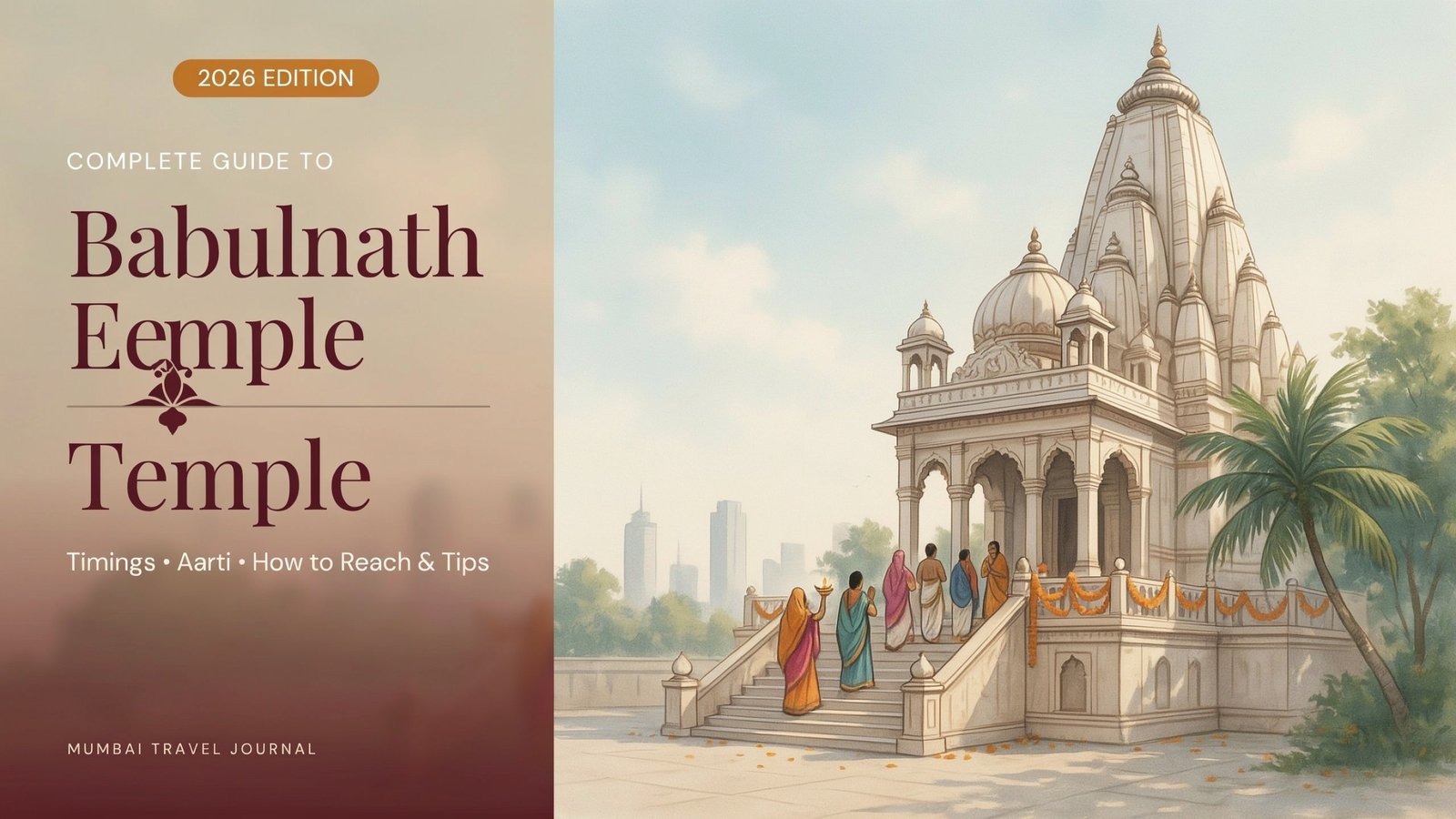
If you’re planning a visit to one of Mumbai’s oldest Shiva shrines, this Complete Guide to Babulnath Temple: Timings, Aarti, How to Reach & Tips 2026 will save you a lot of guesswork (and probably a few wrong turns up that hill too).
Perched on Babulnath Hill near Girgaum Chowpatty, this temple isn’t just another stop on a Mumbai darshan trail it’s a genuine slice of old-city spirituality wedged right between skyscrapers and sea breeze.
Whether you’re a first-timer trying to figure out the aarti schedule or a regular devotee who just wants updated timings for 2026, this guide covers it all in one place, so you don’t have to jump between five different blogs (like we did while researching this, honestly).
Below, we’ll walk through everything daily and festival timings, darshan types, how to actually reach the temple without getting lost, the temple’s fascinating backstory, and some genuinely useful tips that most guides skip over.
Babulnath Temple stays open daily from 5:30 AM to 10:00 PM, giving devotees a wide window for morning meditation, midday darshan, or evening prayers. This isn’t a temple that closes for random afternoon breaks — it’s meant to be accessible throughout the day.
| Day | Temple Timings |
|---|---|
| Monday to Sunday | 5:30 AM – 10:00 PM |
These hours make it easy to slot in a quick visit before work or a peaceful one after dinner, whichever suits your schedule better.
The aarti at Babulnath Temple is honestly the highlight for most visitors, and getting the timing right makes a real difference to the experience.
| Aarti | Timing |
|---|---|
| Mangala Aarti | 4:45 AM – 5:00 AM |
| Morning Aarti | 6:30 AM – 7:00 AM |
| Noon Aarti | 12:00 PM – 12:30 PM |
| Evening Aarti | 6:30 PM – 7:00 PM |
| Shringar Aarti | 8:30 PM – 9:00 PM |
| Night Aarti (Shej Aarti) | 9:45 PM – 10:00 PM |
The morning aarti is quiet and reflective — good for anyone wanting a calm start. The evening aarti, on the other hand, pulls in bigger crowds and has that lively, almost festive energy that a lot of devotees come specifically for.
Sundays and Mondays follow the same base schedule (5:30 AM – 10:00 PM), but Monday holds special religious weight since it’s traditionally associated with Lord Shiva worship. Expect noticeably more footfall on Monday mornings and evenings — locals often plan their weekly puja around this day specifically.
During Shravan (usually falling between July and August), the temple extends its hours and adds special rituals:
Shravan Mondays in particular see a massive spike in visitors, so if peace and quiet is what you’re after, maybe pick a weekday instead.
Mahashivratri is, without a doubt, the biggest day of the year at this temple. The temple opens at 4:00 AM and remains open through the night with continuous aartis and pujas, finally closing the next day around 6:00 AM.
If you’re planning to attend, arriving early or opting for a VIP/group darshan slot is genuinely worth the extra effort — the crowd by midnight can get pretty intense.
Not everyone wants (or has time for) the same kind of darshan, and thankfully Babulnath Temple offers multiple darshan and pooja options to fit different needs and budgets.
| Darshan Type | Description | Price (INR) |
|---|---|---|
| General Darshan | Standard entry for all devotees | Free |
| VIP Darshan | Priority, faster access | ₹200 |
| Special Pooja | Personalized rituals with priest blessings | ₹1,000 |
| Jal Abhishek | Water offering ritual to Lord Shiva | ₹2,000 |
| Group Darshan | For groups of 10+, coordinated entry | ₹100 per person |
If you’re visiting during a festival or a busy weekend, VIP or group darshan genuinely saves you time standing in queues that can stretch for an hour or more. For those seeking a deeper spiritual experience, Jal Abhishek and personalized poojas are popular choices, especially among devotees marking a special occasion.
Babulnath Temple → is located on → Babulnath Hill, near Girgaum Chowpatty, which makes it fairly central and reachable by almost every mode of transport Mumbai has to offer.
This is one of the most searched questions about the temple, so let’s answer it directly: the nearest railway station to Babulnath Temple is Charni Road Station, located on the Western Line, roughly 1 km away.
Other nearby stations, in case Charni Road doesn’t work with your route:
The temple isn’t just a place of worship — it’s built with visitor comfort in mind too, which a lot of older temples honestly overlook.
Is there an entry fee at Babulnath Temple? No — general entry is completely free for all visitors, which is honestly rare for a temple this well-known and well-maintained. The only cost involved is the optional ₹1 lift service for those who’d rather not tackle the stairs.
There’s no “ticket” required in the traditional sense, though VIP darshan and special poojas (listed earlier) do come with their own charges if you choose to opt in.
Babulnath Temple dates back to the 18th century, making it one of Mumbai’s older Shiva shrines — though the version standing today has gone through multiple renovations, so what you see now isn’t exactly the original structure from centuries ago.
This is where local legend comes in. According to oral tradition, a cow used to wander to a particular spot on Babulnath Hill and pour milk from her udder onto the ground every day. Curious villagers eventually dug at the spot and discovered a self-manifested Shivling meaning it wasn’t carved by human hands but believed to have appeared naturally.
This discovery → led to → construction of the original shrine, which local devotees and merchants funded and expanded over subsequent decades. Unlike many major Mumbai temples, there isn’t a single named royal patron credited with building it; it grew organically through community devotion, which honestly adds to its charm.
The temple’s shikhara (spire) and surrounding structure reflect fairly traditional Hindu temple architecture — intricate stone carvings, detailed sculptural work around the sanctum, and a layout designed to guide devotees naturally toward the central Shivling.
Over the years, renovations have added modern conveniences (the lift being the most obvious one) without stripping away the temple’s older character.
Compared to some of Mumbai’s more modernized temples, Babulnath has managed to hold onto a fair bit of its original architectural soul, even after all the additions.
While we can’t embed actual images here, it’s worth knowing what you’ll actually see once you’re there: a tall shikhara visible from a fair distance below the hill, a stone stairway (around 100+ steps for those skipping the lift), decorated entrance gates during festivals, and a sanctum housing the Shivling surrounded by flowers, milk offerings, and incense smoke curling up toward the ceiling.
If you’re looking for Babulnath Temple photos online, festival days like Mahashivratri and Shravan Mondays tend to produce the most striking shots, thanks to the lighting and floral decorations put up specifically for those occasions.
The ideal months to visit are November to March, when Mumbai’s humidity drops and climbing the hill (or the stairs, if you skip the lift) feels a lot less exhausting. That said, if you want the full spiritual experience with crowds, chanting, and an electric atmosphere, Mahashivratri in February is unmatched — just be ready to share the space with thousands of other devotees.
A few reasons keep coming up when you ask locals this question. First, its self-manifested Shivling origin story gives it a mystical edge that man-made idols don’t quite have. Second, its location perched on a hill overlooking Chowpatty and the sea offers a rare combination of spiritual calm and scenic beauty right in the middle of a hectic city.
And third, Mahashivratri celebrations here are considered among the most vibrant in South Mumbai, drawing devotees from across the city for overnight worship.
A quick rundown of practical tips that’ll genuinely make your visit smoother:
Since you’re already in the area, it makes sense to explore a bit more:
The temple stays open daily from 5:30 AM to 10:00 PM, giving devotees a wide window for darshan, prayers, or quiet reflection any time of day.
The morning aarti takes place between 6:30 AM and 7:00 AM daily, offering a peaceful and calm start for early visitors.
The evening aarti happens from 6:30 PM to 7:00 PM, and it’s usually the more lively and crowded of the two main aartis.
Charni Road Station on the Western Line is the closest, roughly 1 km away, followed by a 15–20 minute uphill walk or a quick cab ride.
The temple dates back to the 18th century, though it has undergone several renovations, so the current structure differs from the original.
No single royal patron is credited; local legend says villagers discovered a self-manifested Shivling after a cow poured milk over the spot daily, leading to the temple’s construction.
It’s known for its self-manifested Shivling, scenic hilltop location near Chowpatty, and vibrant Mahashivratri celebrations that draw huge crowds annually.
No formal tickets are needed. General darshan is free; only optional services like VIP darshan or special poojas carry a nominal fee.
During Shravan, the temple stays open from 5:30 AM to 10:30 PM, with extended morning and evening aartis to accommodate the extra footfall.
The temple opens at 4:00 AM and remains open continuously through the night, closing the following day around 6:00 AM.
No, entry is completely free for all visitors. The only charge is an optional ₹1 fee for using the lift to reach the shrine.
Yes, a lift is available for a small ₹1 fee, allowing elderly or differently-abled devotees to skip the long stair climb comfortably.
Early morning or late evening works best for avoiding crowds, while November to March offers the most pleasant weather for the visit.
Festival days like Mahashivratri and Shravan Mondays typically produce the best photos, thanks to floral decorations and special lighting setups.
Options include General Darshan (free), VIP Darshan (₹200), Special Pooja (₹1,000), Jal Abhishek (₹2,000), and Group Darshan (₹100/person).