Physical Address
304 North Cardinal St.
Dorchester Center, MA 02124
Physical Address
304 North Cardinal St.
Dorchester Center, MA 02124

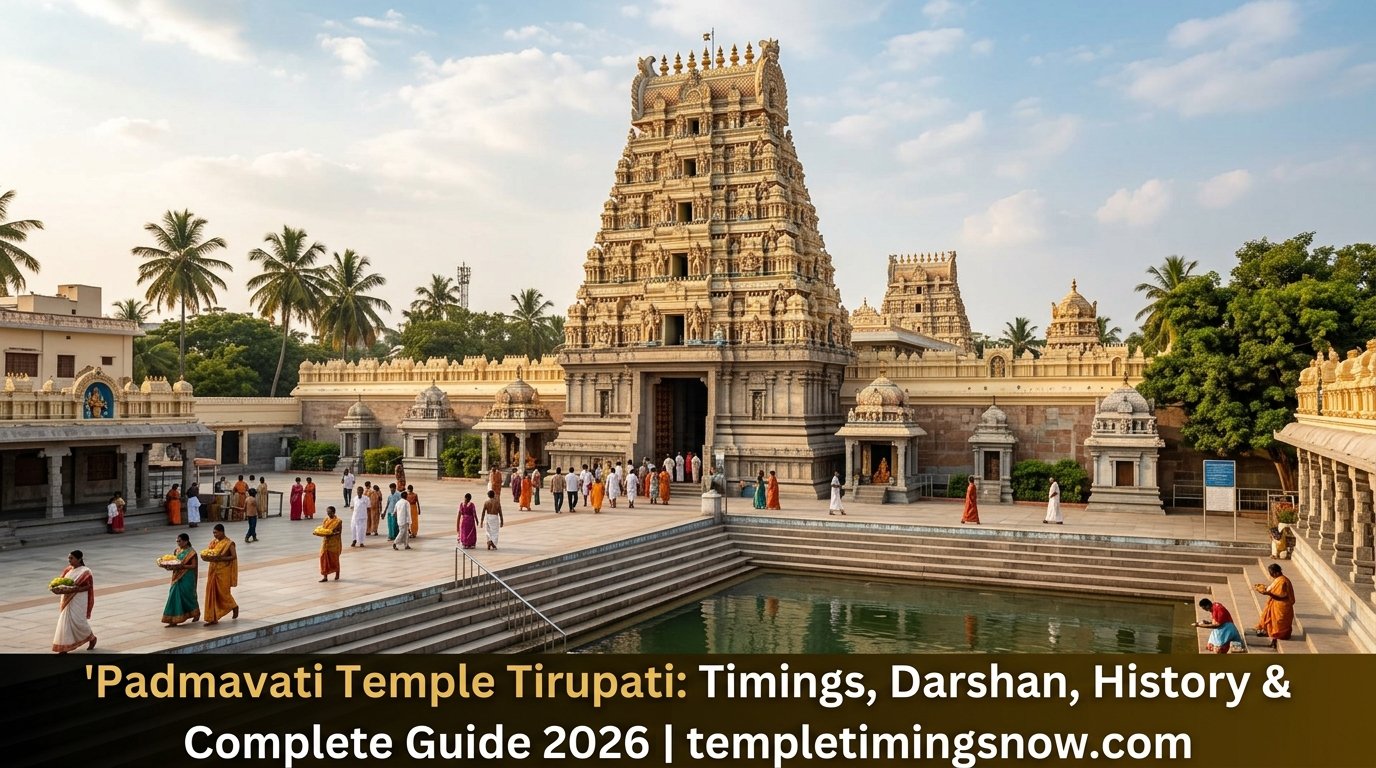
Ask any seasoned pilgrim what to do before climbing the seven hills, and most will tell you the same thing: meet the Goddess first.
The Padmavati Temple Tirupati, also called the Tiruchanur Padmavati Temple, sits just a few kilometres from Tirupati city and honours the divine consort of Lord Venkateswara.
This guide covers Padmavathi temple timings, darshan details, history, dress code, sevas, distances and practical tips, so you don’t have to hunt across ten different websites.
Padmavati Temple is a Hindu shrine in Tiruchanur dedicated to Goddess Padmavati, the consort of Lord Venkateswara. It is about 5 km from Tirupati railway station and is run by the Tirumala Tirupati Devasthanams (TTD).
Locals also call it the Alamelu Manga Temple Tirupati, and “Alamelu Mangamma” is another form of her name you’ll hear.
Devotees here worship her as Lakshmi, the goddess of wealth and compassion. Families come for marriage blessings, childbirth, a good job, or just peace of mind. Its not a side-stop on the Tirupati circuit. It’s a major temple in it’s own right, and on Fridays the queues prove it.
The temple generally opens around 5:30 AM and closes around 9:00 PM, with a short afternoon break. Anyone searching for Padmavathi temple tirupati timings today should know TTD can change the schedule on festival days, so treat the table below as a typical day, not a guarantee.
| Schedule | Typical Timing |
|---|---|
| Temple opening | 5:30 AM |
| Suprabhatam Seva | 5:30 AM – 6:00 AM |
| Morning darshan begins | 6:00 AM |
| Afternoon break | Around 1:00 PM – 2:00 PM |
| Evening darshan | 2:00 PM onwards |
| Temple closing | 9:00 PM |
These are also the Tiruchanur Padmavathi temple timings most pilgrims follow. For Alamelu Mangamma temple tirupati timings on a specific date, especially during Brahmotsavam, check the TTD website or call their helpline the day before. Plans change fast in pilgrim season.
The best time is between 6:00 AM and 8:00 AM on a weekday. Crowds build up from mid-morning, and weekends are much busier. Fridays are special for Goddess Lakshmi, so they draw big numbers, great if you love the atmosphere, not so great if you hate queues.
According to the Varaha Purana, Padmavati was born from a golden lotus and raised by King Akasharaja. That’s where her name, “born of a lotus,” comes from. The story says the king found her in a lotus while ploughing a field for a yagna.
Years later, Lord Srinivasa (Venkateswara) saw her while she was gathering flowers in a garden. He fell for her, and a wedding was arranged. That answers a question a lot of people ask, why did Tirupati Balaji marry Padmavati.
In the legend, the Lord came down to earth in Kali Yuga, and the marriage was part of his earthly leela. Padmavati herself is regarded as an incarnation of Lakshmi. The wedding costs, so the story goes, were borrowed from Kubera, and many devotees believe their offerings at Tirumala help repay that debt.
Those looking for Padmavathi temple history in a historical sense, rather than a mythological one, will find the shrine was developed and patronised over centuries by dynasties of the region, including the Pallavas, Cholas and Vijayanagara rulers. TTD took over the administration later and has kept it up ever since.
Padmavati is not at Tirumala because tradition places her at Tiruchanur, her own seat, while Lakshmi is also said to reside on the Lord’s chest at Tirumala. Devotees see the two temples as one divine household, with the Goddess welcoming pilgrims in the valley and the Lord at the hilltop. Its a lovely way to think about the whole journey, honestly.
Padmavathi temple tirupati distance from Tirupati railway station is roughly 5 km, and about 25 km by road from Tirumala, depending on your route. Here’s a quick table.
| From | Approx. Distance | Travel Time |
|---|---|---|
| Tirupati Railway Station | 5 km | 15–20 minutes |
| Tirupati Bus Stand | 5 km | About 20 minutes |
| Tirupati Airport (Renigunta) | 15 km | 30–40 minutes |
| Tirumala / Alipiri | 25 km | 40–60 minutes |
People also search ammavari temple to tirupati temple distance, meaning Padmavati (Ammavari) Temple to Tirumala. That is the roughly 25 km figure above, and the exact number changes a bit with the road you take. Traffic on the ghat road can stretch the time.
The easiest way is a cab or auto from Tirupati; city buses and APSRTC services also run to Tiruchanur regularly. From the railway station, autos and buses are plentiful. Elderly travellers or families with kids might prefer a private cab, since you can stop and start on your own schedule.
Descend the ghat road to Tirupati and continue to Tiruchanur, which takes around 40 to 60 minutes by cab or bus. TTD buses run between Tirumala and Tirupati, and from the Tirupati bus stand you can take a local bus or auto to the temple.
If you’re short on time, hire a cab straight from Tirumala to save one change. Tour operators like Tirupati Balaji Tours & Travels (+91-8688624758) offer this kind of transfer.
Traditional Indian attire is required inside the Padmavati Temple. The Padmavathi temple dress code matches other TTD temples, and security staff do check, so dont assume you’ll slip through in jeans.
If you reach the gate wearing the wrong outfit, there are usually shops nearby selling dhotis and dupattas. Not ideal, but it works.
Popular sevas include Kumkuma Pooja, Sahasra Kalasabhishekam and Vastra Samarpana. Kumkuma Pooja, done with vermilion, is performed on Fridays and is believed to bless women with a happy married life. Sahasra Kalasabhishekam is a grand ritual bath with a thousand sacred pots. In Vastra Samarpana, devotees offer silk sarees to the Goddess.
You can book most seva tickets through TTD’s official online portal, and general darshan needs no booking at all. For a TTD Padmavathi temple sevas online booking, here’s the usual process:
Prices and availability change, so confirm on the portal itself instead of trusting an old blog post, including this one. Seva quotas fill up quickly in festival months, and ticket types such as Sarva Darshan and Special Entry Darshan have different rules, so read the fine print before paying.
Brahmotsavam is the biggest annual festival at Tiruchanur, held over nine days, usually around Karthika month. Processions feature different vahanas (vehicles), such as the Gaja Vahanam and the Golden Chariot.
The final day is Panchami Teertham, when the sacred Chakra Snanam is performed at the temple tank, the Padma Pushkarini. Lakhs of devotees take part, and the crowds are enormous.
Other big days are Navaratri, with the Goddess decorated differently each day, and Karthika Deepotsavam, when the temple glows with thousands of lamps. Book accommodation and transport early if your dates overlap with these.
The main idol shows Goddess Padmavati seated on a lotus, with four arms, adorned in gold jewellery and bright silk. The mandapam has carved pillars, and the temple tank, Padma Pushkarini, is considered sacred. Legend links this tank with the golden lotus from which she appeared, which is why the Panchami Teertham bath is so important.
A typical visit goes like this: you reach the entrance, leave your footwear, deposit your phone if needed, join the queue, pass through the mandapam, have darshan, and collect prasadam like laddu or tamarind rice at the exit. The air smells of jasmine and incense. Even people who aren’t very religious say it feels calming.
Darshan usually takes 30 minutes to 1.5 hours on a normal day. On Fridays, weekends or festivals it can stretch to 3–4 hours. Plan around 1.5 to 2 hours in total for a weekday visit, including travel inside the premises.
Tradition says visit Padmavati first, then proceed to Tirumala. The belief is that you seek the Goddess’s blessings before meeting her Lord. Pilgrims who follow this custom say it’s like asking the lady of the house for permission before meeting the master.
That said, there’s no strict rule. If you’re coming down from Tirumala and are tired, going to Tiruchanur afterwards is totally fine, and many people do exactly that. Do what suits your schedule and your family’s comfort. Devotion matters more than sequence.
On Day 1, reach Tirupati, check in, and visit Padmavati Temple in the evening. On Day 2, start early for Tirumala, have Venkateswara darshan, see Akasaganga and Sri Varaha Swami Temple, then come down and visit Kapila Theertham. If you have a third day, add Srikalahasti and Chandragiri Fort.
Good nearby options are Govindaraja Swami Temple, Kapila Theertham, Chandragiri Fort and Srikalahasti. Govindaraja Swami Temple is in Tirupati town. Kapila Theertham, a Shiva temple with a waterfall, is about 7 km away. Chandragiri Fort, with its museum, is around 11 km, and Srikalahasti, famous for the Vayu Lingam, is about 35 km out, so keep it for a day trip.
Most guides skip these, so here it is plainly.
Is there an entry fee? General darshan is free. Special entry darshan and sevas carry a ticket, and the amount can change, so check TTD’s portal.
What do I need for online booking? A valid photo ID for each devotee and a mobile number are the usual basics. Senior citizens and differently-abled devotees may have separate facilities, so ask at the TTD counters or helpline before you go.
What is banned in Tirumala? Non-vegetarian food, alcohol, tobacco and similar items are not allowed in the Tirumala area, and plastic is restricted. Political activity, drones and unauthorised photography are also prohibited, and phones are not allowed inside the sanctum. Rules get updated, so double-check before travelling.
Carry some cash, as smaller stalls and autos might not take UPI. Keep a water bottle handy because Tirupati gets hot and humid. Book rooms early for festival periods and long weekends.
Use TTD’s online portal for special tickets if you want a shorter queue. And if you’re a first-timer, a reliable operator such as Tirupati Balaji Tours & Travels can sort cabs and packages, saving you a lot of confusion.
Yes. The temple is located in Tiruchanur, so people call it Tiruchanur Padmavati Temple. Both names refer to the same shrine dedicated to Goddess Padmavati, also known as Alamelu Manga.
Yes, general darshan needs no advance booking. You just join the queue. Only special sevas like Kumkuma Pooja or Sahasra Kalasabhishekam and special entry tickets require booking through TTD’s official online portal.
Plan around 1.5 to 2 hours on a regular weekday, including queue and travel inside the complex. During festivals or Fridays, keep three to four hours free to be safe.
Tradition suggests visiting Padmavati first, then Tirumala. However, there’s no strict rule, so you can choose whichever order fits your schedule, travel route and energy levels.
No, photography and video recording are generally not permitted inside the main hall and sanctum. It’s best to leave your phone and camera in the cloak room or your vehicle.
According to the Varaha Purana, Padmavati was born from a golden lotus and raised by King Akasharaja. Lord Venkateswara fell for her, and their divine wedding is the foundation of this temple’s significance.
Traditionally, devotees visit Padmavati Temple at Tiruchanur first, then proceed to Tirumala Venkateswara Temple. Many pilgrims follow this custom, though it’s a matter of personal preference rather than a rule.
Padmavati Temple is roughly 25 km from Tirumala by road, depending on the route. The journey usually takes 40 to 60 minutes by cab or bus, depending on traffic.
Darshan typically takes 30 minutes to 1.5 hours on non-festival days. On Fridays, weekends and during Brahmotsavam, waiting times can extend to three or four hours.
Yes, and it’s actually the traditional order. Many devotees visit Padmavati Temple first for the Goddess’s blessings, then go to Tirumala for Lord Venkateswara’s darshan the next day.
Tradition places Padmavati at her own temple in Tiruchanur, while Lakshmi is also believed to reside on the Lord’s chest at Tirumala. Devotees consider both temples part of one divine household.
Legend says Lord Srinivasa, who came to earth in Kali Yuga, saw Padmavati in a garden and was captivated. Their marriage was part of his divine leela, as told in the Puranas.
Take a TTD bus or cab down the ghat road to Tirupati, then continue to Tiruchanur by local bus, auto or the same cab. The trip takes around 40 to 60 minutes.
Non-vegetarian food, alcohol, tobacco, drones and restricted plastic items are not allowed in Tirumala. Political activities are also prohibited, and phones aren’t allowed inside the sanctum. Rules may change, so confirm with TTD.
General darshan is free of charge. Special entry darshan tickets and sevas are paid, with prices set by TTD, so check the official portal for the latest rates before you travel.
The Padmavati Temple Tirupati is far more than a quick stop on the way to Tirumala. Its history, its calm atmosphere and the belief that the Goddess blesses you before her Lord make it an essential part of the pilgrimage.
Check the timings, dress properly, book your sevas ahead if you want them, and give yourself enough time. If you’d like help with cabs or full tour packages, Tirupati Balaji Tours & Travels is reachable at +91-8688624758.
https://templetimingsnow.com/trimbakeshwar-jyotirlinga-timings/
https://templetimingsnow.com/tirupati-darshan-tickets/
https://templetimingsnow.com/tirupati-balaji-darshan-from-bangalore/
https://templetimingsnow.com/tirupati-tirumala-darshan-quota-booking/
https://templetimingsnow.com/bangalore-to-tirupati-nri-darshan-package-by-car/