Physical Address
304 North Cardinal St.
Dorchester Center, MA 02124
Physical Address
304 North Cardinal St.
Dorchester Center, MA 02124

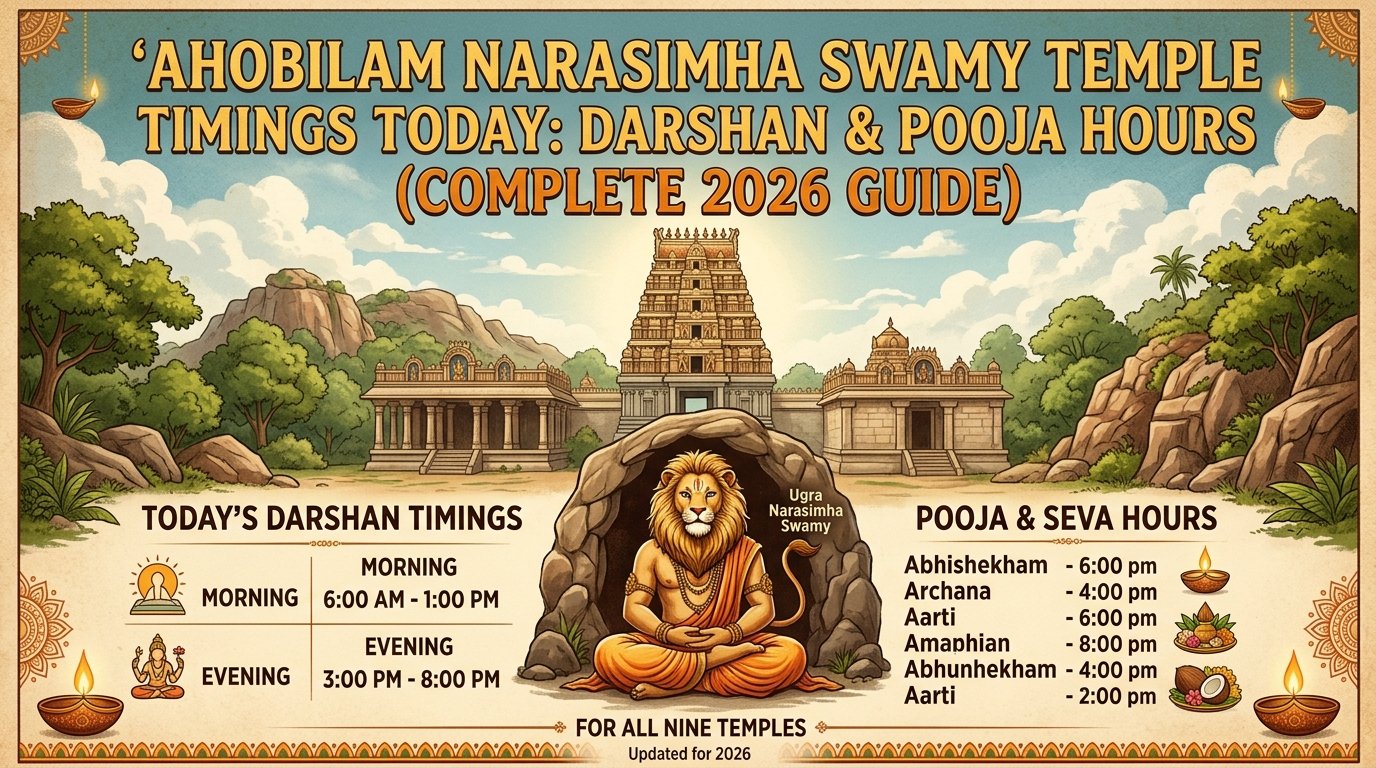
Planning a trip to the Nallamala hills and not sure when the doors actually open? Here’s the short version. Ahobilam Narasimha Swamy Temple timings today are 6:00 AM to 1:00 PM for morning darshan and 3:00 PM to 8:00 PM for evening darshan, with a break in between.
This guide covers darshan and pooja hours, the aarti schedule, trekking timings for the upper shrines, booking questions, festivals, and the practical stuff most people forget to check until they’re standing at the gate.
The temple opens at 6:00 AM and closes at 8:00 PM on regular days, with a closed window between 1:00 PM and 3:00 PM. Morning darshan runs from 6:00 AM to 1:00 PM and evening darshan from 3:00 PM to 8:00 PM. On festival days the schedule can shift, so treat these as usual-day timings.
| Session | Start | End | Status |
|---|---|---|---|
| Temple opening | 6:00 AM | – | Open |
| Morning darshan | 6:00 AM | 1:00 PM | Open |
| Midday break | 1:00 PM | 3:00 PM | Closed |
| Evening darshan | 3:00 PM | 8:00 PM | Open |
| Temple closing | – | 8:00 PM | Closed |
The mornings are usually the busiest, mostly before 10 AM, so if you hate crowds try the late afternoon slot. The afternoon gap isn’t random either. It’s used for rituals and cleaning of the sanctum, which is pretty standard for South Indian temples.
The Ahobilam temple is one of the most important Vaishnava pilgrimage centres in Andhra Pradesh, and it’s dedicated to Lord Narasimha, the fierce man-lion avatar of Vishnu. Tradition says this is the very place where Narasimha emerged from a pillar to protect his devotee Prahlada and defeat the demon king Hiranyakashipu. The name itself is often explained as “Ahobalam”, meaning “what strength!”, a phrase attributed to the awestruck gods who watched the event.
Sri Ahobila Mutt governs the temple and also looks after the daily administration, the festivals and the free meal service for pilgrims. That matters for you as a visitor because the Mutt is the most reliable source for schedule updates.
Also, the whole complex isn’t a single building. It’s a cluster of shrines spread over a forested hill region, which is why you’ll hear people say “Lower Ahobilam” and “Upper Ahobilam” so often.
The Ahobilam Narasimha Swamy Temple is located in Ahobilam village, in the Nallamala hills of Andhra Pradesh. Older sources place it in Kurnool district, and administratively the area now falls under the Nandyal region after the district reorganisation, so you may see both names on maps and websites. The nearest bigger town is Allagadda, and the closest major hub for transport is Nandyal.
The setting is honestly half the reason people go. Thick forest, red-rock cliffs, and a quiet that’s hard to find near the plains. Network coverage gets patchy as you go up, so download your offline map before you leave the highway.
The Ahobilam temple distance depends on where you’re starting from. These are approximate road distances, so double check on your map app before you leave:
Most people drive or hire a cab from Nandyal, which has the closest practical railway connectivity. APSRTC buses also run to Ahobilam from nearby towns, though frequency isn’t great in the off-season, so plan your return before you go up. Reaching by early morning makes a huge difference, since you catch the 6:00 AM opening and have the day ahead.
Diguva Ahobilam, also called Lower Ahobilam, follows the standard schedule: 6:00 AM to 1:00 PM and 3:00 PM to 8:00 PM. This is where the main Ahobilam Narasimha Swamy Temple sits, and it’s the part of the complex any visitor can reach without trekking. It’s also the venue for the big annual festival, the Brahmotsavam.
If your time is short, or you’re travelling with elderly parents or small kids, Lower Ahobilam alone is a very rewarding half-day visit. You can do darshan, have the prasadam, and sit for the evening deeparadhana without any climbing at all.
Eguva (Upper) Ahobilam forest shrines are open for trekking from 6:30 AM to 1:00 PM and 3:00 PM to 7:00 PM. Notice the earlier closing time compared to Lower Ahobilam. That one hour matters a lot, because nobody wants to be walking down a forest trail in the dark.
So the Eguva Ahobilam temple timings are basically built around daylight and safety. If you plan to walk between shrines, start in the first slot of the morning, and don’t set off on a long trek after about 3:00 PM unless you’re only doing a short stretch.
The daily ritual cycle begins with Suprabhatam at 6:30 AM and ends with Shayanotsavam at 7:45 PM. All four main rituals are free to attend. Here’s the usual sequence:
| Ritual | Time | Fee | What happens |
|---|---|---|---|
| Suprabhatam & Viswaroopam | 6:30 AM | Free | Morning opening arati at Diguva and Eguva shrines |
| Kalasanthi | 8:30 AM | Free | Morning abhishekham and naivedyam |
| Sayarakshai (Deeparadhana) | 6:00 PM | Free | Evening lamp ritual |
| Shayanotsavam | 7:45 PM | Free | Night closing ceremony |
The Suprabhatam Seva is a lovely time to be there, with the sanctum just waking up and hardly any queue. The Kalasanthi abhishekam is where the deity gets his morning bath and offerings, and it’s worth catching if you can. The final Shayanotsavam at 7:45 PM is the softer, quieter ritual where the deity is put to rest for the night, which is why it’s often described as the closing ceremony.
No, general darshan at Ahobilam is free and doesn’t need a ticket or advance booking. It’s a walk-in system across all nine shrines, and there’s no paid queue like the ones you’d see at bigger temples. That’s honestly one of the nicest things about the place.
The confusion about Ahobilam temple timings booking usually comes from people searching for online slots that just don’t exist for general entry. Special sevas or festival abhishekams, such as the Narasimha Jayanti Abhishekam, may have separate arrangements, but the details aren’t fixed year-round. So if you want a particular seva, contact the temple office or Sri Ahobila Mutt ahead of time and confirm the procedure and any fee.
For Ahobilam temple darshan online booking, be careful. As far as verified information goes, free general darshan has no online ticket system. Some third-party websites and agents advertise “VIP darshan” or booking packages, and you shouldn’t pay one of them without checking with the Mutt directly.
If an official portal or WhatsApp booking option is launched for any special seva later, it’ll be announced through the Mutt’s own channels, and I’d trust that over any random listing.
There isn’t much point relying on old blog posts for timings, and that includes this one for festival days. For the Ahobilam temple official website, look for the pages and notices issued by Sri Ahobila Mutt, since it’s the governing body. Search for the Mutt’s name directly and skip the ad-heavy aggregator pages.
A few quick tips for verifying information:
Schedules can change on festival days, and crowds go up a lot. The two biggest events are Narasimha Jayanti and the Ahobila Brahmotsavam, and both are worth knowing about if you’re deciding when to go.
Narasimha Jayanti falls in the month of Vaisakha (around May) and lasts about 3 days. It celebrates the appearance of Lord Narasimha, and the sacred herbal bath (abhishekam) is a highlight. Expect high crowds and possibly extended or altered darshan hours.
The Ahobila Brahmotsavam takes place in Phalguna (February to March) and goes on for 10 days. It includes the annual chariot festival (Ratholsavam) and the divine wedding at Lower Ahobilam. Because festival dates follow the Hindu lunar calendar, they shift every year, so don’t assume last year’s dates.
The Ahobilam Narasimha Swamy Kalyanam is the celestial wedding ritual performed as part of the Brahmotsavam. For 2026, the Brahmotsavam window would have fallen in the Phalguna period (February to March), which has already passed as of now.
I can’t confirm the exact 2026 dates from the information available, so if you want the 2027 dates, check the Sri Ahobila Mutt’s announcements once they’re published. The kalyanam is a huge draw, and accommodation around Ahobilam fills up quickly during the festival, so book stays early.
The Nava Narasimha shrines are reached via hill trekking through the Nallamala forests, and most pilgrims need one to two days to see all nine. This is the area where most guides say almost nothing, so here’s what you should know.
The nine shrines are Ahobila, Varaha, Malola, Yogananda, Bhavana, Karanja, Chatravata, Jwala, and Pavana. Some are close to the road and easy, while others need proper walking on uneven forest paths.
Time varies a lot with your fitness and the season. A rough idea, based on common pilgrim experience:
Jeeps and local guides are usually available at Lower Ahobilam, and honestly hiring a guide is worth it for the deeper shrines because trails aren’t always clearly marked. Prices change, so negotiate and confirm before you set off.
Go between October and February if you can, since the weather is cooler and the forest is greener after the monsoon. Summer treks get really hot, and heavy rain can make the rocky paths slippery. Carry water, a small snack, comfortable shoes with grip, and a torch just in case. And remember the upper shrine closing time of 7:00 PM. Don’t cut it close.
Several common questions about this temple never get answered on most sites, so let’s sort them out.
Dress code: Modest, traditional clothing is the norm. Men usually wear dhoti or kurta-pyjama, or simple trousers with a shirt, and women typically wear sarees, salwar suits or similar. Skip shorts, sleeveless tops and anything too revealing. Footwear is removed before entering the shrines.
Parking: Parking is generally available near the Lower Ahobilam temple area, though it can get crowded during festivals. Arrive early if you’re driving a bigger vehicle or a tempo traveller.
Accessibility: The main Lower Ahobilam temple is much easier for elderly visitors and people with mobility issues than the upper shrines. The forest shrines involve steps, uneven terrain and trekking, so they’re hard for wheelchair users. If someone in your group has difficulty walking, plan to focus on the Lower Ahobilam and let the fitter members do the trek.
Yes, but only after 3:00 PM. Between 1:00 PM and 3:00 PM the temple is closed on usual days, and Sunday isn’t an exception in general. Weekends bring more visitors, so if you’re going on a Sunday, go for the early morning or the later evening slot. Festival Sundays can be different, so double check.
Panakam is the signature prasadam at Ahobilam, a cooling jaggery-and-pepper drink sacred to Lord Narasimha, and it’s free. It’s refreshing after a long walk and has a slight peppery kick that people either love or find odd.
The Nitya Annadanam is another big plus. Free meals are served to pilgrims at the Sri Ahobila Mutt dining hall, so you don’t have to worry too much about lunch when you’re in Lower Ahobilam. Do keep in mind the meal timings, because they typically follow the temple’s rhythm, and arriving too late might mean missing it. It’s normal to leave a small donation if you feel like it, though that’s up to you.
A few things that’ll make your visit smoother:
Most visitors underestimate how much time the place needs. If you’re doing both the lower and upper shrines, give yourself at least a full day, and preferably two.
The Ahobilam Narasimha Swamy Temple rewards people who plan a little. Know that darshan runs from 6:00 AM to 1:00 PM and 3:00 PM to 8:00 PM, that the upper forest shrines close earlier at 7:00 PM, and that general entry is free with no ticket to book.
Add in the aarti schedule, the festival calendar and the trekking advice above, and you’re in good shape. Always verify the latest details with Sri Ahobila Mutt before travelling, especially for festival days.
The temple opens at 6:00 AM and closes at 8:00 PM on usual days. There’s a midday break between 1:00 PM and 3:00 PM, and timings may change during festivals.
Morning darshan runs from 6:00 AM to 1:00 PM, and evening darshan runs from 3:00 PM to 8:00 PM. Festival days can bring altered schedules, so confirm locally before visiting.
The first darshan begins at 6:00 AM when the temple opens. The Suprabhatam and Viswaroopam ritual follows at around 6:30 AM, marking the formal start of the daily pooja cycle.
Yes, but only after 3:00 PM. The temple stays closed between 1:00 PM and 3:00 PM on usual days, including Sundays, unless a festival changes the schedule.
Yes, modest traditional attire is expected. Men usually wear dhoti or kurta, women wear sarees or salwar suits. Avoid shorts, sleeveless tops and revealing clothes, and remove footwear before entering the shrines.
Yes. Panakam, a jaggery-and-pepper drink, is offered free. Free meals are also served at the Sri Ahobila Mutt dining hall through the Nitya Annadanam service for pilgrims.
Parking is generally available near Lower Ahobilam. It can fill up quickly during festivals and weekends, so arrive early, especially if you’re travelling with a larger vehicle or group.
The main Lower Ahobilam temple is fairly manageable, but the upper forest shrines involve steps, rocky trails and trekking. Wheelchair users will find the upper shrines very difficult to reach.
Four main rituals happen daily: Suprabhatam and Viswaroopam at 6:30 AM, Kalasanthi at 8:30 AM, Sayarakshai at 6:00 PM, and Shayanotsavam at 7:45 PM.
Eguva (Upper) Ahobilam forest shrines are open for trekking from 6:30 AM to 1:00 PM and again from 3:00 PM to 7:00 PM, an hour earlier closing than Lower Ahobilam.
General darshan across all nine shrines is free and walk-in only. No verified online darshan booking exists for regular entry, so be careful with third-party sites offering paid slots.
Ahobilam is roughly 65 to 70 km from Nandyal and about 350 to 370 km from Hyderabad by road. Distances are approximate, so check your map app before leaving.
The divine wedding happens during the Ahobila Brahmotsavam in Phalguna, around February to March. Dates follow the Hindu calendar and change yearly, so check Sri Ahobila Mutt announcements for confirmation.
October to February is ideal thanks to cooler weather and greener forests. Narasimha Jayanti in May and Brahmotsavam in Phalguna are festive but very crowded, so plan stays early.
Most pilgrims need one to two days. Fit trekkers can attempt all nine in one long day with an early start, but the Jwala and Pavana stretches are demanding.
https://templetimingsnow.com/tirupati-sri-padmavati-temple/
https://templetimingsnow.com/japali-hanuman-temple-tirumala/
https://templetimingsnow.com/kukke-subramanya-temple-timings/
https://templetimingsnow.com/unjal-seva-timings-in-tirumala-perfect-booking-strategies/