Physical Address
304 North Cardinal St.
Dorchester Center, MA 02124
Physical Address
304 North Cardinal St.
Dorchester Center, MA 02124

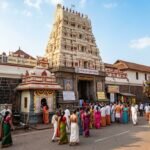
If you’re planning a trip to Tirupati and want to include the Tirupati Sri Padmavati Temple in your pilgrimage, you’re honestly making a smart call most tourists skip it and later regret it.
This temple, dedicated to Goddess Padmavathi, the divine consort of Lord Venkateswara, sits quietly just a few kilometres away from the hustle of Tirumala, yet it holds equal spiritual weight for devotees.
In this guide we’ll cover everything timings, darshan process, seva costs, history, and honestly some things most other articles just gloss over.
The Sri Padmavathi Ammavari Temple is located in Tiruchanoor, a small temple town that’s practically a suburb of Tirupati now. The tirupati to padmavathi temple distance is roughly 5 kilometres, which takes about 15-20 minutes by auto or cab depending on traffic (and Tirupati traffic can be unpredictable, ngl).
If you’re coming from the Tirumala Tirupati Devasthanams (TTD) main temple complex, the ammavari temple to tirupati temple distance works out to around 12-15 km since Tirumala hill is a separate climb altogether. So plan your travel time accordingly a lot of pilgrims underestimate this and end up rushing.
Quick distance reference:
The Padmavathi temple history goes back to a beautiful yet lesser-told legend that connects directly to Lord Venkateswara himself. According to Puranic tradition, Goddess Padmavathi manifested herself as a massive red lotus bloom in the Padma Sarovar lake located right here in Tiruchanoor.
This is actually where her name comes from Padma meaning lotus. Pilgrims lovingly refer to her as “Padmavathi Amma,” and in Telugu she’s also worshipped as Alamelu Manga.
The temple itself, while smaller in scale compared to the grandeur of Tirumala, carries deep architectural and spiritual significance that developed over centuries under the patronage of various dynasties, including later renovations and expansions by the TTD authorities to accommodate the growing footfall.
This is honestly one of the most searched questions, and there’s a genuine reason behind it — not just tradition for tradition’s sake. Lord Venkateswara → resides atop → Tirumala hill, which is considered a sacred, almost austere abode meant for penance and worship.
Padmavathi, on the other hand, chose to manifest in the plains of Tiruchanoor near the lake, which is considered more accessible and grounded.
There’s also a popular belief among devotees that a Tirupati Balaji darshan is considered incomplete without first visiting Padmavathi Amma, because she is his eternal consort and the goddess of wealth and prosperity in this specific regional tradition (similar to how Lakshmi accompanies Vishnu).
So geographically and spiritually, both temples complement each other rather than compete.
Here’s where the mythology actually gets interesting, and most competitor articles just brush past this in one line. Legend says Lord Sri Venkateswara Swamy had to perform 12 long years of penance before he could even see, let alone marry, Goddess Padmavathi. This wasn’t a simple courtship it involved trials, divine tests, and the intervention of sage Narada in some versions of the story.
The marriage between Venkateswara and Padmavathi is celebrated even today through the Kalyana Utsavam, also called Padmavathi Parinayam, performed daily at the temple.
Devotees believe that sponsoring or witnessing this seva brings blessings for marital harmony and prosperity — which explains why it’s one of the most requested sevas among newly married couples visiting Tirupati.
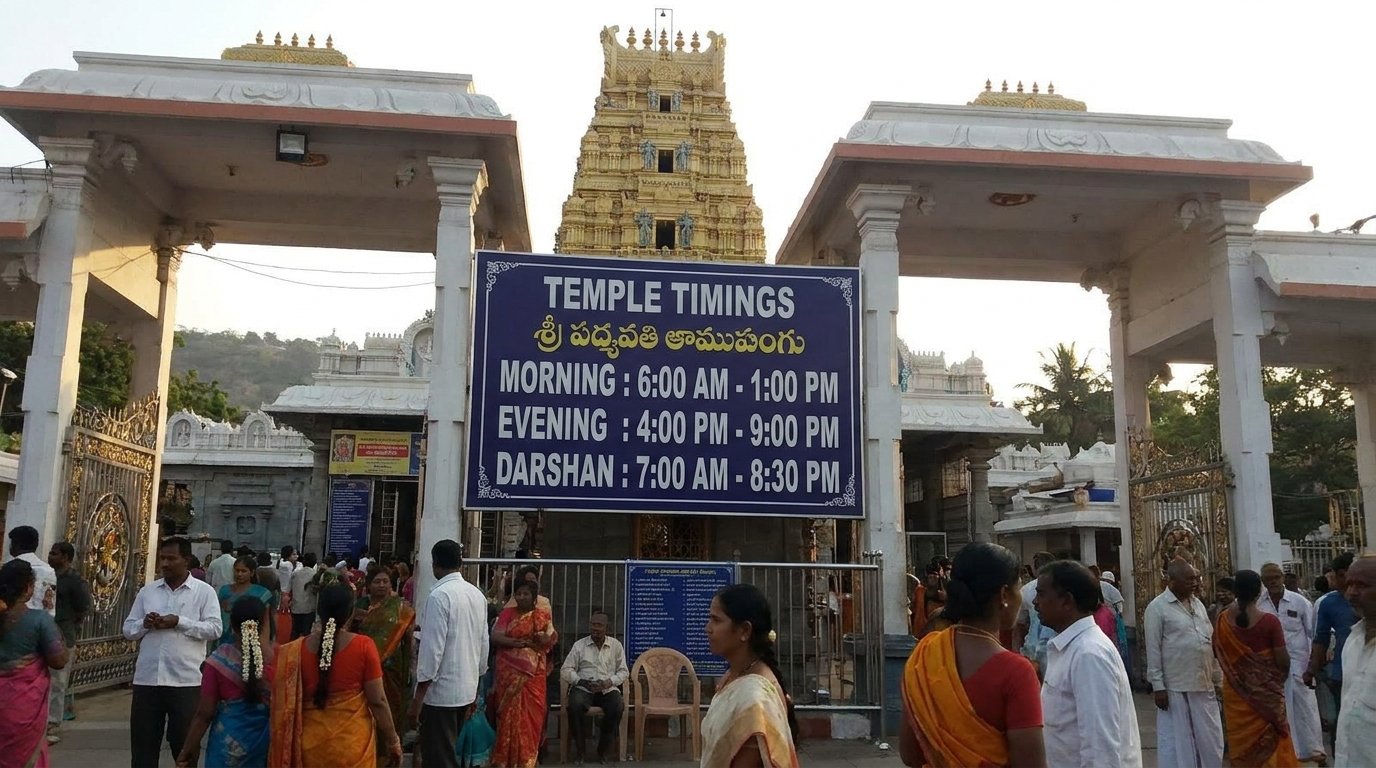
If you just want the quick answer: Sarva Darshan at Padmavathi Ammavari Temple happens in three separate slots daily.
These padmavathi temple tirupati timings today generally hold consistent throughout the year, though during major festivals like Brahmotsavam the temple authorities do extend hours, so it’s always worth double-checking on the official TTD website before you travel. Also worth noting — these are the same padmavathi ammavari temple timings used interchangeably by locals, so don’t get confused if you see slightly different terminology across sources.
Beyond regular darshan, the temple conducts a whole calendar of sevas — daily, weekly, monthly, and annual — each with their own timing and entry rules. Below is the most useful breakdown of tiruchanoor padmavathi temple timings for daily sevas.
| Seva Name | Entry Allowed | Timing | Ticket Cost |
|---|---|---|---|
| Suprabhatham | 1 person | 5:00 AM (3:30 AM Friday) | ₹25 |
| Sahasra Nama Archana | 1 person | 5:30 AM (4:00 AM Friday) | ₹25 |
| Padmavathi Parinayam (Kalyana Utsavam) | 5 people | 10:30 AM | ₹500 |
| Unjal Seva | 2 people | 5:00 PM | ₹116 |
| Ekantha Seva | 1 person | 9:00 PM | ₹25 |
| KumKuma Archana | 2 people | During Sarva Darshan | ₹200 |
| Quick Darshan | 1 person | During Sarva Darshan | ₹40 |
| VIP Entrance | 1 person | During Sarva Darshan | ₹100 |
Beyond the daily list, there are weekly sevas worth knowing about too. Vastrala Alankara Seva, done every Friday morning at 5:30 AM, allows entry for two devotees and costs a hefty ₹10,000 this one’s usually booked well in advance since it involves adorning the Goddess with new garments. Tiruppavada Seva happens every Thursday and permits five people at ₹3,000.
If your budget’s tighter, Pushpaanjali Seva on Saturdays (₹1,500) or Astadala Pada Padmardhanamu on Mondays are more accessible options.
For those planning around a specific date, annual sevas like Vasanthotsavam (May) and Pavitrothsavam (September) are worth aligning your trip with if you want a fuller festive experience though obviously crowds spike during these times too, so weigh that trade-off.
A lot of pilgrims don’t realize that most of these sevas, along with special darshan tickets, can actually be reserved through TTD’s official online portal.
The TTD Padmavathi Temple sevas online booking system works similarly to the Tirumala booking process you register with your Aadhar or ID proof, select your preferred seva date, and make payment online.
That said, availability for premium sevas like Vastrala Alankara Seva or Tiruppavada gets snapped up fast, sometimes within minutes of slots opening. So here’s a practical tip: check the TTD website a good 2-3 months in advance if you have specific seva dates in mind, especially around festival seasons.
The Padmavathi temple complex in Tiruchanoor isn’t just one shrine — it houses a few sub-temples worth exploring while you’re there:
The Sri Sundara Rajaswamivari Temple also hosts its own dedicated festival, the Avathara Utsavam, celebrated over 3 days annually, drawing a decent crowd of devotees separately from the main Padmavathi celebrations.
Festivals at this temple are honestly a sight to witness, and each one carries its own ritual significance:
If your trip dates happen to line up with any of these, you’re in for a genuinely memorable experience, though do expect thicker crowds and longer darshan queues.
This question comes up constantly, and there’s actually a widely followed pilgrim custom around it. Traditionally, devotees are advised to visit Padmavathi Amma’s temple before heading up to Tirumala for Lord Venkateswara’s darshan.
The belief is rooted in temple etiquette since Padmavathi is his consort, paying respects to her first is considered auspicious and, in a way, seeking her blessing before meeting her husband.
Practically speaking, since Tiruchanoor is much closer to Tirupati town (where most pilgrims stay), it makes logistical sense too you can knock out Padmavathi darshan in an hour or two on your arrival day, freshen up, then head to Tirumala hill the next morning when you’re less exhausted from travel.
For those wondering how to sequence the whole trip, here’s a simple flow that works well for most travelers:
A few things that genuinely help first-timers:
Padmavathi Temple is located in Tiruchanoor, near Tirupati, because the Goddess manifested as a lotus in Padma Sarovar lake there. It complements Lord Venkateswara’s abode atop Tirumala hill.
The temple’s origin traces to Goddess Padmavathi emerging as a red lotus in Padma Sarovar. Lord Venkateswara performed 12 years of penance before marrying her, forming the temple’s spiritual foundation.
Sarva Darshan typically takes 30 minutes to 2 hours, depending on crowd size and time of day. Weekdays and early mornings usually see shorter queues than weekends or festivals.
Tradition suggests visiting Padmavathi Temple first, then Tirumala, since she’s Venkateswara’s consort. This sequence is also more practical given the shorter distance from Tirupati town.
According to legend, Venkateswara fell for Padmavathi and performed 12 years of rigorous penance to win her hand, eventually marrying her in a divine union celebrated as Kalyana Utsavam.
Yes, absolutely. In fact, it’s the recommended pilgrim custom to complete Padmavathi Amma’s darshan before proceeding to Tirumala for Lord Venkateswara’s darshan.
Padmavathi manifested from a lotus; Venkateswara sought her hand through years of penance and divine trials. Their marriage is reenacted daily via the Padmavathi Parinayam seva.
The Padmavathi Amma temple in Tiruchanoor is approximately 5 kilometres from Tirupati town, making it an easy 15-20 minute drive by cab or auto-rickshaw.
Sarva Darshan runs in three slots: 9:30 AM–12:30 PM, 1:00 PM–6:00 PM, and 7:00 PM–8:45 PM daily, though festival days may see extended hours.
Sevas can be booked via the official TTD website using valid ID proof. Popular sevas like Vastrala Alankara fill up fast, so book weeks in advance.
Quick Darshan costs ₹40 per person and is available during regular Sarva Darshan hours, offering a faster route through the queue for a small fee.
Yes, three sub-temples exist: Sri Krishnaswamy Temple, Sri Sundara Rajaaswamivari Temple, and Sri Suryanarayana Swamivari Temple, each with their own significance.
Padma Sarovar is the sacred lake where Goddess Padmavathi manifested as a lotus. It remains an important pilgrimage spot within the Tiruchanoor temple complex.
Visiting during Brahmotsavam or Vasanthotsavam offers a festive experience, though for quieter darshan, weekdays outside major festival periods are ideal.
Yes, VIP Entrance costs ₹100 and allows one person quicker access during Sarva Darshan hours, bypassing the general queue to a good extent.
https://templetimingsnow.com/japali-hanuman-temple-timings/
https://templetimingsnow.com/time-slotted-sarva-darshan/
https://templetimingsnow.com/tirupati-nri-darshan/
https://templetimingsnow.com/khatu-shyam-ji-registration/