Physical Address
304 North Cardinal St.
Dorchester Center, MA 02124
Physical Address
304 North Cardinal St.
Dorchester Center, MA 02124

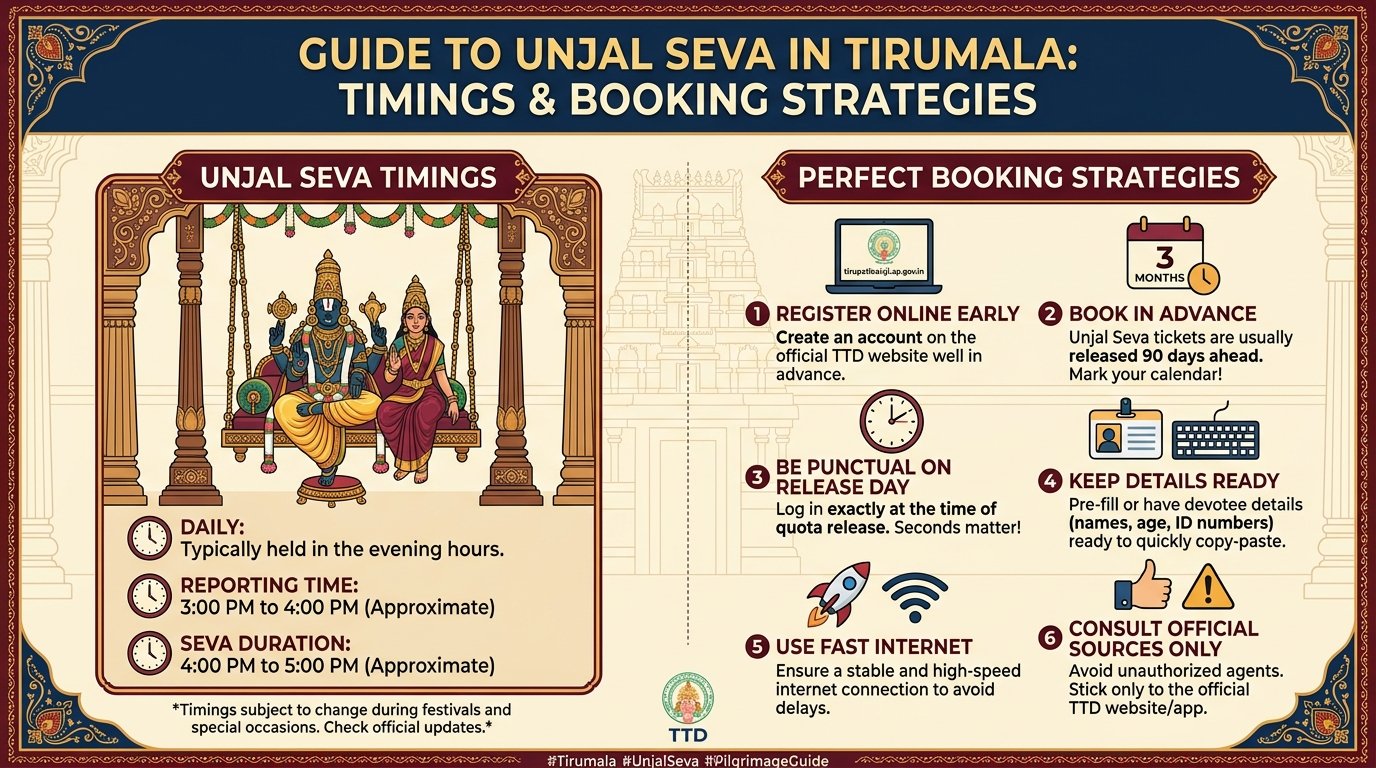
Ask any regular pilgrim which seva feels the most peaceful, and you’ll hear about the swing ceremony in the Mirror Hall. Unjal Seva timings in Tirumala are the first thing devotees search for, because the seva is short, popular and gone from the booking portal in minutes.
This guide covers the timing, meaning, ticket price and booking steps for Unjal Seva. It also covers the full Tirumala seva list, so you can plan a day that actually works.
A quick note on accuracy: TTD revises timings and ticket rates from time to time, and some older web pages list different figures. Treat the numbers here as a planning guide and confirm them on the official TTD portal before you pay.
Unjal Seva in Tirumala is a daily swing ceremony in which the utsava murtis (Sri Malayappa Swami with Sridevi and Bhudevi) are seated on a decorated swing and gently rocked while hymns are sung. It is also called Dolotsavam, and it belongs to the Arjitha Seva category, meaning a paid, ticketed ritual that devotees can take part in.
Honestly, it’s one of the calmest sevas on the list. There’s no heavy procession or big crowd noise, only soft music and the slow sway of the swing. Devotees sit in front of the deities for a while, which most people say feels very personal.
“Unjal” means swing, and “Dolotsavam” comes from “dola” (swing) plus “utsavam” (festival). So Unjal Seva means the festival of the swing. The symbolism is lovely. The gentle back-and-forth motion stands for the rhythm of life, while the deity at the centre stays calm and steady.
Many devotees also see it as the playful, joyful side of God, the Lord relaxing with his consorts after a long day.
The ceremony features Sri Malayappa Swami, Sridevi and Bhudevi. The main idol, Lord Venkateswara, stays in the sanctum. The utsava murtis represent him in most festival rituals, which is why they are taken out for sevas like this one.
The most commonly published Unjal Seva timing is 5:00 PM to 5:30 PM, and it runs for around 30 minutes. Some older listings show an early-afternoon slot (1:30 PM to 2:30 PM), so please don’t rely on a random blog, this one included. Check the seva details on the TTD portal for your travel date.
The seva takes place at the Aina Mahal (also called Addala Mantapam or Mirror Hall). Aim to report about an hour before the start, because security checks and walking to the venue eat up more time than you’d think.
| Detail | Information |
|---|---|
| Seva name | Unjal Seva (Dolotsavam) |
| Category | Arjitha Seva |
| Commonly listed time | 5:00 PM – 5:30 PM |
| Venue | Aina Mahal (Mirror Hall) |
| Deities | Malayappa Swami, Sridevi, Bhudevi |
| Reporting time | About 1 hour before the seva |
| Booking channel | Official TTD website |
If your dates fall around a festival, timings can shift. Brahmotsavam and other major utsavams sometimes change or pause regular arjitha sevas, so look at the notices on the TTD site.
Aina Mahal is a hall with mirrors on all four walls, which multiplies the reflection of the swing, the lamps and the deities. That’s a big part of why Unjal Seva feels so special. You see the seva, and then you see it again a hundred times over in the glass. Photography isn’t allowed, so you won’t be tempted to film it. Just sit and take it in.
The hall is compact, so seats are limited, and this is exactly why Unjal Seva ticket slots vanish fast. Plan for the crowd.
Devotees name several Unjal Seva benefits, mostly spiritual and emotional rather than material.
These are matters of faith, of course, and different people take away different things. Still, I’ve met plenty of first-timers who called this the highlight of their trip.
Unjal Seva ticket price is fixed by TTD and sits in the same range as other mid-level arjitha sevas, so confirm the current amount on the portal. Rates get revised now and then, so the table below shows typical figures. Use it to compare, not to budget to the rupee.
| Seva | Typical Timing | Approx. Ticket Price |
|---|---|---|
| Suprabhatam Seva | 3:00 AM – 3:30 AM | ₹120 |
| Thomala Seva | 3:30 AM – 4:00 AM | Check TTD |
| Archana Seva | 4:30 AM – 4:45 AM | Check TTD |
| Arjitha Brahmotsavam | 7:00 AM – 8:00 AM | Check TTD |
| Kalyanotsavam | 10:30 AM – 11:30 AM | Check TTD |
| Unjal Seva (Dolotsavam) | 5:00 PM – 5:30 PM (commonly listed) | Check TTD |
| Sahasra Deepalankara Seva | 5:30 PM – 6:30 PM | Check TTD |
| Ekantha Seva | 9:00 PM – 9:30 PM | Check TTD |
I’ve left “Check TTD” where I can’t verify a current rate. Guessing wrong on a ticket price helps nobody, and the portal shows the live figure on the booking page anyway.
Tirumala seva timings run from about 3:00 AM to 9:30 PM, starting with Suprabhatam and ending with Ekantha Seva. Seeing the whole day helps you slot Unjal Seva in without clashing with anything else.
Vasanthotsavam, the spring festival seva, also appears on many lists at around 2:00 PM. Its slot varies, so check it separately.
Arjitha Brahmotsavam is a condensed, ticketed version of the yearly Brahmotsavam festival that lets devotees take part in festival-style rituals on an ordinary day. The real Brahmotsavam runs for days with grand processions, and not everybody can travel then. This seva gives a taste of it, with special decorations, offerings and a ceremonial flavour.
The commonly listed slot is 7:00 AM to 8:00 AM. Book online through TTD, since counter tickets are scarce. It’s a good choice if you’d rather avoid the middle-of-the-night starts of Suprabhatam and Thomala.
Sahasra Deepalankara Seva is usually listed for 5:30 PM to 6:30 PM, and it involves the deities being seated amid a thousand oil lamps. The lamps symbolise knowledge chasing away ignorance. It’s a very visual seva, and the warm glow makes it one of the most memorable evening rituals.
Because Unjal Seva and Sahasra Deepalankara Seva sit close together in the evening, some devotees hope to attend both. In practice you should confirm whether the two slots on your date leave you enough gap. If TTD lists them back to back, you might only manage one comfortably.
Unjal Seva is a swing ritual, not a wedding or a lamp festival, and that’s the key difference from its neighbours. Kalyanotsavam re-enacts a marriage. Sahasra Deepalankara Seva centres on light. Unjal Seva centres on rest, joy and gentle movement, with music doing most of the work.
Two reasons cause most of the mix-ups you’ll see online:
That’s why I keep saying to verify on TTD. Screenshot the seva details page and carry it with your ticket, just in case an official asks.
Swing festivals (dolotsavam) are an old part of Vaishnava temple worship across South India, and the idea is simple: devotees treat the Lord like a beloved family member and entertain him. In Tirumala, this shows up as a short, sweet ritual with music instead of long chanting. The mirrors in the hall then add a touch of wonder for anyone who walks in.
You book Unjal Seva through the official TTD website (ttdevasthanams.ap.gov.in) by registering, selecting the seva and date, and paying online. Here are the steps.
Don’t fall for agents promising guaranteed tickets. Only book through the official site.
Generally, seva tickets can’t be rescheduled. Rules about cancellations and refunds are set by TTD and can change, so read the terms on the booking page before paying.
TTD expects traditional attire: men wear dhoti with angavastram or kurta-pyjama, and women wear saree or salwar kameez with dupatta. Skip jeans, shorts and sleeveless tops. You won’t be let in, and it’s a real hassle to sort out at the gate.
Some quick etiquette reminders:
Reach the Tirumala hills by late morning if your Unjal Seva is in the evening, so you have a buffer for traffic and checks. Doing the queue for regular darshan earlier in the day is common, but be careful. A long queue can overrun and make you late, and TTD is strict about entry times.
If you’re coming up from Tirupati, arrange a taxi or your own vehicle for both directions. Evening return trips on the ghat road are easier when you know your pickup point. Comfortable footwear helps too, since you’ll walk more than you expect.
For first-time visitors, a simple plan works: morning darshan, lunch and rest, then Unjal Seva in the evening. Sahasra Deepalankara Seva tickets, if you get them, can round off the day nicely.
Keep it simple: photo ID matching the booking, printed confirmation, traditional clothes, a water bottle for the wait outside, and patience. Also plan a bit of prayer or quiet time before you arrive. It makes the ten minutes in front of the swing feel richer.
The commonly listed Unjal Seva slot is 5:00 PM to 5:30 PM daily at Aina Mahal. Older listings show other times, so confirm the current schedule on the official TTD website before booking.
Unjal Seva is a daily swing ritual where Sri Malayappa Swami, Sridevi and Bhudevi are placed on a decorated swing and gently rocked while devotional hymns and music fill the Mirror Hall.
“Unjal” means swing. Unjal Seva, also called Dolotsavam, is the festival of the swing, symbolising the joyful, playful side of the divine and the gentle rhythm of life.
It’s performed at Aina Mahal, also known as Addala Mantapam or the Mirror Hall, inside the Tirumala temple complex. Mirrors on all four walls create beautiful reflections of the ceremony.
The ceremony itself lasts roughly 30 minutes. You should report about an hour earlier because security checks, walking time and seating take longer than most first-time visitors expect.
The price is fixed by TTD and falls in the arjitha seva range. Because rates get revised, check the current amount on the official TTD booking page before you pay.
Register on the official TTD website, log in when the quota opens, choose the seva and date, enter pilgrim details matching your ID, pay online, then download and print the ticket.
Book the moment the quota opens. Popular sevas like Unjal Seva often sell out within minutes, and advance booking windows of around 60 days are commonly mentioned, so watch TTD announcements.
Devotees mention inner peace, a relaxed and close darshan of the utsava murtis, family well-being prayers and a rich cultural experience. These benefits are matters of personal faith and vary between individuals.
It’s a condensed, ticketed version of the annual Brahmotsavam festival, letting devotees experience festival-style rituals, decorations and offerings on a regular day instead of waiting for the main event.
The commonly listed timing is 7:00 AM to 8:00 AM. Slots can change during festivals, so verify the schedule and availability on the official TTD booking portal.
Sahasra Deepalankara Seva is usually listed from 5:30 PM to 6:30 PM. The deities are seated amid a thousand lamps, symbolising light dispelling ignorance. Confirm the current slot on TTD.
The daily list includes Suprabhatam, Thomala, Archana, Arjitha Brahmotsavam, Kalyanotsavam, Unjal Seva, Sahasra Deepalankara Seva and Ekantha Seva. Vasanthotsavam also appears on many lists.
Yes. Men should wear dhoti with angavastram or kurta-pyjama, and women should wear saree or salwar kameez. Western or revealing clothing isn’t allowed, and photography is prohibited inside seva areas.
Generally, seva tickets can’t be rescheduled. You may have to cancel and rebook subject to availability and TTD’s refund rules, so read the terms carefully before confirming payment.
https://templetimingsnow.com/time-slotted-sarva-darshan/
https://templetimingsnow.com/tirupati-nri-darshan/
https://templetimingsnow.com/khatu-shyam-ji-registration/
https://templetimingsnow.com/tirupati-sri-padmavati-temple/