Physical Address
304 North Cardinal St.
Dorchester Center, MA 02124
Physical Address
304 North Cardinal St.
Dorchester Center, MA 02124

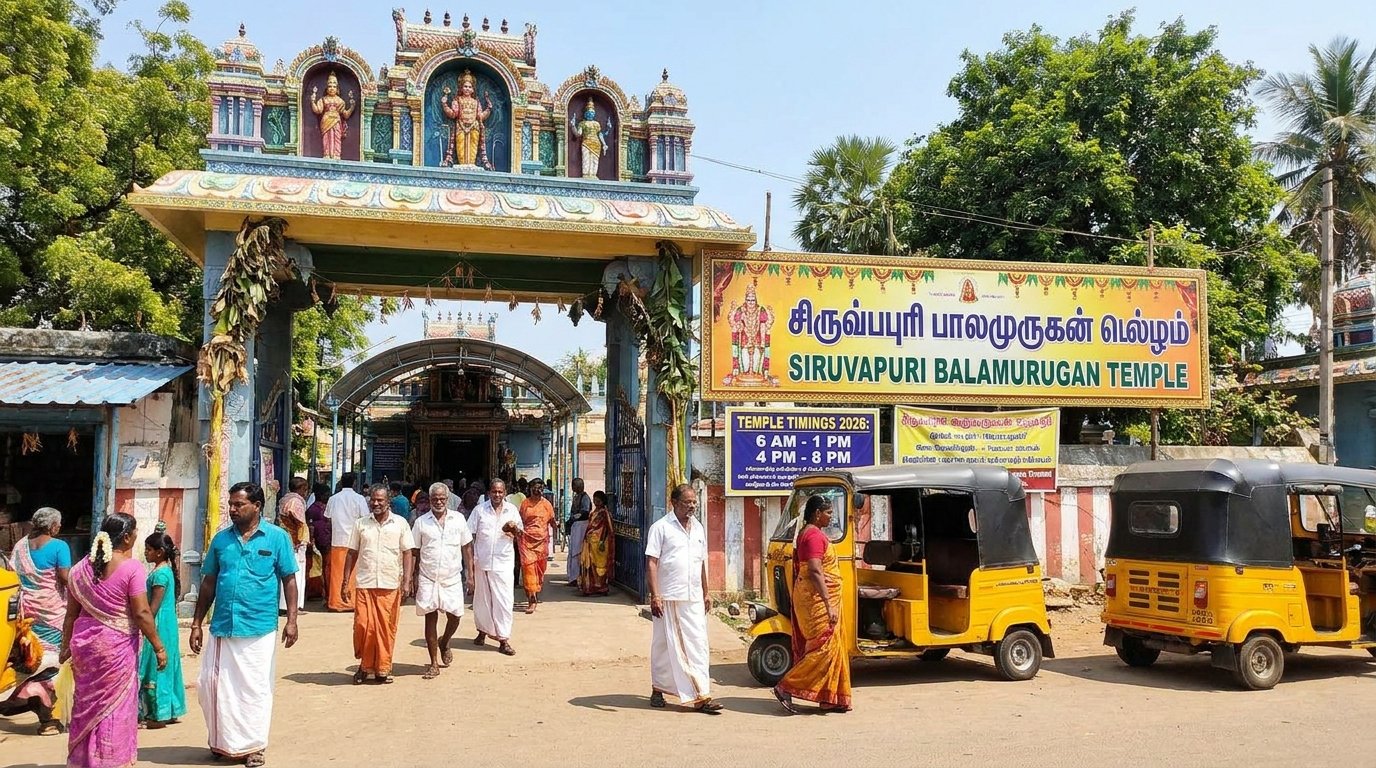
Tamil Nadu is often called the land of temples, and honestly, once you start visiting these places you kind of understand why. Among the countless shrines scattered across the state, the Siruvapuri Balamurugan Temple near Chennai stands out as one of the most beloved pilgrimage spots for devotees of Lord Murugan, especially in his radiant child form known as Balamurugan.
If you’re planning a trip and searching for Siruvapuri Balamurugan Temple timings, history, or how to reach this sacred place, you’ve landed on the right guide.
This article is going to walk you through literally everything from the temple’s 500-year-old legend, daily darshan schedule for 2026, major festivals, architecture, spiritual rituals, and even the practical stuff like booking poojas and travel tips that most guides forget to mention. Let’s get into it.
The temple is open daily for both morning and evening darshan, giving devotees flexible options depending on their schedule and preference.
| Time of Day | Darshan Hours |
|---|---|
| Morning | 6:00 AM – 12:00 PM |
| Evening | 4:00 PM – 8:00 PM |
Morning darshan tends to be quieter and more reflective — good if you want to sit for a bit, do archana, and just soak in the peace without a big crowd pushing you along. Evening hours, on the other hand, get pretty lively with deepa pooja, chanting, and a more communal, energetic vibe. Some devotees genuinely prefer the evening because it feels more festive.
During major occasions like Skanda Shashti, Thaipusam, and Panguni Uthiram, the temple management usually extends the darshan window to handle the extra footfall. If you’re planning to go during one of these dates in 2026, get there early like really early because the queues stretch fast once word gets around.
Quick tips before you go:
Siruvapuri village sits roughly 40 km from Chennai, and the temple → is well connected → by road, rail, and air, so getting there isn’t much of a hassle regardless of where you’re coming from.
The temple is accessible via NH16 (Chennai–Kolkata Highway), and there’s a steady stream of buses, taxis, and auto-rickshaws running from Chennai and the surrounding towns. If you’re driving yourself, parking near the temple premises is decent, not overly crowded on regular weekdays.
Tip: Start out early morning if you’re driving from the city Chennai traffic on NH16 can eat into your travel time surprisingly fast, especially post 9 AM.
Chengalpattu and Chennai Central are the nearest railway stations, both linked well to major cities across Tamil Nadu and beyond. From either station, autos and taxis will get you to the temple without much fuss. This route works best for pilgrims traveling from far-off towns or other states.
Chennai International Airport is about 45 km away, and cabs or ride-hailing apps can take you directly to Siruvapuri. Flyers often club this visit with a broader spiritual tour of nearby Tamil Nadu temples, which honestly makes for a really fulfilling weekend trip.
The temple functions as a vibrant hub for Murugan festivals throughout the year, and each one draws thousands of devotees, particularly from Chennai and nearby districts.
| Festival | Tamil Month | Highlights |
|---|---|---|
| Thaipusam | Thai (Jan–Feb) | Kavadi offerings, processions, special poojas |
| Skanda Shashti | Aippasi (Oct–Nov) | Six-day event commemorating Murugan’s victory over Surapadman |
| Panguni Uthiram | Panguni (Mar–Apr) | Divine wedding of Murugan and Goddess Deivanai |
| Karthigai Deepam | Karthigai (Nov–Dec) | Festival of lights, temple lit with rows of oil lamps |
| Vaikasi Visakam | Vaikasi (May–Jun) | Birth star celebration with abhishekam and prayers |
Skanda Shashti → commemorates → Murugan’s victory over the demon Surapadman, and this particular festival carries deep symbolic weight for devotees seeking courage and protection from negativity. During Thaipusam and Skanda Shashti, devotees carry Kavadi as an act of penance and surrender — it’s physically demanding but spiritually significant, and watching (or participating) is honestly a powerful experience.
Beyond the five big festivals, the temple also observes smaller Murugan-related auspicious days with abhishekam and archana, where devotees pray for success, education, and general well-being of their families.
The Siruvapuri Balamurugan Temple carries a history spanning over 500 years, and its story is deeply tied to Arunagirinathar, the celebrated Tamil saint-poet. Arunagirinathar → composed → the Thiruppugazh hymns, devotional verses in praise of Lord Murugan, and legend says he personally visited Siruvapuri and sang these hymns here, hymns that are still chanted during rituals today.
Local folklore describes an interesting backstory: a group of children accidentally damaged a Shiva Lingam in the region years ago. To make amends, local devotees established a temple in honor of Balamurugan, the youthful form of Murugan believed to forgive innocent mistakes and offer protection.
This damaged Shiva Lingam legend → led to → the establishment of the Balamurugan temple, and over the centuries the shrine grew with support from local rulers and generations of worshippers.
Most guides mention “500 years old” and stop right there, which honestly leaves a lot of curious pilgrims and history buffs unsatisfied. Here’s a deeper look:
Temples in the greater Chengalpattu-Kanchipuram belt, where Siruvapuri is located, were historically patronized across multiple dynastic periods including the later Pallava, Chola, and subsequent Vijayanagara-era chieftains, who were known for endowing smaller regional shrines alongside the larger, more famous temple complexes of Kanchipuram.
While Siruvapuri Balamurugan Temple doesn’t carry the grand inscriptional records of a Chola-built Brihadeeswarar-type structure, its growth mirrors the broader pattern seen across Tamil Nadu a local shrine, born from folk devotion, gradually expanded through community funding, local chieftain patronage, and periodic renovations over centuries.
Records of formal renovation (referred to as kumbhabhishekam in temple tradition) aren’t extensively documented publicly for this particular temple, which is fairly common for smaller regional shrines that don’t fall under direct Archaeological Survey of India protection. What we do know is that the temple’s continued association with Arunagirinathar’s Thiruppugazh tradition places it firmly within Tamil Nadu’s broader Murugan worship network, connecting it culturally (if not architecturally) to larger Arupadaiveedu shrines like Palani and Tiruchendur.
The presiding deity is Lord Murugan in his child form, portrayed young and radiant, holding the divine Vel (spear). The Balamurugan idol → holds → the Vel, symbolizing courage, wisdom, and protection from negativity.
Devotees typically visit seeking:
Families, students, and newlyweds in particular consider this temple a go-to spot for spiritual strength before big life decisions.
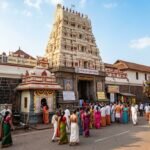
The temple is a solid example of Dravidian architecture, featuring a Rajagopuram decorated with colorful sculptures depicting deities and mythological stories. Inside, you’ll find intricately carved pillars, traditional mandapams, and separate sanctums for Lord Shiva, Goddess Parvati, and Lord Ganesha alongside the main Balamurugan shrine.
The sanctum sanctorum houses the primary idol, usually adorned with flowers, silk garments, and jewellery during major rituals. The Vel remains the visual and spiritual centerpiece, and devotees perform special abhishekam ceremonies to invoke its symbolic power.
This temple is widely regarded as a place of powerful, positive energy where prayers are believed to be answered fairly promptly — which is probably why it draws such a loyal, repeat crowd of devotees, not just first-timers.
Here’s something most competitor articles completely skip over, and it’s genuinely one of the most searched practical questions: how do you actually book a pooja here?
Generally, at temples of this scale, the process works like this:
Since exact pricing and online booking availability can change year to year, it’s always smart to call the temple administration office directly or check with local devotee groups before your visit, especially if you’re traveling from far away and want to plan ahead.
If you’ve got extra time, pair your Siruvapuri visit with a few nearby spots:
It’s located in Siruvapuri village, roughly 40 km from Chennai, Tamil Nadu, and is easily accessible via NH16 or nearby railway stations.
The main deity is Lord Murugan in his youthful child form, popularly known as Balamurugan, holding the sacred Vel.
Morning darshan runs 6:00 AM to 12:00 PM, and evening darshan runs 4:00 PM to 8:00 PM, daily throughout the year.
The temple’s history spans over 500 years, closely tied to saint Arunagirinathar and the Thiruppugazh devotional tradition.
Major festivals include Thaipusam, Skanda Shashti, Panguni Uthiram, Karthigai Deepam, and Vaikasi Visakam, each with distinct rituals.
Folklore says children accidentally damaged a Shiva Lingam nearby, and devotees built the Balamurugan temple as an act of atonement.
You can travel by road via NH16, by train through Chengalpattu or Chennai Central, or by air via Chennai International Airport.
Yes, devotees can book archana and abhishekam at the on-site seva counter, with special packages offered during major festivals.
Modest, respectful clothing is recommended, and photography is restricted inside the sanctum sanctorum.
Yes, it’s a six-day festival commemorating Murugan’s victory over demon Surapadman, drawing large crowds and extended darshan hours.
The Vel represents courage, wisdom, and protection, and it’s the central symbolic element of the Balamurugan idol.
Absolutely, many parents specifically visit to pray for their children’s academic success, health, and overall well-being.
Kanchipuram temples, Thiruvallur Veeraraghava Perumal Temple, Pulicat Lake, and Kapaleeshwarar Temple are all within reach.
Not really, weekday mornings are usually calm and peaceful, while weekends and festival dates see significantly higher footfall.
Early mornings offer peace year-round, while Thaipusam and Skanda Shashti offer the most vibrant, festival-charged atmosphere.