Physical Address
304 North Cardinal St.
Dorchester Center, MA 02124
Physical Address
304 North Cardinal St.
Dorchester Center, MA 02124

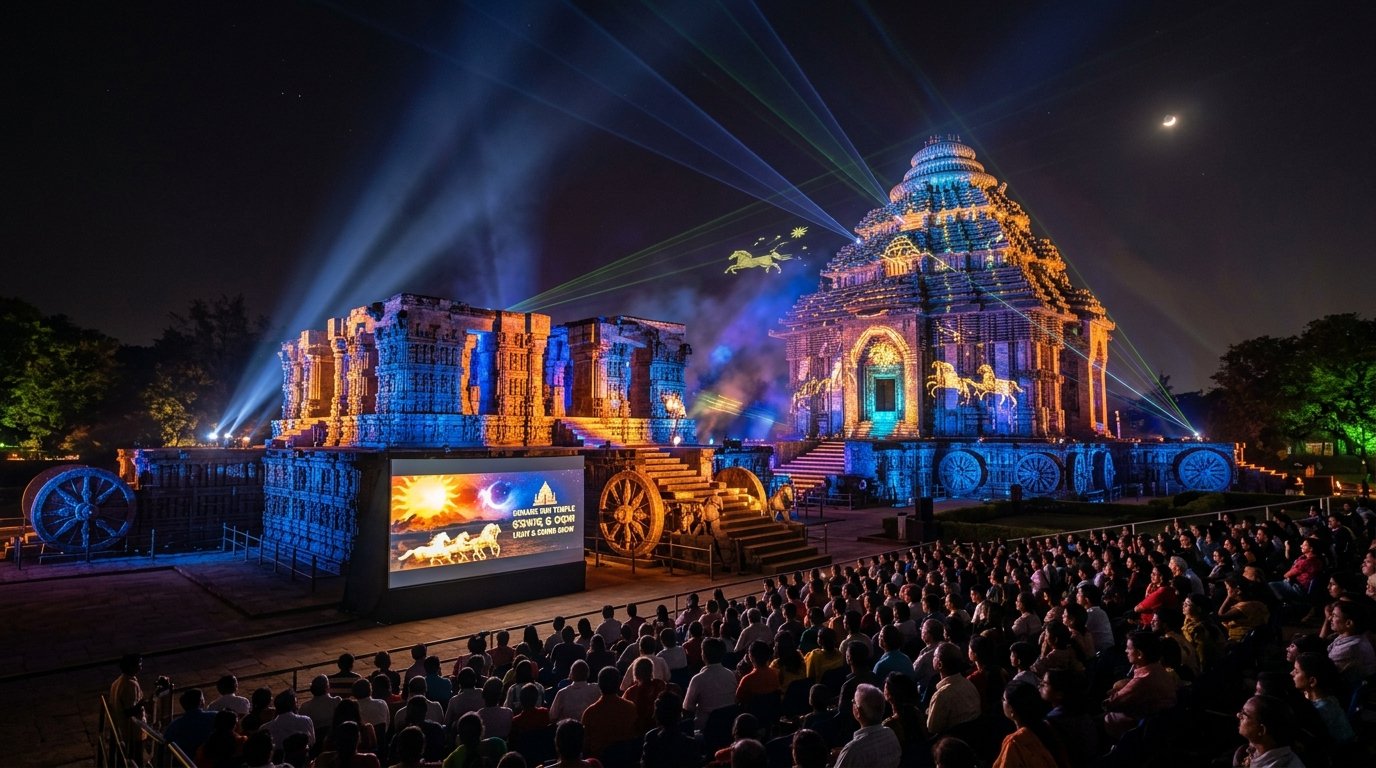
If you’ve ever seen photos of the Konark Sun Temple glowing against a dark sky, you already know why this show is on so many bucket lists. The Konark Sun Temple Light & Sound Show is honestly one of those experiences that photos just don’t do justice to you kinda have to be sitting there, headphones on, watching the stone chariot wheels light up one by one.
This guide walks you through everything, booking, prices, timing, the whole deal, so you don’t end up standing at the gate confused like half the tourists we’ve seen there.
Whether you’re coming from Puri for a day trip or building an entire Odisha itinerary around heritage sites, this write-up covers the practical stuff (tickets, timings, how to reach) and the stuff nobody bothers to explain properly (accessibility, pricing confusion, what’s actually worth your time nearby).
The Konark Sun Temple, a 13th-century marvel built in the shape of a colossal chariot dedicated to the Sun God, becomes something else entirely after dark. Once the sun sets, the monument transforms through a curated sequence of lights, music, and narration that walks visitors through its mythology, its architecture, and the history behind its construction under King Narasimhadeva I.
The Light & Sound Show isn’t just a projection gimmick, it’s actually built around storytelling — the legends of the Sun God Surya, the craftsmanship of the temple’s wheels and horses, and the historical events that shaped Odisha’s coastal heritage.
It’s designed for pretty much everyone: history buffs, families with kids, spiritual travelers, and casual tourists just looking for something memorable to do in the evening.
The show runs twice daily, and timing shifts depending on the season — earlier in winter because it gets dark sooner, later in summer months.
| Season | First Show | Second Show |
|---|---|---|
| March – November | 7:30 PM | 8:20 PM |
| December – February | 6:30 PM | 7:20 PM |
Each performance lasts roughly 40 minutes, so plan your evening around that window. A lot of visitors search for “konark temple light show timings today” right before heading out — honestly, timings don’t change day to day within a season, but weather (heavy rain, for instance) can occasionally push things around, so it’s worth a quick check with the ticket counter or official site on the day of your visit.
Visitor Tip: Get there at least 20–30 minutes before showtime. Seating fills up fast on weekends, and you’ll want a decent spot to actually hear the narration clearly through your headset.
Ticket pricing at Konark works on a tiered system — Indian nationals pay significantly less than foreign visitors, which is standard practice at most ASI-protected monuments across India.
| Ticket Category | Price (INR) |
|---|---|
| Indian Nationals (Temple Entry) | ₹40 |
| SAARC/BIMSTEC Visitors | ₹40 |
| Foreign Nationals | ₹600 |
| Light & Sound Show Entry | ₹30–₹40 (varies by season/booking source) |
| Children under 5 years | Usually free |
A quick heads up here — you’ll notice a lot of blogs (including some competitor guides) quote wildly different numbers for the light and sound show konark ticket, some say ₹30, others say ₹70. This inconsistency is real and it happens because rates get revised periodically and aren’t always updated everywhere at once.
Our honest advice: treat the numbers above as a general ballpark and always confirm the exact price on the official ASI or Odisha Tourism website before you travel, since we can’t guarantee live pricing accuracy from here.
Visitor Tip: The show entry ticket is separate from the general temple entry ticket. Don’t assume one covers the other, we’ve seen people get caught out at the gate over this exact mix-up.
Booking ahead is genuinely the smarter move, especially if you’re visiting during peak season (October–March) or on a weekend.
Booking Options:
Pro Tip: Book at least a day in advance if you can, particularly around weekends or festival season. Seating is capped at roughly 200–250 people per show, and once it’s full, it’s full — there’s no standing-room option here.
One of the things that genuinely sets this show apart is the language accessibility. Performances are offered in English, Hindi, and Odia, and visitors select their preferred language when they book their headset.
Every seat comes equipped with a wireless headphone, individually synced to your chosen language channel. This means the narration is crystal clear no matter where you’re sitting, and it doesn’t disturb the peace of the monument with loudspeakers blasting across the complex — honestly a smart bit of design when you think about it.
For international travelers, this multilingual setup means the myths, architectural details, and historical context of the temple land properly, without losing anything in translation confusion.
Getting to Konark isn’t complicated, connectivity from major Odisha cities is genuinely solid.
Time your travel so you’re arriving with a buffer, roads near coastal Odisha can get a bit congested during evening rush around tourist season, and you don’t want to be rushing in right as the show’s about to start.
Konark Sun Temple → transforms into → a Light & Sound spectacle after sunset, and that transformation is honestly what makes this experience stand out from a typical daytime temple visit. A few reasons this show has built such a strong reputation:
October to March is the sweet spot — the weather cools down, evenings are pleasant, and you won’t be sweating through the show like you might in peak summer.
If your travel dates are flexible, try to align your visit with December, when the Konark Dance Festival takes place nearby. Watching classical Odissi and other Indian dance forms performed against the backdrop of the temple, then catching the light show afterward, makes for a genuinely unforgettable cultural evening.
This is a part most guides skip entirely, and it shouldn’t be. If you’re traveling with elderly family members, or anyone who needs mobility assistance, here’s what you should realistically expect:
Our honest take: if accessibility is a major concern for your group, it’s worth calling ahead or checking with a local guide before your visit, since on-ground facilities can vary and aren’t always reflected accurately online.
We touched on this earlier, but it deserves its own space because it genuinely trips people up. Different sources quote different numbers for the konark sun temple light show tickets, and this isn’t really anyone being dishonest, it mostly comes down to:
The safest move, always, is checking the official ASI e-ticketing portal or Odisha Tourism website on the actual day you’re planning to book. Don’t rely fully on any single blog’s number, ours included, treat these figures as a helpful estimate rather than gospel.
Since you’re already making the trip, it’s worth building a bit more into your itinerary.
You can book through the ASI e-ticketing portal or the official Odisha Tourism website. Online booking secures your preferred show timing and avoids long queues at the venue.
Two shows run daily: 6:30 PM & 7:20 PM (December–February) and 7:30 PM & 8:20 PM (March–November). Each lasts about 40 minutes.
Indian nationals pay around ₹40 for temple entry, foreign nationals around ₹600, plus a separate show entry fee. Always verify current rates on the official site before visiting.
Yes, the show runs daily throughout the year, weather permitting. Occasional cancellations due to heavy rain are possible but rare.
The show is narrated in English, Hindi, and Odia, delivered through wireless headphones synced to your chosen language at booking.
Each performance runs for approximately 40 minutes, covering the temple’s mythology, architecture, and historical background.
Yes, on-site booking is available, but seating is limited to roughly 200–250 people per show, so online booking is strongly recommended during peak season.
Konark is about 35 km from Puri (roughly 1 hour) and 65 km from Bhubaneswar (about 1.5–2 hours) by road.
Yes, it’s family-friendly and educational, though the open-air seating lacks dedicated accessible arrangements, so plan ahead if mobility is a concern.
October to March offers the most pleasant weather, cool evenings, and comfortable seating conditions for the full 40-minute performance.
Yes, every seat includes a wireless headset tuned to your selected language, ensuring clear narration without disturbing others nearby.
Yes, if you visit in December, you can catch the Konark Dance Festival earlier in the evening and the Light & Sound Show right after.
Carry a light jacket for winter chill, water for warmer months, and avoid using flash photography during the performance itself.
Yes, Chandrabhaga Beach, the Konark Museum, and Ramachandi Temple are all within a short drive and make great additions to your itinerary.
Prices get periodically revised by ASI and state tourism boards, and not every website updates simultaneously, always confirm on the official portal before booking.