Physical Address
304 North Cardinal St.
Dorchester Center, MA 02124
Physical Address
304 North Cardinal St.
Dorchester Center, MA 02124

If you’re planning a trip to one of Andhra Pradesh’s most revered shrines, you’ve probably typed “Kanipakam Vinayaka Temple” into Google more than once trying to nail down the timings, darshan process, and the actual story behind this place.
Honestly, this temple isn’t just another stop on a pilgrimage circuit it’s one of the few shrines in South India where devotees genuinely believe the deity is still “growing.”
In this guide, we’ll walk you through everything, from daily rituals to festival dates, booking steps, and the fascinating legend that put Kanipakam on the map.
Kanipakam Vinayaka Temple is located in the Chittoor district of Andhra Pradesh, about 11 kilometers from Chittoor town itself. So when people ask “what’s the kanipakam vinayaka temple place exactly,” the simple answer is it sits along the Bahuda River, in a small town also called Kanipakam (sometimes spelled Kanipakkam), which is fairly easy to access from both Chittoor and Tirupati.
The temple’s location plays a pretty big role in its popularity too. Since Tirupati is only 68 kilometers away, a huge chunk of devotees visiting the famous Tirumala Venkateswara Temple make a detour to Kanipakam as well.
This makes it a natural addition to any Andhra Pradesh temple tour, and honestly it doesn’t add much extra travel time given how close the two shrines are.
The name Kanipakam vinayaka temple name itself has an interesting origin locals say it’s derived from the Telugu words “Kani” (meaning field or land) and “Pakam” (meaning stream or canal), roughly translating to “stream near the field.”
This ties directly into the temple’s founding legend, since the idol was reportedly discovered near an irrigation well in agricultural land, which we’ll get into below.
Kanipakam Vinayaka Temple’s history dates back over a thousand years, and the story attached to it is one of the more unique origin tales you’ll come across in South Indian temple lore.
Legend says three brothers one blind, one deaf, and one mute were digging a well to solve a water shortage in the village. While digging, they struck something hard, and to their shock, water gushed out along with what turned out to be a Swayambhu (self-manifested) idol of Lord Ganesha.
The moment the brothers touched the water associated with the idol, all three were miraculously cured of their disabilities. Word spread fast, and the well became sacred, now known as the Kanipakam pushkarini or temple tank.
Here’s the part that really makes this temple stand out the idol is said to be continuously growing in size. Historical records and local priests claim the Ganesha idol has visibly increased over the centuries, and because of this, the idol’s exact measurements have never been officially recorded (devotees believe attempting to measure it invites misfortune).
Whether you take this literally or as symbolic folklore, it’s one of the reasons Kanipakam draws such devoted crowds year after year.
| Period | Historical Significance |
|---|---|
| 11th Century | Original shrine believed to be constructed, linked to Chola-era influence |
| 1336 CE | Temple renovated and expanded under the Vijayanagara Empire |
| 1996 | Major renovation and gopuram (tower) construction completed |
| Present Day | Administered under Andhra Pradesh’s state endowment department |
The importance of Kanipakam Vinayaka Temple goes beyond just its miraculous origin story. It’s considered one of the most powerful Ganesha shrines in India, and here’s why devotees hold it in such high regard:
If you’re googling “kanipakam temple timings,” here’s the direct answer — the temple is open from 6:00 AM to 9:00 PM on weekdays (Monday to Saturday), and from 6:30 AM to 9:30 PM on Sundays.
Morning darshan generally runs until 1:00 PM, followed by a break from 1:00 PM to 4:00 PM, and then evening darshan resumes until closing time. Plan for 2 to 3 hours to complete your visit comfortably, especially if you’re doing archana or a seva alongside the darshan.
| Ritual | Approximate Time |
|---|---|
| Suprabatham (wake-up ritual) | 4:00 AM |
| Maha Harathi | 6:00 AM |
| Abhishekam (1st) | 6:00 AM |
| Aarti (following 1st abhishekam) | 7:00 AM |
| Abhishekam (2nd) | 12:00 PM |
| Aarti (following 2nd abhishekam) | 12:30 PM |
| Abhishekam (3rd) | 6:00 PM |
| Aarti (following 3rd abhishekam) | 7:00 PM |
The temple also conducts special sevas like Panchamruthabhishekam (bathing the deity in five sacred substances — milk, curd, honey, ghee, and sugar), Palabhishekam (milk abhishekam), and Ganapathi Homam (a fire ritual dedicated to Lord Ganesha) at designated slots throughout the day.
Archana can be performed by devotees during regular operating hours without much of a wait usually, unless it’s a festival day.
A lot of first-time visitors get confused between the different darshan categories, so let’s break it down simply.
The temple offers standard (free) darshan as well as special/express darshan for those who want to skip the longer queues. This is honestly a lifesaver during weekends and festival rush.
If you prefer booking in person, counters are available near the main temple entrance where you can register for sevas and get tokens for special darshan on the same day, subject to availability. Do note, prices and available slots can change from what’s listed online, so it’s always smart to double check closer to your travel date.
Ticket prices generally range anywhere from free (general darshan) up to a few hundred rupees for premium sevas like Kalyanam or Panchamruthabhishekam — but honestly these amounts fluctuate, so cross-verifying on the official portal before you travel is your best bet.
Since kanipakam temple distance is one of the most searched queries, here’s a quick reference table for travelers coming from nearby cities.
| From | Approximate Distance |
|---|---|
| Chittoor | 11 km |
| Tirupati | 68 km |
| Bengaluru | 130 km |
| Chennai | 165 km |
| Vellore | 60 km |
The nearest railway station is Chittoor Railway Station, and the closest airport is Tirupati Airport (TIR), which has decent domestic connectivity. From either point, taxis and local buses run frequently to Kanipakam, and the roads are generally in good condition.
Vinayaka Chavithi (Ganesh Chaturthi) is, without question, the biggest celebration at the temple, drawing massive crowds annually as devotees celebrate the birth of Lord Ganesha with elaborate rituals, processions, and extended darshan hours.
But there’s more to the temple’s festival calendar than just that one occasion — something many guides gloss over entirely:
During Vinayaka Chavithi especially, expect the temple to extend its operating hours, and darshan queues can stretch for several hours, so arriving early morning (before 6 AM) is strongly recommended if you’re visiting during this period.
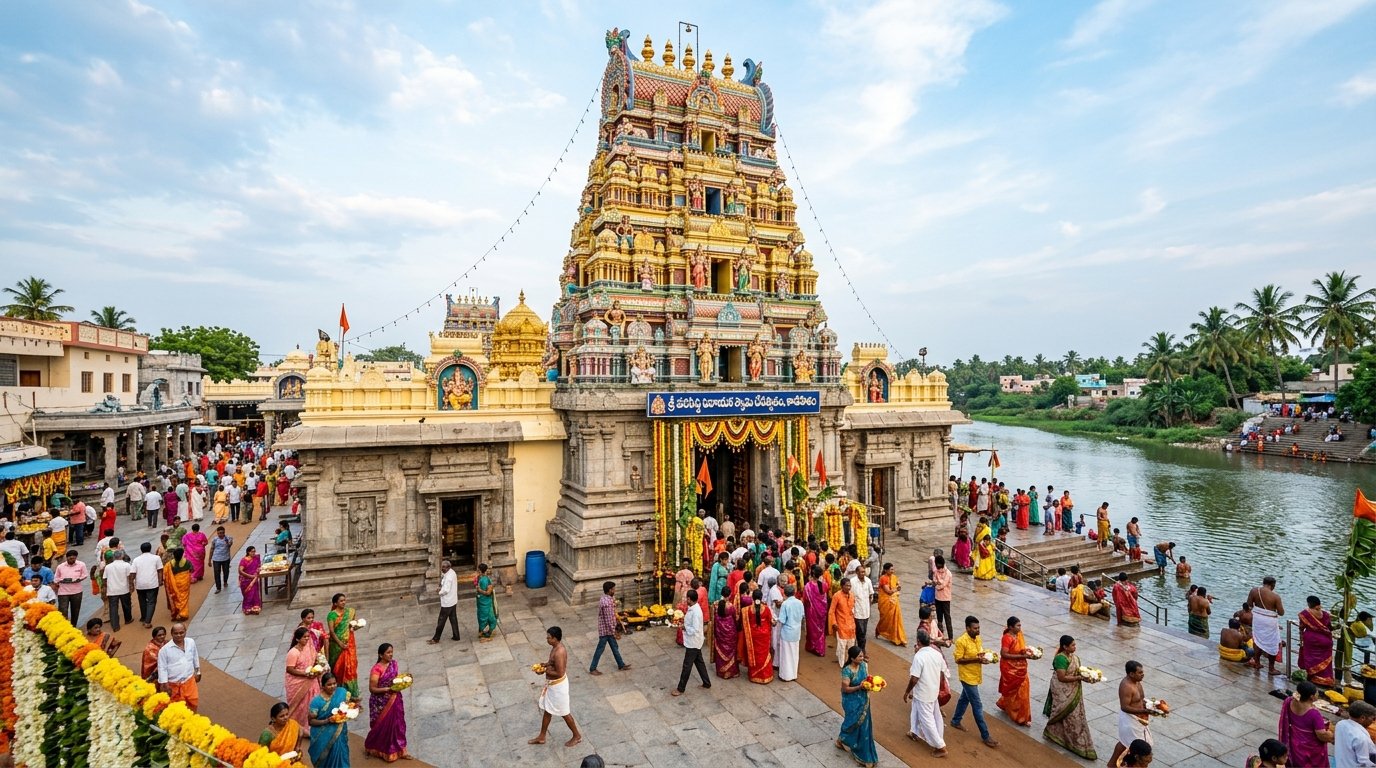
While we can’t embed actual Kanipakam Vinayaka Temple photos here, if you search online you’ll typically find images showcasing the towering Rajagopuram (main entrance tower), intricately carved pillars in the mandapams, the sacred pushkarini (temple tank) where the idol was originally discovered, and the sanctum where the swayambhu Ganesha idol is enshrined.
Photography is generally restricted inside the main sanctum, though the outer temple complex and gopuram are usually fair game for pictures just keep an eye out for signage since rules do get updated from time to time.
A few things worth keeping in mind before you set off:
Since you’re already in the region, it’s worth combining your trip with a few other spots:
Its Swayambhu Ganesha idol is believed to be continuously growing in size, and the temple is historically known as a place where devotees swore oaths, believing lies couldn’t be told before the deity.
The temple opens 6:00 AM–9:00 PM (Mon–Sat) and 6:30 AM–9:30 PM (Sunday), with a midday break from 1:00 PM to 4:00 PM between morning and evening darshan.
You can book online through the official temple/endowments website by selecting your seva, date, and time slot, or opt for offline booking at counters near the temple entrance on arrival.
The idol was discovered by three disabled brothers digging a well, who were miraculously cured upon touching the sacred water — this is considered the temple’s founding miracle.
Yes, local legend and temple records describe the idol’s discovery during a well-digging exercise over a thousand years ago, tied to the healing of three brothers with different disabilities.
Different traditions honor different forms, but the Swayambhu (self-manifested) Ganesha at Kanipakam is considered exceptionally powerful due to its miraculous, naturally-occurring origin.
Besides the main sanctum, don’t miss the sacred pushkarini (tank), the Rajagopuram entrance tower, and the intricately carved mandapams within the temple complex.
He’s the remover of obstacles, son of Shiva-Parvati, rides a mouse, has an elephant head, loves modaks, is worshipped first before any ritual, has multiple names, symbolizes wisdom, has Ganesh Chaturthi dedicated to him, and appears in various forms across India.
Historical estimates place its origin around the 11th century, though the temple saw significant expansion and renovation during the Vijayanagara period in the 14th century.
This refers to the famous 1995 “Milk Miracle” phenomenon across India, where Ganesha idols were widely reported to absorb offered milk — a widely discussed event, though scientifically debated.
It’s situated in Chittoor district, Andhra Pradesh, roughly 11 km from Chittoor town and 68 km from Tirupati, along the banks of the Bahuda River.
The distance is approximately 68 kilometers, making it a popular add-on stop for pilgrims already visiting the Tirumala Venkateswara Temple nearby.
Photography is generally restricted inside the main sanctum sanctorum, but visitors can usually photograph the outer complex, gopuram, and tank area, subject to current temple rules.
It’s the temple’s biggest annual festival, celebrating Lord Ganesha’s birth with extended rituals, processions, and significantly higher devotee turnout than regular days.
Yes, most sevas including special darshan, Panchamruthabhishekam, and homams can be booked online via the official portal, alongside offline booking options at the temple.
https://templetimingsnow.com/sri-kalahasti-temple-darshan-timings/
https://templetimingsnow.com/rahu-ketu-pooja-at-sri-kalahasti-temple/
https://templetimingsnow.com/kateramma-temple/
https://templetimingsnow.com/rahu-kalam-yamagandam-kuligai-timings-by-day/