Physical Address
304 North Cardinal St.
Dorchester Center, MA 02124
Physical Address
304 North Cardinal St.
Dorchester Center, MA 02124

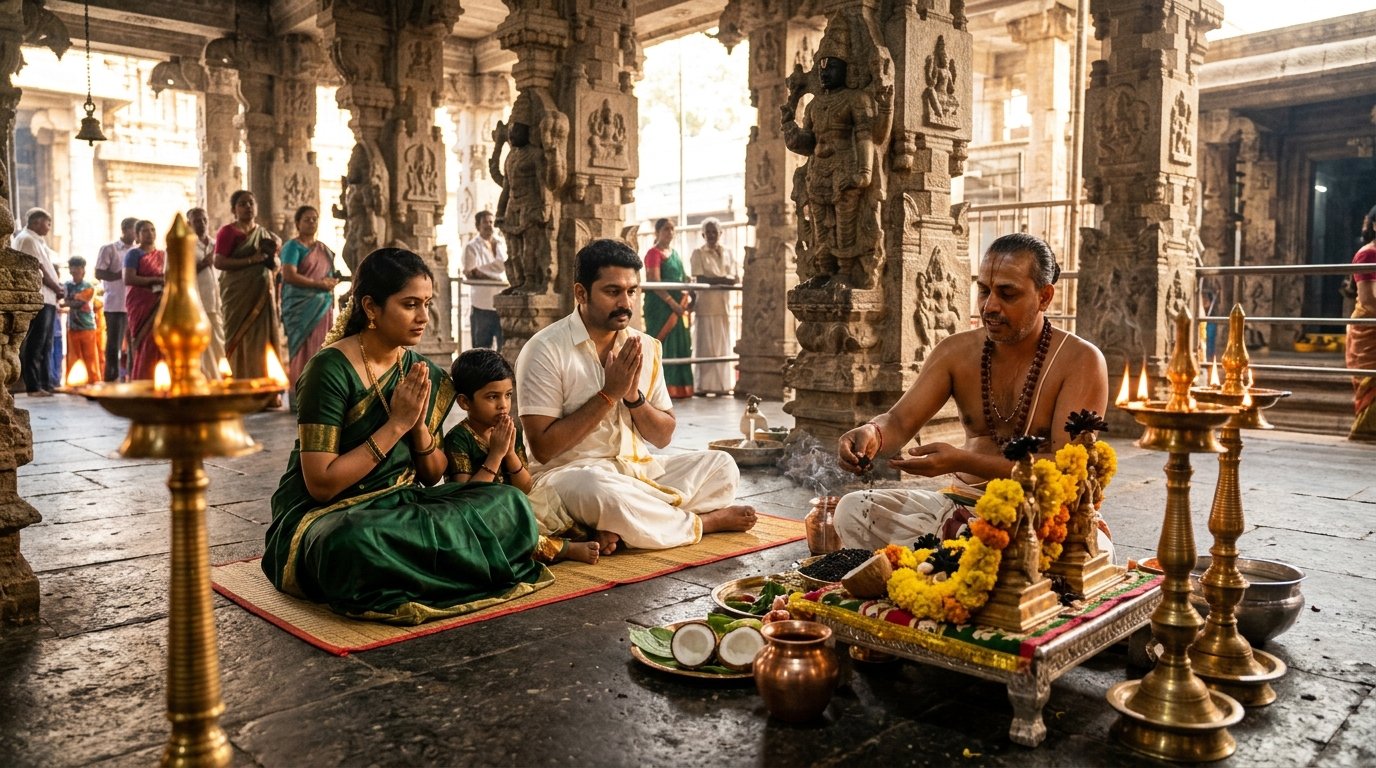
If you’ve been searching for rahu ketu pooja guidance because Rahu or Ketu is troubling your horoscope, you’re honestly not alone thousands of devotees head to Srikalahasti every single month chasing the same relief.
Sri Kalahasti Temple, tucked near the Swarnamukhi river in Andhra Pradesh, is widely regarded as the most powerful destination in South India for Rahu-Ketu dosha remedies.
This guide walks you through srikalahasti pooja timings, ticket prices, the online booking process, and the exact ritual steps so you don’t land up confused at the counter like a lot of first-timers do.
Whether you’re planning a quick day trip from Tirupati or a dedicated pilgrimage, this article covers everything — pricing, dress code, best days, and even a few things competitors’ guides skip entirely, like what happens to your idols after the pooja is over.
| Detail | Information |
|---|---|
| Temple Name | Sri Kalahasteeswara Temple, Srikalahasti, Andhra Pradesh |
| Main Deity | Lord Shiva (Sri Kalahasteeswara) and Goddess Gnana Prasunambika Devi |
| Special Pooja | Rahu Ketu Dosha Nivarana Pooja |
| Pooja Duration | 30–45 minutes (ritual only, allow 2 hours total) |
| Daily Timings | 6:00 AM – 5:00 PM |
| Ideal Days | Rahu Kalam slots, Sundays, Tuesdays, Amavasya |
| Ticket Cost Range | ₹500 to ₹5000 depending on seating category |
| Dress Code | Traditional attire, black clothing not allowed |
| Online Booking | AP Endowments temple portal + official Devasthanam site |
These are the basics most pilgrims want first, so getting them out of the way early just makes sense before we go deeper into why this temple is so special in the first place.
Devotees perform Rahu Ketu Pooja at Sri Kalahasti to neutralize the negative planetary influence caused by Rahu and Ketu, the two shadow planets in Vedic astrology.
This ritual is believed to remove Rahu-Ketu Dosha, Naga Dosha, and Kaal Sarpa Dosha the doshas most commonly blamed for delayed marriage, career stagnation, health worries, or a general “stuck” feeling in life.
Sri Kalahasti is known as the Kailasa of the South, and it’s genuinely one of India’s most sacred Shiva temples. What makes it stand apart, and this is a fact most people don’t realize until they visit, is that the Rahu Ketu Pooja continues even during solar and lunar eclipses and on Amavasya, when almost every other temple across the country shuts its doors.
That single detail is basically why pilgrims travel hundreds of kilometers just to book a slot here rather than at a temple closer to home.
Before you step in for the ritual though, there are a handful of dress code and entry rules you’ll need to follow — nothing complicated, just traditional attire and a bit of discipline while inside the mandap.
The significance of Rahu Ketu Pooja lies in its ability to correct planetary afflictions that Vedic astrology says influence one’s destiny directly. Rahu and Ketu → occupy sensitive houses in a horoscope → and cause delays in marriage, childbirth, or finances that’s the basic cause-and-effect logic most astrologers explain to devotees before recommending this pooja.
What’s genuinely unique about Sri Kalahasti is that the ritual happens near the Vayu Lingam, one of the five Pancha Bhoota Lingas representing the air element (the other four being at Chidambaram, Kanchipuram, Tiruvanaikaval, and Tiruvannamalai).
According to the Skanda Purana, this is the exact spot where Lord Shiva granted liberation to Rahu and Ketu themselves, which is why the temple carries the title Dakshin Kailasam.
Performing the pooja during Rahu Kalam or on Amavasya days is generally considered the most beneficial timing, though honestly your birth star (nakshatra) day works just as well if that’s more convenient for your travel plans.
The srikalahasti rahu ketu pooja tickets price ranges from ₹500 for a general seat up to ₹5,000 for the extended Eka Varam ritual. Here’s the full breakdown so you know exactly what you’re paying for before you reach the counter.
| Ticket Type | Location | Price (₹) | Includes |
|---|---|---|---|
| General Ticket | Open Mandap | 500 | Basic pooja materials and priest service |
| Special Ticket | South Hall | 750 | Closer seating with individual priest |
| VIP Ticket | North Hall | 1500 | Personalized pooja, seating near main shrine |
| Premium Ticket | Air-Conditioned Hall | 2500 | Family seating with audio guide |
| Eka Varam Pooja | Main Mandap | 5000 | Extended Rahu-Ketu dosha nivarana ritual |
A quick note here — children below 12 years are not permitted to sit for the pooja itself, so plan accordingly if you’re traveling with young kids. Also, prices do get revised occasionally by the Devasthanam, so treat this table as a solid reference point rather than gospel truth on the exact day you visit.
The Rahu Ketu Pooja procedure at Sri Kalahasti follows a fixed sequence that the temple priests guide you through, no prior mantra knowledge required. Here’s how it actually unfolds:
That’s basically the entire flow, and it’s honestly not as intimidating as it sounds once you’re actually sitting there with everyone else chanting along.
If you’ve never done this pooja before, here’s roughly what your two-hour window looks like in practice: arrival and parking (90 minutes before slot), ticket verification, kit collection, the cleansing tap, seating allocation on the marble floor, sankalpam (where the priest names your gotra and nakshatra), dhyana mantra chanting for about 10 minutes, offerings for another 10, mantra recitation covering 108 Rahu and 108 Ketu beejaksharas, and finally aarti with tirtham and vibhuti.
On a normal weekday the whole thing wraps in around 2 hours including darshan; on Mondays or festival days budget closer to 3-4 hours since the crowd builds up fast.
Rahu Ketu Pooja at Sri Kalahasti runs daily from 6:00 AM to 5:00 PM, split across eight batches through the day. The srikalahasti temple rahu ketu pooja timings for each slot are:
The best days to book, according to most priests and long-time devotees, are Sundays, Tuesdays, and Amavasya, since these align with Rahu Kalam timing windows. And here’s the part that genuinely sets this temple apart from nearly every other Rahu-Ketu destination the pooja continues even during eclipses, with a special Grahana Kala Abhishekam performed right at the eclipse midpoint.
Most temples across India close their doors during eclipse hours; Srikalahasti deliberately stays open because the eclipse period is considered spiritually potent here, not inauspicious.
If you’re checking kalahasti temple pooja timings for a specific festival day like Vinayaka Chaturthi or during the Pitru Paksha fortnight, expect these to shift slightly or get extended due to heavier footfall, so it’s worth a quick call to the temple office before you finalize travel.
The srikalahasti temple rahu ketu pooja tickets online booking process is fairly straightforward once you know which portal to use. Book through the official Sri Kalahastheeswara Swamy Vari Devasthanam website (srikalahasthitemple.org) or the AP Endowments Department portal (aptemples.ap.gov.in).
That said, in practice, most Rahu Ketu Pooja tickets are still issued directly at the temple seva counters, and same-day tickets are pretty much the norm for regular days.
Here’s the general srikalahasti temple rahu ketu pooja online booking timings flow:
For anyone wondering about the srikalahasti temple sevas online booking for other rituals (abhishekam, darshan, accommodation), the same AP Endowments portal handles most of it, though availability can vary by season. One tip that genuinely matters: on Amavasya days, try to book at least 7 to 10 days in advance, since tickets sell out surprisingly fast and walk-in queues stretch well past the parking lot.
For the srikalahasti rahu ketu pooja timings contact number, it’s best to reach out directly through the AP Endowments helpline or the temple’s official office line, since counter numbers occasionally change and we’d rather you get the current one from the source than an outdated one here.
Most articles stop at “take the idols home,” which honestly leaves a lot of devotees confused a few months down the line. So here’s the fuller picture. The silver-coated Rahu and Ketu idols you receive are meant to be placed in your home pooja room, ideally facing south, since that direction is traditionally associated with these two planets. Do not gift or lend these idols to anyone else they carry the energy of your specific sankalpam (your personal resolution made during the ritual), and agamic tradition treats them as tied to your intent alone.
Over time, if the idols get damaged, tarnished, or you simply feel it’s time to let them go, the standard practice is visarja respectfully immersing them in a flowing river or, if that’s not accessible, returning them to the temple during your next visit rather than discarding them in household trash.
Many devotees choose to redo the pooja once every six months or once a year and simply add a fresh set, keeping the older idols alongside rather than replacing them immediately. There isn’t a hard rule on frequency, but priests generally recommend a gap of at least six months between repeat poojas for the ritual to hold meaning rather than becoming routine.
Generic advice says “do it on Amavasya” or “on your birth star day,” but that’s only half the story. If you want the pooja to genuinely align with your chart, the better approach is to check your Rahu Mahadasha or Antardasha period with a qualified astrologer first this is the phase where Rahu’s influence is strongest in your life, and performing the pooja during this window is considered far more effective than an arbitrary calendar date.
Similarly, if your horoscope shows Kaal Sarpa Dosha (where all seven other planets sit between Rahu and Ketu), the timing consideration shifts slightly, and many priests recommend combining both poojas on the same visit rather than doing them months apart.
A simpler rule of thumb that most temple priests here actually give out: your Nakshatra day (the day ruled by your birth star) combined with a Tuesday or Sunday gives you a reasonably strong, personalized window without needing a full astrological consultation. It’s not as precise as a proper Dasha analysis, but it’s a practical middle ground for devotees who can’t access a personal astrologer before their trip.
Devotees often ask why they should travel specifically to Srikalahasti instead of a nearer temple. Three things really do set it apart: the eclipse-day pooja availability, the presence of the Vayu Lingam (one of only five Pancha Bhoota shrines in the country), and the sheer volume of daily batches eight slots running from 6 AM to 5 PM, compared to limited or appointment-only slots elsewhere.
The Andhra Pradesh Endowments Department specifically lists this temple for Rahu-Ketu Sarpa Dosha Nivarana, which adds a layer of institutional credibility that a lot of smaller regional temples simply don’t have.
Yes, it’s considered one of the most powerful locations in India for this pooja because it’s performed near the Vayu Lingam and continues even during eclipses, unlike most other temples.
Ticket prices range from ₹500 for a general seat up to ₹5,000 for the extended Eka Varam pooja, with mid-tier options at ₹750, ₹1,500, and ₹2,500 depending on seating.
Buy a ticket, collect your pooja kit, cleanse at the designated tap, sit facing north, follow the priest’s mantra chanting, offer flowers and milk, then keep the silver idols for home.
Sri Kalahasti Temple in Andhra Pradesh is widely regarded as the top choice, thanks to its Vayu Lingam, eclipse-day availability, and Skanda Purana connection to Rahu-Ketu liberation.
It’s not mandatory, but many devotees prefer a fresh bath after returning home as a personal cleansing practice, especially if they plan to visit another temple the same day.
Traditional attire in light or neutral colors is recommended. Black clothing is strictly discouraged for this pooja, as it’s considered inauspicious for the ritual.
Take darshan of Lord Shiva and Goddess Gnana Prasunambika Devi right after the pooja, and most priests advise against visiting other temples for the rest of that day.
Yes, absolutely. Sri Kalahasti is only about 36 km, roughly a 50-minute drive, from Tirumala, making a combined trip very common among pilgrims.
It’s usually done as a couple or per individual depending on the ticket type booked, but the Premium and Eka Varam tiers allow family group seating together.
No, you don’t leave your clothes. However, footwear must be left outside at the designated stand before entering the mandap area for the ritual.
It’s famous because the ritual is performed at the Vayu Lingam, one of the five Pancha Bhoota shrines, and the temple stays open even during solar and lunar eclipses.
Yes. Srikalahasti is one of the very few temples in India open during eclipses, and many devotees consider this timing to be even more spiritually powerful.
Yes, women can perform the pooja, except during menstruation days, when it’s traditionally advised to postpone the ritual to a later date.
Yes, both rituals can be performed on the same day at Srikalahasti with the priest’s guidance, since they address related but distinct planetary dosha conditions.
Yes, foreign devotees are welcome and just need to show passport ID at the ticket counter. Some priests can offer English guidance if requested in advance.
https://templetimingsnow.com/mantralayam-raghavendra-swamy-mutt-timings/
https://templetimingsnow.com/kanipakam-vinayaka-temple-timings/
https://templetimingsnow.com/padmavathi-ammavari-temple-timings/
https://templetimingsnow.com/thiruthani-murugan-temple-timings/