Physical Address
304 North Cardinal St.
Dorchester Center, MA 02124
Physical Address
304 North Cardinal St.
Dorchester Center, MA 02124

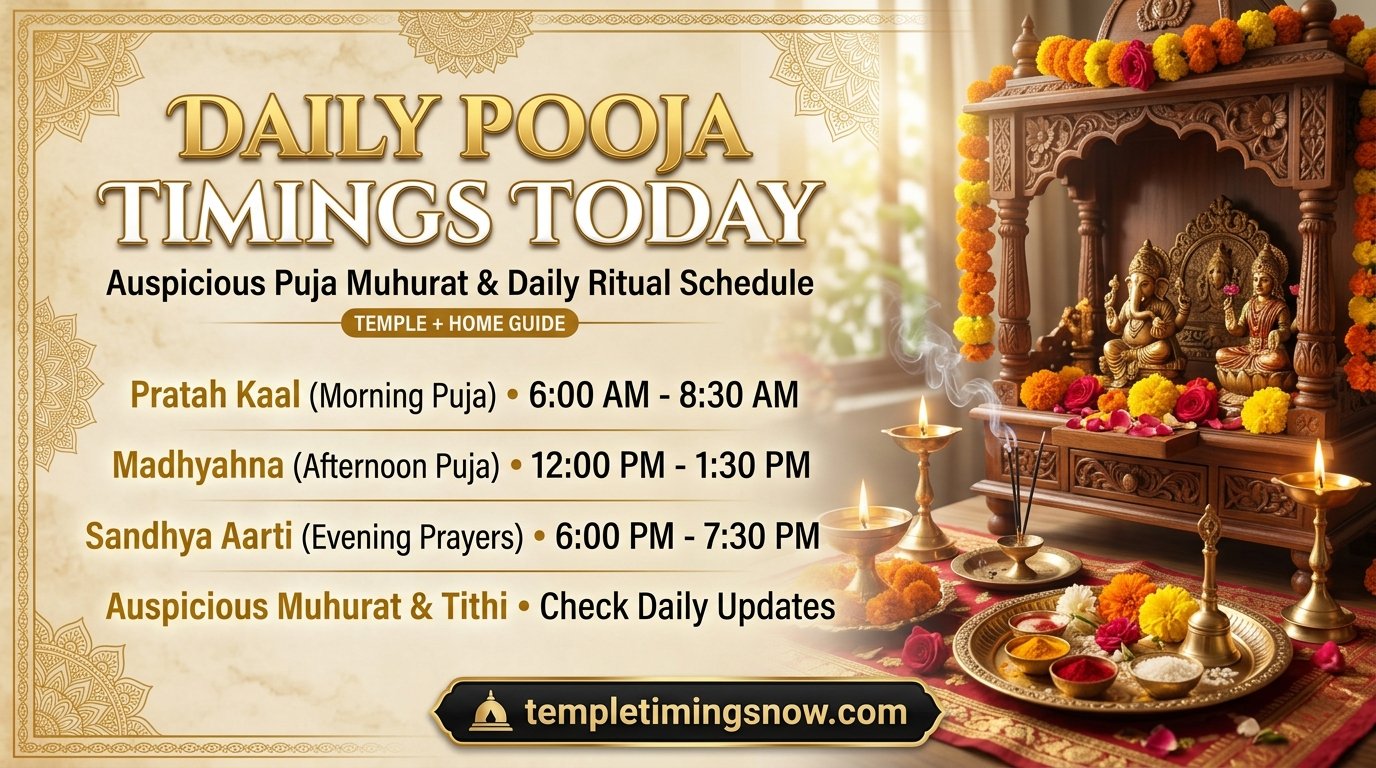
You wake up, bath done, diya ready, and then the question hits you: is this actually the right time to start? Getting the daily pooja timings today right matters to a lot of families, whether you’re planning a trip to a famous temple or just lighting the lamp in your home shrine.
This guide covers the auspicious puja muhurat, the full daily ritual schedule of Shri Kshetra Dharmasthala, home puja timings, Lakshmi and Varalakshmi pooja, and even Vadakkunnathan Temple, all in one place so you dont have to hop between ten tabs.
Pooja timings today depend on two things: your location and the day’s Panchang. For temples, the schedule is fixed and published by the temple itself. For home worship, the best windows are Brahma Muhurat (roughly 1 hour 36 minutes before sunrise) for morning pooja, and Pradosh Kaal (just after sunset) for evening pooja.
Temples follow a fairly steady nitya pooja routine every day, with changes only on festivals, eclipses or special occasions. Your home pooja is more flexible, but picking an auspicious slot and avoiding Rahu Kalam gives most people extra peace of mind.
Dharmasthala pooja timings run from 6:30 am to 9:30 pm, with a temple closure between 2:30 pm and 5:00 pm. Shri Kshetra Dharmasthala, in Dakshina Kannada, Karnataka, follows the schedule below every day, and thousands of pilgrims plan their visit around it.
| Time | Pooja / Darshan / Seva |
|---|---|
| 6:30 am – 11:00 am | Sarva Darshan |
| 8:30 am – 10:30 am | Shatharudra Abhisheka |
| 11:00 am – 11:30 am | Sahasra Namarchana |
| 11:30 am – 12:00 pm | Naivedyam |
| 12:00 pm – 12:15 pm | Maha Pooja |
| 12:10 pm | Nithyabali |
| 12:15 pm – 2:30 pm | Sarva Darshan |
| 2:30 pm – 5:00 pm | Temple closed |
| 5:00 pm | Temple reopens |
| 5:00 pm – 8:40 pm | Sarva Darshan |
| 8:30 pm – 8:45 pm | Maha Pooja |
| 8:45 pm | Nithyabali |
| 9:30 pm | Temple closing time |
One small thing you might notice, the afternoon Nithyabali is listed at 12:10 pm, slightly before the Maha Pooja slot ends. Thats how the temple publishes it, so just reach a bit early and follow the priests’ lead.
Dharmasthala darshan timings are split into three Sarva Darshan windows: 6:30 am to 11:00 am, 12:15 pm to 2:30 pm, and 5:00 pm to 8:40 pm. Sarva Darshan simply means general darshan open to every devotee, no special ticket needed.
If you want a calmer visit, the early morning window is usually the best. The late morning gets busy around the Shatharudra Abhisheka, and weekends, school holidays and festival days can bring really long queues. For Dharmasthala temple darshan timings on big occasions like Laksha Deepotsava, always double check with the temple office first.
Dharmasthala timings today are normally the same as the standard schedule above, because the temple runs a fixed daily routine. The exceptions are festival days, special utsavas and any announcement by the temple administration.
Since I cant see live updates for your particular date, treat the table as the baseline and verify on the day, either through the temple’s official channels or the information counter at the premises. A quick phone call before a long drive is never a bad idea.
Dharmasthala special darshan timings generally refer to quicker or arranged darshan options and sevas that devotees can register for, separate from the free Sarva Darshan queue. The published schedule only lists Sarva Darshan, so the exact special darshan slots, ticket rules and seva booking process should be confirmed at the temple counter or official source.
Here’s the useful part: a Seva is a registered devotional service (like the Shatharudra Abhisheka), while Darshan is just viewing the deity. Don’t mix the two up when planning, because sevas have set times and sometimes need prior booking.
Most websites list times and stop there, but a devotee who knows what each ritual means feels the visit much more deeply. Each ritual in the Dharmasthala schedule has a specific purpose and a specific place in the day.
Shatharudra Abhisheka is a ceremonial bathing of the deity accompanied by the chanting of Rudra mantras, performed here between 8:30 am and 10:30 am.
It’s offered to Lord Shiva (Manjunatha at Dharmasthala) for health, protection and removal of obstacles. It takes place during the morning Sarva Darshan, so devotees can watch it while the temple stays open to everyone.
Sahasra Namarchana is worship through chanting the thousand divine names of the deity, from 11:00 am to 11:30 am. Think of it as an extended archana, each name offered with devotion. Many people book it for family wellbeing or on birthdays and anniversaries.
Naivedyam is the food offering to the deity, and it comes right before Maha Pooja. At 11:30 am the cooked food is offered, then Maha Pooja, the main ceremonial worship, takes place at 12:00 pm.
A second Maha Pooja is held in the evening at 8:30 pm. Nithyabali is the daily ritual offering (bali), performed after the Maha Pooja each time, and it’s considered part of the temple’s unbroken daily worship.
Temple worship follows the rhythm of the day: morning for abhisheka and chanting, midday for the main offering, and evening for the closing worship.
The afternoon closure from 2:30 to 5:00 pm lets the temple rest and prepare for the evening rituals. So really the timings arent random, they follow the traditional cycle of deity worship rituals that has been passed down for generations.
A puja muhurat is an auspicious time window chosen using the Hindu calendar, or Panchang. The Panchang has five parts, and you’ll hear these words again and again: Tithi (lunar day), Nakshatra (star), Yoga, Karana and Vara (weekday).
Rahu Kalam is a roughly 90-minute period each day considered unfavourable for starting new pujas, and it shifts depending on the weekday and your city’s sunrise.
Brahma Muhurat, on the other hand, is the pre-dawn window many people consider ideal for meditation and the first pooja of the day. Check a reliable local Panchang for exact times, because sunrise in Bengaluru and Delhi is not the same, obviously.
Days like Amavasya, Purnima, Ekadashi, Pradosh and major festivals often bring longer queues, extra sevas and modified temple timings. If your visit falls on one of these, plan extra time and expect changes to the usual temple visiting hours.
The best pooja timings at home today are during Brahma Muhurat or early morning for the first pooja, and after sunset for the evening lamp. You don’t need priests or elaborate arrangements, a clean space, a lit diya and sincere intention are enough.
| Pooja | Best window | Notes |
|---|---|---|
| Morning pooja | Brahma Muhurat to about 8:00 am | After bath, before breakfast |
| Midday offering | Around 12:00 pm | Optional, simple naivedya |
| Evening pooja | Just after sunset (Pradosh Kaal) | Light the lamp, avoid Rahu Kalam |
| Night prayer | Before bedtime | Short prayer or stotra |
Evening pooja timings at home are best right after sunset, typically between 6:00 pm and 7:30 pm, depending on season and city. Lighting the lamp at dusk is a long-standing custom in many households, believed to welcome positivity and prosperity into the home.
For evening pooja timings today, check your local sunset time and add a few minutes. Many Panchang apps show Pradosh Kaal directly. Pooja timings today also shift slightly with the seasons, since winter sunsets are much earlier than summer ones.
Lakshmi pooja timings today are usually in the evening, during Pradosh Kaal, when the goddess is believed to visit homes. On regular Fridays, many families do a short Lakshmi pooja at dusk. On Diwali, the muhurat is chosen very specifically within Pradosh and Sthir Lagna, so check the festival Panchang for that year.
For everyday practice, keep the home clean, light a lamp near the entrance and offer flowers, kumkum and a sweet. Simple is fine, honestly.
Varalakshmi Vratam is observed on the Friday just before Shravana Purnima, and it’s especially popular in Karnataka, Andhra Pradesh, Telangana and Tamil Nadu. Married women usually perform it for the wellbeing of their family.
Varalakshmi 2026 pooja timings fell around 21 August 2026 by most calendars (please confirm with your local Panchang, as I’m going by memory). Since it’s already October now, the next one will come in 2027.
Traditionally there are four auspicious lagna windows for the pooja: Simha lagna (early morning), Vrischika lagna (afternoon), Kumbha lagna (evening) and Vrishabha lagna (midnight). Most families pick the morning or evening one. Exact Varalakshmi pooja timings differ from city to city, so use a Panchang for your location.
Vadakkunnathan Temple in Thrissur, Kerala, is one of the oldest Shiva temples in the state, and its daily schedule is divided into morning and evening sessions with a long midday break. Commonly, the temple opens very early (around 4:00 am) and closes in the late morning, then reopens in the afternoon until about 8:30 pm.
Those are approximate figures, though, so confirm the current Vadakkunnathan temple pooja timings with the temple’s official notice, particularly during Thrissur Pooram season when everything changes.
Temple rules vary, but these basics help at most places like Dharmasthala:
Sarva Darshan runs 6:30 am to 11:00 am, 12:15 pm to 2:30 pm, and 5:00 pm to 8:40 pm. The temple closes between 2:30 pm and 5:00 pm.
Main rituals include Shatharudra Abhisheka at 8:30 am, Sahasra Namarchana at 11:00 am, Maha Pooja at 12:00 pm and again at 8:30 pm, plus Nithyabali after each Maha Pooja.
They normally follow the standard daily schedule from 6:30 am to 9:30 pm. Festival days may differ, so confirm with the temple office or official announcements before travelling.
Special darshan and seva slots are not listed in the standard schedule. Ask at the temple counter or check official sources for ticket details, availability and timings on your visit date.
Yes, partially. Sarva Darshan continues from 12:15 pm to 2:30 pm, then the temple closes from 2:30 pm until it reopens at 5:00 pm.
The temple closing time is 9:30 pm, after the evening Maha Pooja at 8:30 pm and Nithyabali at 8:45 pm have been completed.
Morning pooja is best from Brahma Muhurat until about 8:00 am, and evening pooja right after sunset. Avoid Rahu Kalam, and check your local Panchang for exact times.
Typically between 6:00 pm and 7:30 pm, just after sunset during Pradosh Kaal. Exact timing changes with season and city, so check local sunset time.
Use a trusted Panchang or calendar app set to your location. It shows sunrise, sunset, Rahu Kalam, Brahma Muhurat and tithi, which together define the day’s auspicious puja muhurat.
Lakshmi pooja is generally done in the evening during Pradosh Kaal, after sunset. On Diwali, a precise muhurat is announced, so check the festival Panchang for that particular year.
Right after local sunset is ideal, usually 6:00 to 7:30 pm. Light the lamp, offer flowers, chant prayers, and avoid the Rahu Kalam window if possible.
Varalakshmi Vratam in 2026 was observed on the Friday before Shravana Purnima, around 21 August 2026. Verify with your regional Panchang, since muhurat windows differ by city.
Four lagna windows are considered auspicious: Simha (early morning), Vrischika (afternoon), Kumbha (evening) and Vrishabha (midnight). Most families choose morning or evening, based on their local Panchang.
The temple opens early morning, around 4:00 am, closes late morning, then reopens in the afternoon until roughly 8:30 pm. These are approximate, so confirm with the temple before visiting.
Rahu Kalam is a daily 90-minute period considered inauspicious for starting new activities. Many families avoid beginning pooja then, though regular ongoing worship and temple visits are usually not restricted.