Physical Address
304 North Cardinal St.
Dorchester Center, MA 02124
Physical Address
304 North Cardinal St.
Dorchester Center, MA 02124

If you’re planning a trip to see Baba Shyam this year, you’ve probably typed “Khatu Shyam Ji Registration 2026” into Google at least once already, and honestly, you’re not alone. Lakhs of devotees do the same every single month, especially around the Phalgun Mela season.
This guide covers everything the online booking process, who actually needs registration, ticket details, timings, and even the stuff most articles forget to mention, like crowd patterns and how to actually reach the temple without losing your mind in traffic.
Let’s get into it properly, step by step.
In simple words, Khatu Shyam Ji Registration is the process through which devotees can book their darshan slot online instead of standing in the general queue for hours.
It’s mainly meant for Divyangjan (persons with disabilities above 40%) and senior citizens (above 70 years), though a general booking option also exists on a separate portal for regular devotees who want quicker or “immediate darshan.”
The Temple Committee → introduced this system → to reduce waiting time and manage crowd flow better, particularly during the fair season when footfall touches lakhs of people in a single day.
There isn’t one fixed universal timing — it actually depends on which portal you’re using and what kind of darshan you’re booking.
It’s always a smart move to check the official website a day before your visit since timing does shift a little during festival rush.
Not everyone needs to register online — that’s actually a common misconception. Regular devotees can walk in and join the standard queue without any booking at all. Online registration becomes compulsory mainly for two groups:
These two categories → get access to → a separate, faster line, which honestly makes a huge difference during peak season when regular lines can stretch for hours.
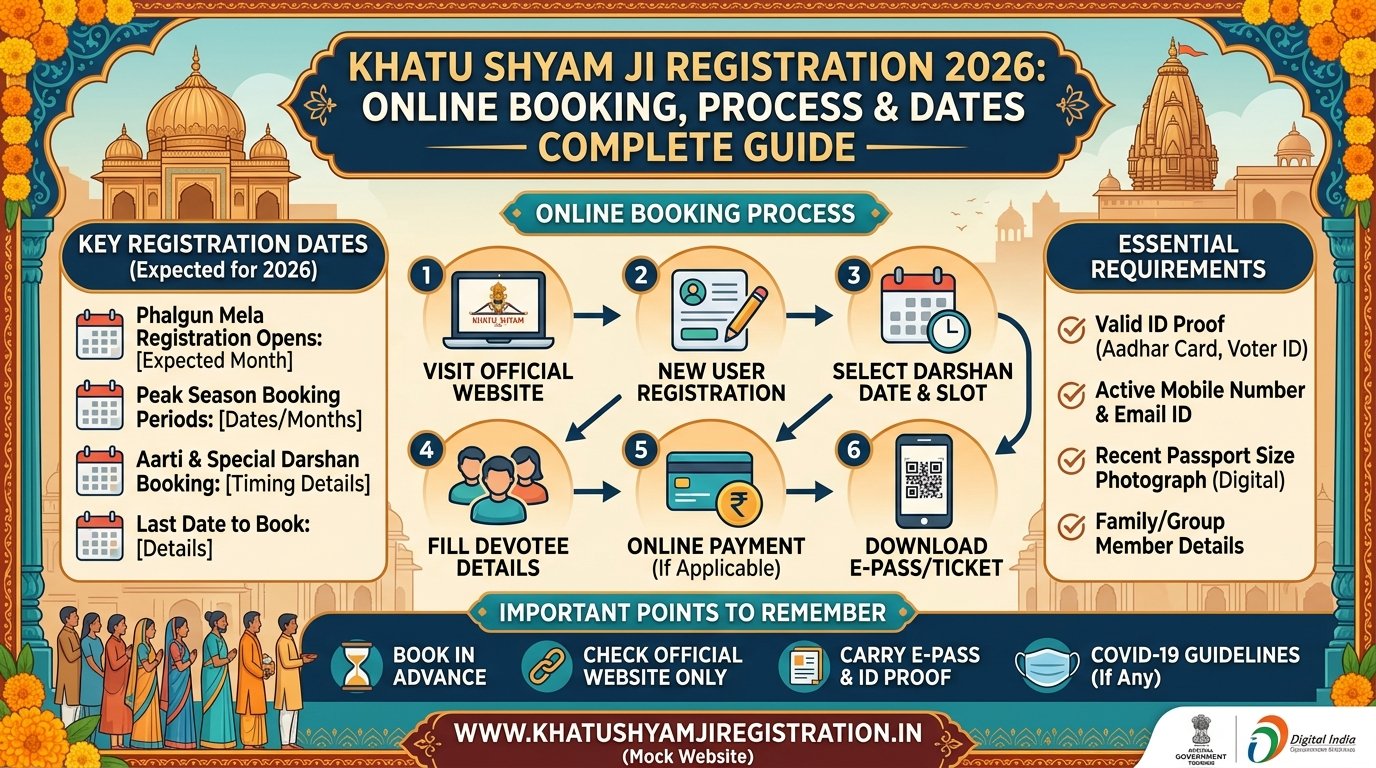
Here’s the process for booking through online.shrishyammandir.com, which is the official portal for the disabled and elderly darshan category:
Registered Mobile Number → is verified by → OTP, and this single step is what makes the entire system genuinely paperless and quick.
For general ticket booking — not the disability/senior category — devotees use www.shrishyamdarshan.in. The process is a bit different:
A lot of readers get confused between “pass,” “ticket,” and “registration slip” — they’re basically referring to the same thing, just different wording. Here’s a quick breakdown:
| Type of Pass | Who It’s For | Cost |
|---|---|---|
| Divyangjan/Senior Citizen Pass | Disabled (40%+) & elderly (70+) | Free |
| General Darshan Slot | Regular devotees | Free |
| Immediate/Priority Darshan Pass | Devotees wanting faster entry | Nominal fee (set by committee) |
Immediate Darshan Booking → may involve → Temple Committee charges, and this money usually goes back into maintaining the temple premises and Khatu’s local infrastructure.
Here’s the direct answer since most people just want this bit quickly — there is no fixed ticket price for regular Khatu Shyam Ji darshan. It’s completely free for general devotees. The only scenario where a small charge might apply is under the “immediate darshan” priority category, and even that isn’t mandatory.
A few important rules apply once your ticket or pass is generated:
Medical Certificate/Photo ID → is mandatory for → entry into the reserved line, so don’t forget these documents at home, people genuinely do that more often than you’d think.
Khatu Shyam Mandir is located in the small town of Khatu in Sikar district, Rajasthan, and it’s dedicated to Baba Shyam, believed to be an incarnation of Barbarik, grandson of Bhima from the Mahabharata.
The temple sees massive footfall throughout the year but especially during the Lakkhi Phalgun Fair, when devotees arrive in numbers running into lakhs over just a few days.
Sixteen separate lines have now been arranged inside the temple for darshan management — the first line being reserved specifically for the disabled, elderly, and those booked under immediate darshan.
Because of these arrangements, actual darshan time inside the sanctum now takes roughly 10 to 15 minutes, which, honestly, is a massive improvement from what devotees experienced a few years back.
This is one part most competitor articles barely touch, so let’s actually cover it properly.
By Rail: The nearest railway station is Jaipur (about 80 km away) or Ringas (closer, around 17 km). From there, shared taxis and buses run regularly to Khatu.
By Road: Khatu is well connected via road to Jaipur, Sikar, and Delhi. State buses and private cabs both operate frequently, especially during mela season.
By Air: Jaipur International Airport is the nearest airport, roughly 80-85 km from the temple town.
A quick tip — during the fair days, traffic near Khatu gets seriously congested, so it’s worth reaching a day early if you can, or planning your travel for early morning hours to skip the worst of it.
There are plenty of dharamshalas (free or low-cost pilgrim rest houses) run by various trusts around the temple, along with private hotels and guesthouses ranging from budget to mid-range. During the Phalgun Mela, rooms fill up fast, so booking a couple weeks in advance genuinely saves a lot of last-minute stress.
This question gets searched constantly, and for good reason — crowd levels at Khatu Shyam Mandir change quite dramatically depending on the day and season.
| Time Period | Crowd Level | Recommended Approach |
|---|---|---|
| Regular weekdays | Low to Moderate | Walk-in darshan usually fine |
| Weekends | Moderate to High | Early morning visit advised |
| Ekadashi & special days | High | Plan for longer queue times |
| Phalgun Mela (Feb-March) | Extremely High | Online registration strongly recommended |
Generally speaking, weekday mornings before 7 AM tend to have the lightest rush. If you’re checking “how is the crowd in Khatu Shyam today” before heading out, local WhatsApp channels and the temple’s official social handles often post live updates, which is genuinely more reliable than guessing.
Here’s where things get a little tricky, and we want to be upfront about it rather than confuse you like some articles do. As of now, general darshan does not require mandatory online booking — regular devotees can visit and join the standard queue directly. Online registration is currently compulsory only for the Divyangjan and senior citizen category through the reserved-line system.
However, the temple committee has indicated plans for expanding online booking further in the near future, particularly for managing the immediate darshan lines better. There’s no confirmed date yet for when general compulsory booking might roll out, so it’s best to check the official portals close to your travel date rather than relying on older information.
For registration issues, OTP problems, or general queries about darshan booking, devotees can reach out through the temple committee’s official helpline, which is usually listed on the homepage of both official booking websites.
It’s also worth following the official Khatu Darshan WhatsApp Channel, since real-time updates about registration changes, mela timings, and any last-minute rule changes get posted there first, often faster than the website itself updates.
Yes, there’s an immediate/priority darshan line available through paid online booking. It’s separate from the general queue and offers noticeably faster entry into the temple.
Regular darshan is completely free. Only the immediate/priority darshan category may involve a nominal fee decided by the temple committee, which varies occasionally.
The temple generally opens around 4:30 AM and closes near 10 PM, with short breaks during aarti timings. Timings may extend slightly during the mela season.
There are two main portals — online.shrishyammandir.com for disabled/senior citizen booking, and www.shrishyamdarshan.in for general darshan registration.
It depends heavily on timing. Regular weekdays stay moderate, but during Phalgun Mela and Ekadashi, crowds swell massively into lakhs of visitors.
Leather items, large bags, and certain electronic gadgets are typically restricted. Rules can change slightly during festival periods, so checking beforehand helps.
Rush varies daily — weekdays are lighter, weekends heavier. Checking official WhatsApp updates or local news before travelling gives the most accurate real-time picture.
Generally yes, phones are allowed, but photography or videography inside the main sanctum area is usually restricted or discouraged depending on temple rules that day.
Budget hotels and dharamshalas start around ₹500-800 per night, while mid-range hotels can go up to ₹2000-3000, especially during fair season.
Visit the official portal matching your category (general or disability/senior), register with your mobile number, verify via OTP, select date and slot, then save to generate your ticket.
A photo ID is mandatory for everyone. Divyangjan need a medical/disability certificate, and senior citizens need valid age proof identity documents.
Yes, on the general booking portal, you can book for up to five members using a single mobile number, provided Aadhaar details are filled for each person.
No, the ticket is strictly non-transferable and valid only for the person whose name and details appear on the registration.
You can usually log back into the registration portal using your mobile number and OTP to retrieve your booking details before your visit date.
Early weekday mornings, outside the Phalgun Mela period and major Ekadashi dates, generally offer the smoothest and least crowded darshan experience.
https://templetimingsnow.com/ttd-vip-darshan/
https://templetimingsnow.com/gangapur-temple-timings/
https://templetimingsnow.com/tirupati-ssd-token-timings/
https://templetimingsnow.com/tirumala-darshan-for-infants/
https://templetimingsnow.com/japali-hanuman-temple-timings/