Physical Address
304 North Cardinal St.
Dorchester Center, MA 02124
Physical Address
304 North Cardinal St.
Dorchester Center, MA 02124

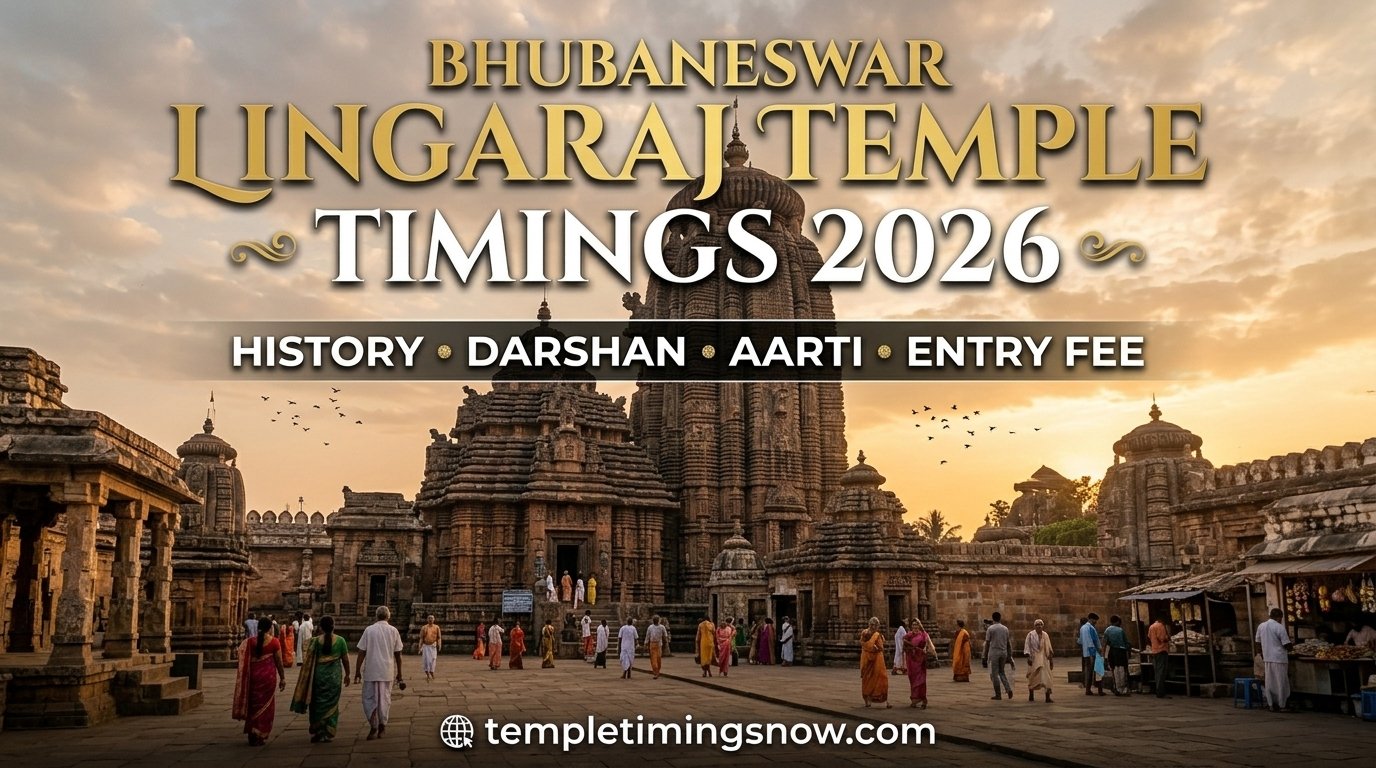
If you’re planning a trip to Odisha’s Temple City, the Lingaraj Temple Bhubaneswar is the one place you can’t skip. It’s the biggest and most sacred shrine in the city, and its 11th-century sandstone tower still dominates the skyline of the Old Town.
This guide covers Lingaraj temple timings, history, darshan, aarti, the entry fee and the practical stuff most blogs forget, like what non-Hindus can actually see.
Everything is written for 2026 travellers, but please double check timings locally before you go, since temple schedules shift on festival days.
Quick answer: The Lingaraj Temple is a Kalinga-style Hindu shrine in Old Town, Bhubaneswar, dedicated to Lord Harihara (Vishnu and Shiva together). It has no entry fee, the tower is about 180 feet tall, and only Hindus can enter the sanctum.
| Detail | Information |
|---|---|
| Location | Rath Road, Lingaraj Nagar, Old Town, Bhubaneswar, Odisha 751002 |
| Presiding deity | Lord Harihara (Hari + Hara) |
| Built | 11th century (Shivalinga worshipped much earlier) |
| Architecture | Kalinga style, sandstone and laterite |
| Entry fee | Free |
| Common listed timing | 6:30 am to 7:30 pm, all days |
| Phone (listed) | 0674 2340105 |
That’s the short version. Now let’s get into the details.
Quick answer: Most travel listings give the Lingaraj temple opening and closing time as 6:30 am to 7:30 pm on every day of the week. The temple’s own ritual day starts earlier, though, and there’s usually a break in the afternoon.
The 6:30 am to 7:30 pm window is what you’ll see on most tourism websites, and its a safe plan for general visitors. But the truth is that the servitors (sevayats) begin their rituals well before sunrise, and the sanctum may be closed to the public for short periods during bhoga offerings and other rituals. So if you want to see everything, reach early.
Quick answer: Lingaraj temple timings Sunday are the same as other days on paper, 6:30 am to 7:30 pm. Sundays, Mondays and festival days are just far more crowded than a random Tuesday.
| Day | Listed timing |
|---|---|
| Monday | 6:30 am – 7:30 pm |
| Tuesday | 6:30 am – 7:30 pm |
| Wednesday | 6:30 am – 7:30 pm |
| Thursday | 6:30 am – 7:30 pm |
| Friday | 6:30 am – 7:30 pm |
| Saturday | 6:30 am – 7:30 pm |
| Sunday | 6:30 am – 7:30 pm |
Mondays are considered auspicious for Shiva, so devotees come in big numbers. If you can pick your day, a mid-week morning is way easier. And remember the Lingaraj temple closing time isn’t a strict last-entry time, so don’t arrive at 7:15 pm and expect to see the sanctum properly.
Quick answer: The best time to visit Lingaraj temple is early morning, between about 6:30 am and 9:00 am, on a weekday in the cooler months from October to February.
Bhubaneswar gets hot and sticky from April to June, and the monsoon (July to September) brings heavy rain. Winter is the sweet spot. Early mornings also mean softer light on the carved walls, shorter queues and a calmer feel around the Bindu Sarovar. Evenings are lovely too, particularly when the lamps are lit, but they get crowded. If you’re coming for Mahashivaratri, well, be ready for a serious crowd and plan the whole day around it.
Quick answer: The Lingaraj temple aarti timings follow the temple’s traditional ritual cycle, with morning (Mangala Alati), midday and evening aarti. Exact times aren’t fixed in public listings and can change, so confirm with the temple office or a priest on the day.
Here’s something many guides skip. Lingaraj isn’t run on a “ticket and slot” model like some big pilgrimage places. Daily worship (niti) is carried out by hereditary servitors, and the timings of aarti, bhoga and other offerings can shift a bit on festival days. Generally speaking, you’ll find these parts of the day:
Because I can’t promise exact minutes, the smartest move is to ask the temple’s information desk or your local guide a day before. Don’t just trust a random app screenshot.
Quick answer: Darshan at Lingaraj means viewing the Swayambhu Shivalinga inside the Vimana. The queue moves faster in the morning, and you’ll need to remove footwear and leave electronics outside.
The linga here is believed to be self-manifested, roughly 8 feet in diameter and 8 inches above the ground. It’s bathed with water, milk and other offerings, and what makes it special is that it’s worshipped as Harihara, so you’ll notice both Shaiva and Vaishnava elements in the rituals. Tulsi leaves and bel leaves are both offered, which is rare and quite beautiful.
Quick answer: There’s no official paid “VIP darshan” advertised for Lingaraj Temple, and the general entry is free. Anyone selling a “special VIP pass” at the gate is most probably a tout.
Honestly this is where tourists lose money. People offering quick access, special puja packages or “priest booking” near the entrance often overcharge. If you want a proper puja or abhisheka, approach the temple priests through the temple’s own channels, and ask for the rate openly before agreeing.
Elderly visitors or people with mobility trouble can speak to temple staff about assistance, which is usually the better route than paying a stranger.
Quick answer: Lingaraj temple prasad timings depend on the bhoga cycle, with offerings typically made around midday and evening. Mahaprasad is also easy to find nearby, close to the Ananta Vasudeva Temple area, so ask locally.
Prasad here is simple, sacred and honestly delicious. Devotees buy bhoga from the authorised stalls inside and around the complex, and the rule of thumb is the same as with everything else: buy from official counters, not from random hawkers. Timings can change, so if prasad is the main thing you want, ask a priest what time the bhoga is offered that day.
Quick answer: The Lingaraj temple history stretches across centuries. Tradition credits the Somavamsi (Somvanshi) king Jajati Keshari with building it in the 11th century, and later Ganga-period rulers added to the complex.
So, Lingaraj temple was built by which dynasty? The most common answer is the Somvanshi (Somavamsi) dynasty, with Jajati Keshari as the king most often named. Some scholars point out that construction continued into the Ganga era, when additional halls were completed, so you’ll sometimes see both dynasties mentioned. The thing is, the Swayambhu Shivalinga was probably worshipped way before the stone temple existed, and some belief traditions place that worship as early as the 7th century.
The temple’s name also appears in the Brahma Purana, which gives it a deep religious backing beyond just architecture. And the shrine symbolises the coming together of Shaivism and Vaishnavism, which is why the deity is Harihara and not just Shiva. That unity is probably the most interesting thing about it.
Lingaraj Temple → is dedicated to → Lord Harihara (Vishnu + Shiva). Jajati Keshari → built → the temple in the 11th century. These two statements are the backbone of almost every historical account.
लिंगराज मंदिर का इतिहास: भुवनेश्वर का लिंगराज मंदिर 11वीं शताब्दी में सोमवंशी राजा ययाति केशरी द्वारा बनवाया गया माना जाता है। यहाँ हरिहर (विष्णु और शिव) की पूजा होती है, और स्वयंभू शिवलिंग बहुत प्राचीन माना जाता है। यह मंदिर कलिंग शैली की वास्तुकला का शानदार उदाहरण है। अगर आप लिंगराज मंदिर भुवनेश्वर घूमने आ रहे हैं तो सुबह जल्दी आना बेहतर रहता है।
The local name Lingaraj Mandir is how most Odias refer to it, and you’ll also see Bhubaneswar Lingaraj Mandir on road signs and in Hindi guides. Bhubaneswar itself was historically called Ekamra Van or Ekamra Kshetra, “the forest of a single mango tree”. That ancient name is still attached to the garden near the temple. In fact the city’s very name comes from Tribhuvaneswar, “lord of the three worlds”, another title for Shiva.
Quick answer: The temple is a masterpiece of Kalinga architecture, built of sandstone and laterite, with four main parts: Vimana, Jagamohana, Nata Mandira and Bhoga Mandapa.
The complex sits inside a huge laterite compound wall covering about 22,720 sq. m, and inside it there are around 150 smaller shrines. The main entrance faces east, with smaller gates on the north and south sides. The porch gate is said to be built using sandalwood, which is a fun detail to look for.
All four halls are aligned in one line and rise in height from Bhoga Mandapa up to the Vimana, which gives that gradual, almost climbing effect when you look at it from the front. For anyone who loves temple carving, this is basically a free open-air classroom.
Quick answer: Cameras and electronic gadgets are not allowed inside the temple, so Lingaraj temple inside photos are not something you can take yourself. You can photograph the exterior from the non-Hindu viewing platform and surrounding areas.
This is the question I get asked a lot, so let me be clear. Official Lingaraja temple photos online mostly show the tower from outside, the compound wall, the Bindu Sarovar and festival scenes.
If you’re searching for Lingaraj temple god images, you’ll find mostly pictures of the Harihara Shivalinga with floral decoration, usually taken from published or official sources and not by tourists. Please don’t try sneaking a phone in. Security is strict, and its disrespectful to the worshippers.
For good exterior shots, try these:
Quick answer: The entry fee is zero. The temple is free for Hindus, and you only pay for optional things like offerings, puja items or shoe-keeping.
Here are the main rules worth remembering:
Quick answer: Non-Hindus can’t enter, but a raised viewing platform outside the complex gives a clear look at the tower, the courtyard and some of the smaller shrines. It’s free and open during the same day hours.
This section fills a gap that most competitor pages leave out. The platform is close to the temple’s outer wall, so you do get a decent view of the Vimana rising above the compound and the details on the tower. Bring a camera for the exterior, since photography from the platform is the normal practice, but follow any signs posted that day. Staff and guides can point you towards it easily.
A few etiquette tips help a lot:
If you’re a Hindu traveller with a foreign passport or mixed group, it’s best to ask the temple office about their current rules, because policies are enforced at the gate.
Quick answer: The three big festivals are Mahashivaratri (Phalgun month), Ashokashtami (8th day of Chaitra) and Chandan Yatra (21 days from Akshaya Tritiya).
| Festival | When | What happens |
|---|---|---|
| Mahashivaratri | Phalgun month (Feb/March) | Night-long worship, fasting, and the Mahadipa raised atop the temple |
| Ashokashtami (Rath Yatra) | 8th day of Chaitra (March/April) | Lord Lingaraj travels in a chariot to the Rameswar (Mausi Maa) Temple |
| Chandan Yatra | 21 days from Akshaya Tritiya (April/May) | Idols go on decorated Chapa boats in Bindu Sarovar |
Mahashivaratri is the most important one. Devotees fast all day and break the fast at night after the Mahadipa, a big earthen lamp, is lifted to the top of the tower. It’s a sight you won’t forget in a hurry.
Ashokashtami is the annual Rath Yatra of Lord Lingaraj. Ashokashtami → takes → the deity to Rameswar (Mausi Maa) Temple, and the idol returns after four days following a ritual bath at Bindu Sarovar.
Chandan Yatra begins on Akshaya Tritiya and runs for 21 days. Chandan Yatra → begins on → Akshaya Tritiya, with the idols carried across the Bindu Sarovar in beautifully decorated Chapa boats and sanctified with sandalwood paste and water. For 2026 specifically, the exact dates follow the Hindu panchang, so if you’re planning a festival visit for next year, check an Odisha tourism calendar or the temple’s announcements a few weeks ahead.
Quick answer: Here are 10 lines about Lingaraj temple that are handy for school projects and quick notes.
Quick answer: The best nearby spots are Bindu Sarovar, Ekamra Van, Mukteswara, Rajarani, Ananta Vasudeva, Brahmeswara and Parasurameswara temples.
The Bindu Sarovar lies to the north of the temple, about 700 ft wide and 1300 ft long, and its the focal point of Chandan Yatra. On its western bank is Ekamra Van, a garden with plants linked to different gods and goddesses and known for medicinal use.
From there, the older temples are an easy auto ride away. Mukteswara is small but gorgeous, while Rajarani is famous for its sculpted figures. Beyond temples, the Odisha State Museum, the Odisha Craft Museum, Udayagiri and Khandagiri Caves and the Dhauligiri Shanti Stupa are all worth a day.
Quick answer: The temple is only about 4.4 km from Biju Patnaik International Airport and 4.8 km from Bhubaneswar railway station, so an auto rickshaw or taxi gets you there in 10 to 12 minutes.
| From | Distance | Approx. time |
|---|---|---|
| Biju Patnaik International Airport | ~4.4 km | ~10 min |
| Bhubaneswar Railway Station | ~4.8 km | ~12 min |
| City centre | Short ride | Varies with traffic |
Auto rickshaws, local buses and private taxis are easy to find. Cab apps also work in most of the city. Traffic around Rath Road gets messy during festivals, so leave extra time then.
A few small things make a big difference:
Most listings show 6:30 am to 7:30 pm daily. Ritual schedules start earlier and may pause briefly during the day, so it’s sensible to confirm with the temple office before your visit.
The commonly listed opening time is 6:30 am and the closing time is 7:30 pm. Festival days can change this, so reach early and avoid arriving right at closing.
Sunday follows the same listed hours, 6:30 am to 7:30 pm. Expect bigger crowds than weekdays, so early morning is the better time if you want a calmer darshan.
No, there is no entry fee. You may spend a little on puja items, offerings or footwear storage, but entering the temple itself is free for those allowed inside.
No, entry is restricted to Hindus. Non-Hindus can see the temple from a viewing platform outside the complex, which gives a clear view of the tower and courtyard.
Early morning on a weekday between October and February is ideal. The weather is cooler, queues are shorter, and the light is lovely for exterior photos of the tower.
There’s no officially advertised paid VIP darshan. Be careful of anyone selling special access near the gate, and approach the temple priests or office for genuine assistance instead.
Aarti happens in the morning, midday and evening as part of daily rituals. Exact minutes aren’t fixed publicly, so ask the temple staff or a priest for that day’s schedule.
Prasad is linked to the bhoga offerings, typically around midday and evening. Buy only from authorised counters, and ask a priest for the exact time on the day you’re visiting.
Tradition credits Jajati Keshari of the Somvanshi (Somavamsi) dynasty with building it in the 11th century. Some additions are linked to later Ganga-period rulers, so accounts differ slightly.
The presiding deity is Lord Harihara, a combined form of Hari (Vishnu) and Hara (Shiva). The main object of worship is the self-manifested Swayambhu Shivalinga inside the sanctum.
No, cameras and electronic gadgets aren’t allowed inside the premises. Photographs of the exterior can be taken from the viewing platform and surrounding public areas, following any posted instructions.
The main Vimana tower is about 180 feet tall. It’s visible from far across Old Town and is considered one of the finest examples of Kalinga architecture.
It’s about 4.4 km from Biju Patnaik International Airport and roughly 4.8 km from Bhubaneswar railway station. Auto rickshaws and taxis take about 10 to 12 minutes.
The main festivals are Mahashivaratri, Ashokashtami (the Rath Yatra of Lord Lingaraj) and the 21-day Chandan Yatra. Mahashivaratri is the most important and draws thousands of devotees.