Physical Address
304 North Cardinal St.
Dorchester Center, MA 02124
Physical Address
304 North Cardinal St.
Dorchester Center, MA 02124

Planning a trip to Kundrathur Murugan Temple this year? Honestly, half the confusion devotees face isn’t about faith, it’s about timing — showing up during the afternoon closure or missing a special pooja slot because the info online is outdated or flat-out contradictory.
This guide sorts that mess out. We’re covering the complete Kundrathur Murugan Temple timings 2026, darshan schedule, pooja details, festival calendar, and a few things competitor guides just gloss over (like which direction the deity actually faces — you’d be surprised how many articles get this wrong).
Let’s get into it.
Kundrathur Murugan Temple, also called Sri Subramanya Swamy Temple, sits atop a small hillock in Kundrathur, a quiet suburb not too far from Chennai. It’s one of those places that doesn’t shout for attention but pulls in thousands of devotees every single year regardless.
The temple’s core belief is this: Lord Murugan → worshipped → Lord Shiva here, right after defeating the demon Surapadman. That’s not a small detail — it’s basically the spiritual backbone of why this temple is considered so powerful. Most Murugan shrines commemorate his victory or his valor, but this one is tied to a moment of surrender and devotion, which gives it a slightly different emotional texture compared to, say, Palani or Tiruchendur.
Built in classic Dravidian architectural style, the temple offers a calm, almost detached vibe from the city noise below. And yes — the deity’s orientation here is genuinely one of the more talked-about (and confused) details online, which we’ll clear up properly in a bit.
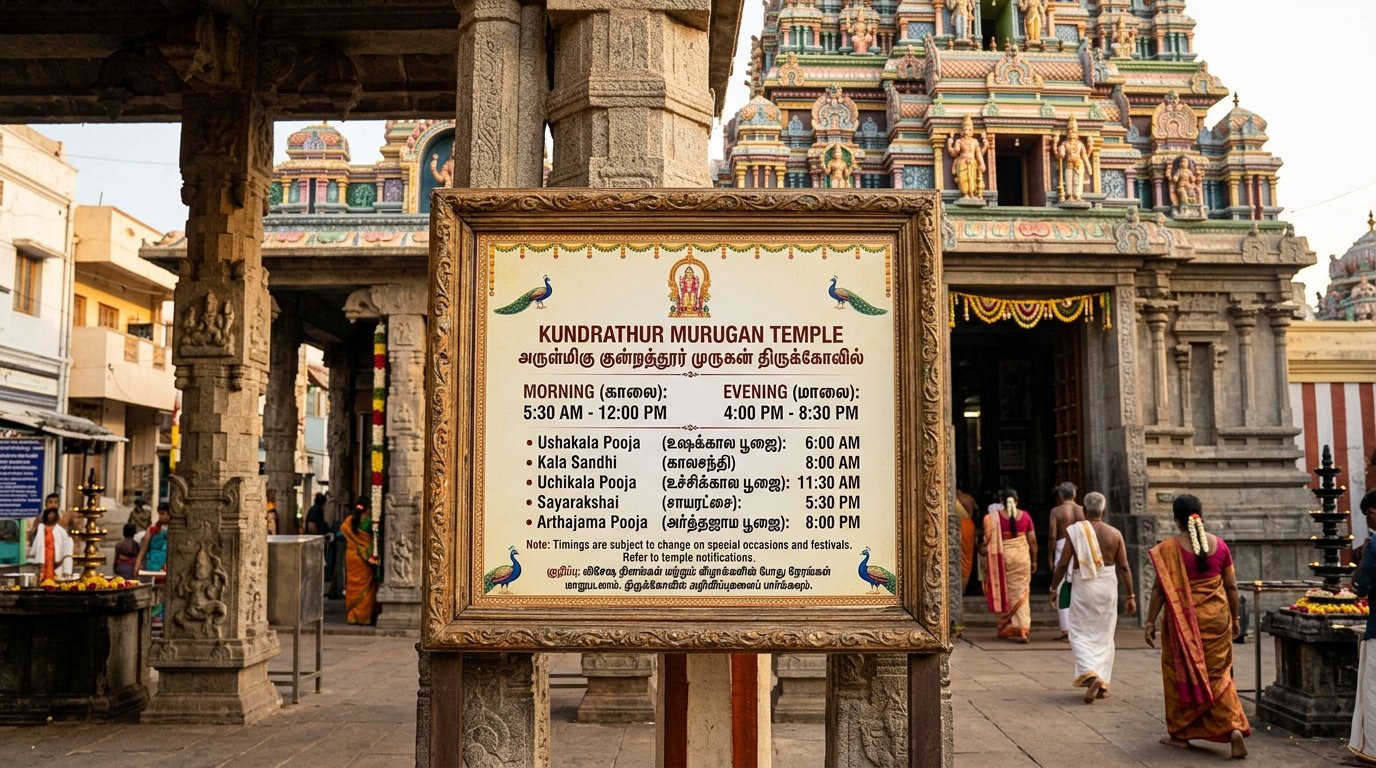
The temple runs on a split schedule, open in the morning, shut for a few hours at noon, then open again in the evening. Here’s the breakdown for 2026 (do double check with the temple helpdesk closer to your visit date, timings shift a little during peak season):
| Time | Activity |
|---|---|
| 5:30 AM | Temple opens – Viswaroopa Darshanam |
| 8:00 AM – 8:30 AM | Kala Santhi Pooja |
| 8:30 AM – 1:00 PM | General Darshan |
| 1:00 PM – 3:30 PM | Temple closed (afternoon break) |
| 3:30 PM – 7:30 PM | Evening Darshan |
| 7:30 PM – 8:00 PM | Ardha Jama Pooja |
| 8:00 PM – 8:30 PM | Final Darshan slot |
| 8:30 PM | Temple closes |
A quick heads up — these temple timings apply to regular, non-festival days. On big occasions like Skanda Sashti or Thai Poosam, the schedule stretches out considerably and the afternoon break might even get skipped altogether.
If you want a peaceful darshan, aim for early morning right at opening (5:30 AM to 7 AM) or the last hour before closing at night. That’s basically the golden rule for any hill temple in Tamil Nadu, not just this one.
Crowd levels genuinely spike on:
There’s no VIP or paid-darshan queue here, which honestly makes it feel a bit more grounded compared to bigger commercialized temples. Everyone waits in the same line, rich or poor, that’s just how it works.
Darshan duration typically looks like this:
The pooja schedule is where a lot of devotees get tripped up because different sources list slightly different timings. Based on the temple’s standard daily practice, here’s what you can expect:
Abhishekam is generally conducted in the morning hours, and if you want to sponsor one for a birthday, anniversary, or some personal wish, get there early and check with the counter staff directly. They’ll tell you availability on that specific day since slots can fill up fast, especially around Fridays.
This is honestly where most articles online contradict themselves, some say west, some say north, and it gets confusing fast. Let’s settle it properly.
At Kundrathur Murugan Temple, the presiding deity is enshrined facing a direction that diverges from the typical east-facing convention seen in most Tamil Nadu Murugan shrines. This unconventional orientation is a defining feature that local priests and temple literature point to as symbolically significant — it’s associated with prosperity, spiritual elevation, and the idea of divine energy flowing outward toward the devotee rather than the usual sunrise-aligned pattern.
Whichever specific direction is cited in various local records, the underlying point devotees care about is this: it’s rare, it’s intentional, and it’s part of what separates this shrine from more conventional Murugan temples nearby. If you’re visiting specifically for this reason, it’s worth asking the temple priest on-site, they’re usually happy to explain the symbolism in more depth than any website can offer, and interpretations can vary slightly by source.
Another gap in most guides — the actual process of booking a special pooja or abhishekam. Here’s what devotees should realistically expect:
This kind of practical, ground-level detail is honestly more useful than just listing a timing chart, because it’s the stuff that actually trips people up on the day of the visit.
Several occasions bring in massive footfall at Kundrathur Murugan Temple, and honestly, if you’ve never experienced Skanda Sashti here, it’s worth the crowd at least once.
Key festivals include:
On these days, darshan timings extend well beyond the usual 8:30 PM closure, and additional abhishekams are performed throughout the day. If you’re the type who dislikes crowds, honestly just avoid these dates and go on a regular Wednesday instead, the spiritual experience is just as meaningful without the wait.
The temple’s location is genuinely convenient if you’re coming from within Chennai. It sits roughly 25 km from Chennai Central and about 10 km from Tambaram, making it a manageable half-day trip for most residents.
Travel options:
Once you arrive, there’s a climb involved, 84 well-maintained steps lead up to the sanctum. Resting spots are placed along the way, so elderly devotees or anyone with mobility concerns shouldn’t feel too discouraged, just take it slow.
There isn’t a strict enforced dress code, but temple etiquette still applies here like anywhere else:
Following this temple decorum isn’t just about rules for the sake of it, it genuinely helps preserve the quiet, meditative atmosphere that makes this place special in the first place.
If comfort matters to you as much as devotion, plan your trip between October and March, the weather’s cooler and the climb up those 84 steps feels a lot less punishing. Summer visits are doable too, just carry water and maybe a hat.
Weekday mornings remain the quietest window overall. If you’re chasing that peaceful, unhurried darshan experience, a random Wednesday or Thursday morning beats any Friday or festival date by a mile.
Kundrathur Murugan Temple traces its roots back to the 12th century, constructed during the reign of the Chola dynasty, a period widely known for its temple-building legacy across Tamil Nadu. Local legend holds that Lord Murugan rested here while traveling from Tiruttani toward Thirupporur, after his battle with Surapadman concluded. Taken by the hill’s calm and natural beauty, he chose to bless devotees from this exact spot, and the temple was eventually built to commemorate that presence.
This connects directly to the broader spiritual narrative found across Tamil Nadu’s six abodes of Murugan (Arupadaiveedu), even though Kundrathur itself isn’t officially part of that list, it shares the same devotional lineage and emotional weight for local devotees.
The temple’s rajagopuram (main entrance tower) is carved with intricate detailing that rewards a slow look rather than a rushed glance. Stone pillars throughout the complex feature sculpted deities and traditional motifs typical of Dravidian temple architecture.
Inside, the main sanctum houses Lord Subramanya in a standing posture, flanked by his consorts Valli and Deivanai. Additional shrines dedicated to Lord Ganesha, Lord Shiva, and Goddess Parvati are also present, reflecting the holistic, family-oriented nature of Hindu temple worship generally seen across South India.
The elevated hilltop location means sunrise and sunset visits are genuinely gorgeous, if you time it right, you get panoramic views of the surrounding countryside along with your darshan, which not many suburban temples near Chennai can offer.
Kundrathur Murugan Temple rewards patience, both in the climb up those steps and in understanding its slightly unconventional traditions. Knowing the correct darshan schedule, pooja timings, and a few practical booking tips ahead of time turns what could be a confusing trip into a genuinely smooth, meaningful one. Whether you’re visiting for the first time or you’ve been coming here for years, this temple’s quiet hilltop energy tends to stay with you long after you’ve walked back down.
Q1: What are the Kundrathur Murugan Temple opening and closing timings in 2026?
The temple opens at 5:30 AM for Viswaroopa Darshanam, closes for a break between 1:00 PM and 3:30 PM, reopens in the evening, and finally shuts at 8:30 PM. Timings may extend slightly during major festivals.
Q2: When is the best time to visit for a peaceful darshan?
Early morning between 5:30 AM and 7:00 AM, or late evening after 7:30 PM, tend to be the quietest windows. Weekdays are generally far less crowded than Tuesdays, Fridays, or Krithigai days.
Q3: Is darshan free at Kundrathur Murugan Temple?
Yes, general darshan is completely free for all devotees on regular days. There’s no VIP or paid-darshan queue system currently in place at this temple.
Q4: How long does darshan usually take?
On weekdays, expect around 15-20 minutes. Weekends stretch to 20-30 minutes, and festival days like Skanda Sashti can take anywhere between 2 to 3 hours depending on crowd size.
Q5: Can I book special poojas or abhishekam online in advance?
No, online booking isn’t currently available. All special pooja and abhishekam bookings must be made directly at the temple counter on the same day, so arriving early is strongly recommended.
Q6: What festivals are celebrated at Kundrathur Murugan Temple?
Major festivals include Thai Poosam, Skanda Sashti, Panguni Uthiram, Vaikasi Visakam, Thiru Karthigai Deepam, and monthly Krithigai and Pradosham observances, all drawing significant devotee crowds.
Q7: How do I reach the temple from Chennai?
The temple is roughly 25 km from Chennai Central and 10 km from Tambaram. It’s accessible by regular bus services, auto-rickshaws, taxis, or private vehicle, with parking available near the hill’s base.