Physical Address
304 North Cardinal St.
Dorchester Center, MA 02124
Physical Address
304 North Cardinal St.
Dorchester Center, MA 02124

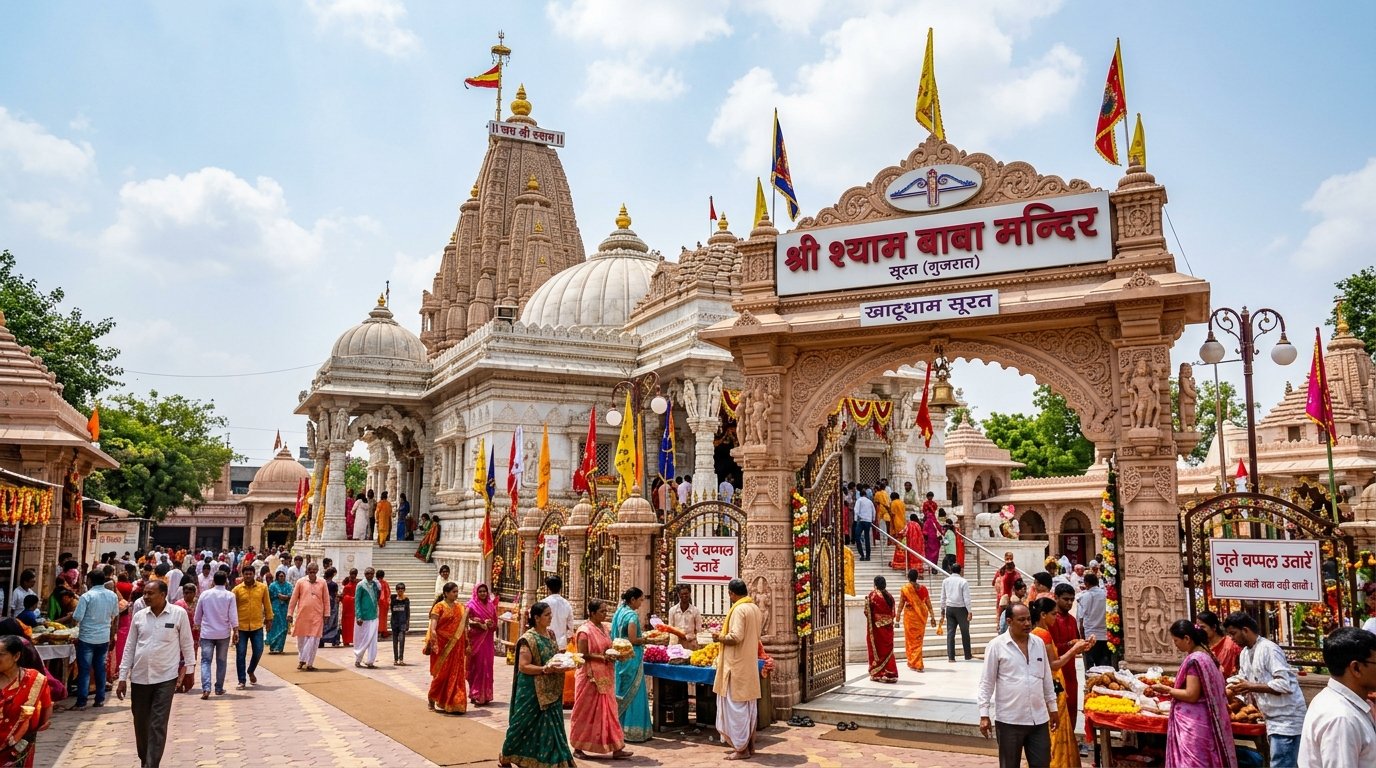
If you’re planning a trip to Shree Shyam Baba Mandir Surat this year, you’re honestly in for something special. Also known as Suratdham or Khatu Shyam Mandir Surat, this temple has quietly become one of Gujarat’s most talked-about spiritual destinations in just a few short years.
Whether you’re a lifelong devotee of Khatu Shyam Ji or someone who just heard about the temple from a friend, this guide covers everything — timings, aarti schedule, location, how to reach, architecture, and a few things most other articles simply forget to mention.
Let’s be real, finding accurate and updated info about temple timings online can be a headache. Half the sites have outdated info, the other half copy-paste from each other. So we’ve put together this article to be your one-stop resource for planning a hassle free visit in 2026.
Shree Shyam Baba Mandir Surat, popularly called Suratdham, is a temple in Surat, Gujarat dedicated to Barbarik, who devotees worship as Shyam Baba in the current age, known as Kali Yuga. The temple was set up by the Shri Shyam Seva Trust and it was inaugurated on Basant Panchami in 2017, so it’s actually a fairly recent addition to Surat’s spiritual landscape, but don’t let that fool you — the devotion here runs deep.
For people who follow Khatu Shyam Ji of Sikar, Rajasthan, this temple offers something really meaningful: a chance to experience that same divine energy without having to travel all the way to Rajasthan. Many devotees say the atmosphere at Suratdham genuinely mirrors what you’d feel at the original shrine, which is no small compliment considering how revered Khatu Shyam Ji is across North and Western India.
Every single day, hundreds (and on festival days, thousands) of people show up here for darshan, aarti, bhajans and satsangs. It’s become one of the go-to Shyam Baba temples not just for locals but for pilgrims traveling in from other states too.
The temple stays open daily, with a short break in the afternoon. Below is the complete darshan and aarti timing breakdown so you don’t end up standing outside a closed gate (trust us, it happens more than you’d think).
Devotees get two separate windows for darshan — morning and evening — with the temple closing briefly in the afternoon for rituals.
These extended hours basically mean you can plan your visit whenever suits you best, early riser or night owl, doesn’t matter much.
Each aarti at the temple carries it’s own spiritual weight and devotees often plan their visit around a specific one.
| Aarti Name | Timing |
|---|---|
| Mangala Aarti | 4:45 AM – 5:45 AM |
| Shringar Aarti | 7:00 AM – 8:00 AM |
| Bhog Aarti | 12:15 PM – 12:30 PM |
| Sandhya Aarti | 6:00 PM – 7:15 PM |
| Shayan Aarti | 9:00 PM – 10:00 PM |
Attending the Sandhya Aarti → is considered → one of the most spiritually rewarding experiences at the temple, mainly because the whole complex lights up and the crowd energy is at its peak.
Pro tip: if you’re someone who hates crowds, go for early Mangala Aarti. It’s peaceful, quiet, and honestly kind of magical watching the temple wake up for the day.
The temple is located in Surat, Gujarat, and it’s well connected to all major parts of the city, so getting there isn’t a struggle even if you’re an out-of-towner.
Shree Shyam Baba Mandir, Surat, Gujarat, India
The temple sits roughly 10 kilometers from Surat Railway Station, which makes it pretty accessible for both residents and visitors coming in by train. You’ve got a few options to actually get there:
| From | Distance | Approx. Time |
|---|---|---|
| Surat Railway Station | 10 km | 25 minutes |
| Surat Airport | 16 km | 35 minutes |
| Udhna Bus Stand | 8 km | 20 minutes |
| Surat City Center | 12 km | 30 minutes |
Because of it’s strategic location, good road connectivity → makes → the temple accessible from nearly every corner of Surat, which is a big reason it’s grown so popular so quickly.
The story behind Khatu Shyam Ji actually goes way back to the Mahabharata era, and it’s genuinely a fascinating tale if you haven’t heard it before.
Barbarik, son of Ghatotkacha and grandson of the mighty Bhima, was known as an incredibly powerful warrior — some say unmatched in his devotion and willingness to sacrifice. Lord Krishna → blessed → Barbarik, granting him a boon that in the Kali Yuga, he’d be worshipped under the name Shyam.
Devotees deeply believe that praying at Shree Shyam Baba Mandir Surat can fulfill heartfelt wishes and bring peace, prosperity, and success. For people who can’t make the long journey to Rajasthan, this temple has honestly become a powerful substitute, a place where faith finds it’s home closer to Gujarat.
The temple treats Shyam Baba as a divine form of Lord Krishna himself. Alongside the main deity, you’ll also find idols of Salasar Balaji and the Shiv Parivar installed within the complex — so devotees essentially get to seek blessings from multiple deities under one roof. Regular bhajans, satsangs, and religious discourses keep the spiritual energy of the place alive throughout the year.
Beyond it’s religious importance, the temple is genuinely stunning to look at. The architecture reflects grandeur and craftsmanship in a way that photos honestly don’t do full justice to.
Here’s a quick look at the key architectural highlights:
The intricate carvings and spacious prayer halls create this calm, almost meditative atmosphere that’s hard to describe unless you experience it in person. Marble construction and gold detailing → combine to create → one of the most visually striking Shyam Baba temples in Gujarat, and it’s easy to see why photographers and architecture enthusiasts show up here too, not just devotees.
The temple management has clearly put thought into making visits comfortable, not just spiritually but practically too.
During major festivals, the temple hosts large scale bhandara (community meals) that draw huge crowds. One highlight worth mentioning is the 501 kg milk cake offering along with the traditional Chhappan Bhog, a 56-item food offering that’s honestly a sight to behold if you catch it during a festival.
A few things to keep in mind before you visit:
These rules exist to preserve the sanctity and peaceful vibe of the place, and most devotees genuinely appreciate that.
This is the part a lot of other articles skip completely, but it honestly makes the biggest difference to your actual experience.
If crowds aren’t your thing, aim for early morning weekday darshan, ideally right around the Mangala Aarti. Weekends, especially Tuesdays (traditionally significant for Shyam Baba devotees) and festival days, get seriously packed. Expect long queues if you show up during Sandhya Aarti on a Saturday evening.
There’s parking space available near the temple complex for two-wheelers and cars, though it can fill up fast during festival season. The temple grounds are relatively accessible for elderly devotees and those with mobility challenges, with resting areas placed conveniently along the darshan route. If you’re traveling with someone who needs extra assistance, it’s a good idea to visit during off-peak hours when staff can offer more personal attention.
While the temple itself doesn’t run a dharamshala as of now, Surat city offers plenty of hotels and guesthouses within a 10-15 km radius, ranging from budget to premium. Since the temple is fairly central, most decent hotels in Surat will put you within a reasonable driving distance.
While the daily darshan and aarti schedule keeps the temple lively, it’s really the festivals that bring Suratdham to life in the biggest way.
Festival days → significantly increase → footfall and require earlier planning for parking, darshan queues, and prasad. If your visit coincides with any of these dates, plan to arrive at least an hour before the gates typically get busy.
Honestly, visiting this temple is more than just ticking off a religious site on your list — most devotees describe leaving with a genuine sense of calm and positivity that’s hard to put into words.
A visit here typically offers:
Whether it’s your first time or you’re a regular, the temple genuinely welcomes everyone with the same warmth.
For any queries related to darshan timings, aarti schedules, upcoming festivals or general temple services, devotees can reach out through the official channels:
These channels usually have the most updated info on special pujas and festival celebrations, so it’s worth a quick check before you head out, especially during festival season.
Shree Shyam Baba Mandir Surat brings together spiritual devotion, striking architecture and genuine community spirit in a way that’s honestly rare to find. With it’s deep connection to the legend of Khatu Shyam Ji, well organized facilities, grand festival celebrations and a peaceful atmosphere throughout the year, it’s earned it’s place as one of Surat’s most important religious and cultural landmarks. Whether you’re seeking blessings, planning around a festival, or just exploring Gujarat’s spiritual side, a visit to Suratdham is honestly worth the trip.
The temple is open for morning darshan from 4:30 AM to 1:00 PM and evening darshan from 4:00 PM to 10:30 PM daily, with a short afternoon break in between for rituals.
The temple, also called Suratdham, is located in Surat, Gujarat, roughly 10 km from Surat Railway Station, and is well connected by road to all major areas of the city.
The temple is dedicated to Barbarik, worshipped as Shyam Baba, a divine form of Lord Krishna believed to bless devotees in the Kali Yuga era, according to Mahabharata legend.
The Mangala Aarti takes place daily from 4:45 AM to 5:45 AM, marking the first ritual of the day and offering a peaceful, less crowded darshan experience.
Photography is strictly prohibited inside the sanctum, or garbhagriha, though visitors can generally take photos in the outer temple complex and courtyard areas.
Shree Shyam Baba Mandir is approximately 16 km from Surat Airport, taking around 35 minutes by road depending on traffic conditions in the city.
The temple was established by the Shri Shyam Seva Trust and was formally inaugurated on the auspicious occasion of Basant Panchami in 2017.
Barbarik, son of Ghatotkacha and grandson of Bhima, was a warrior blessed by Lord Krishna to be worshipped as Shyam Baba in Kali Yuga for his supreme devotion and sacrifice.
The temple structure stands at an impressive 150 feet, built using 125 trucks of marble along with generous gold and silver detailing throughout the complex.
Yes, alongside Shyam Baba, the temple complex also houses idols of Salasar Balaji and the Shiv Parivar, allowing devotees to seek blessings from multiple deities together.
Chhappan Bhog is a traditional 56-item food offering presented to Shyam Baba during major festivals, alongside special prasad like the notable 501 kg milk cake.
Early morning weekday darshan, ideally around the Mangala Aarti, tends to be much quieter compared to weekend evenings or festival days when queues get significantly longer.
Yes, parking space is available near the temple complex for two-wheelers and cars, though it can get crowded fast during major festivals and weekend evenings.
The temple itself doesn’t currently run a dharamshala, but Surat city offers plenty of hotel and guesthouse options within a 10-15 km radius of the temple.
Devotees can visit the official website at shyammandirsuratdham.com for updated details on darshan timings, festival schedules and special puja arrangements.