Physical Address
304 North Cardinal St.
Dorchester Center, MA 02124
Physical Address
304 North Cardinal St.
Dorchester Center, MA 02124

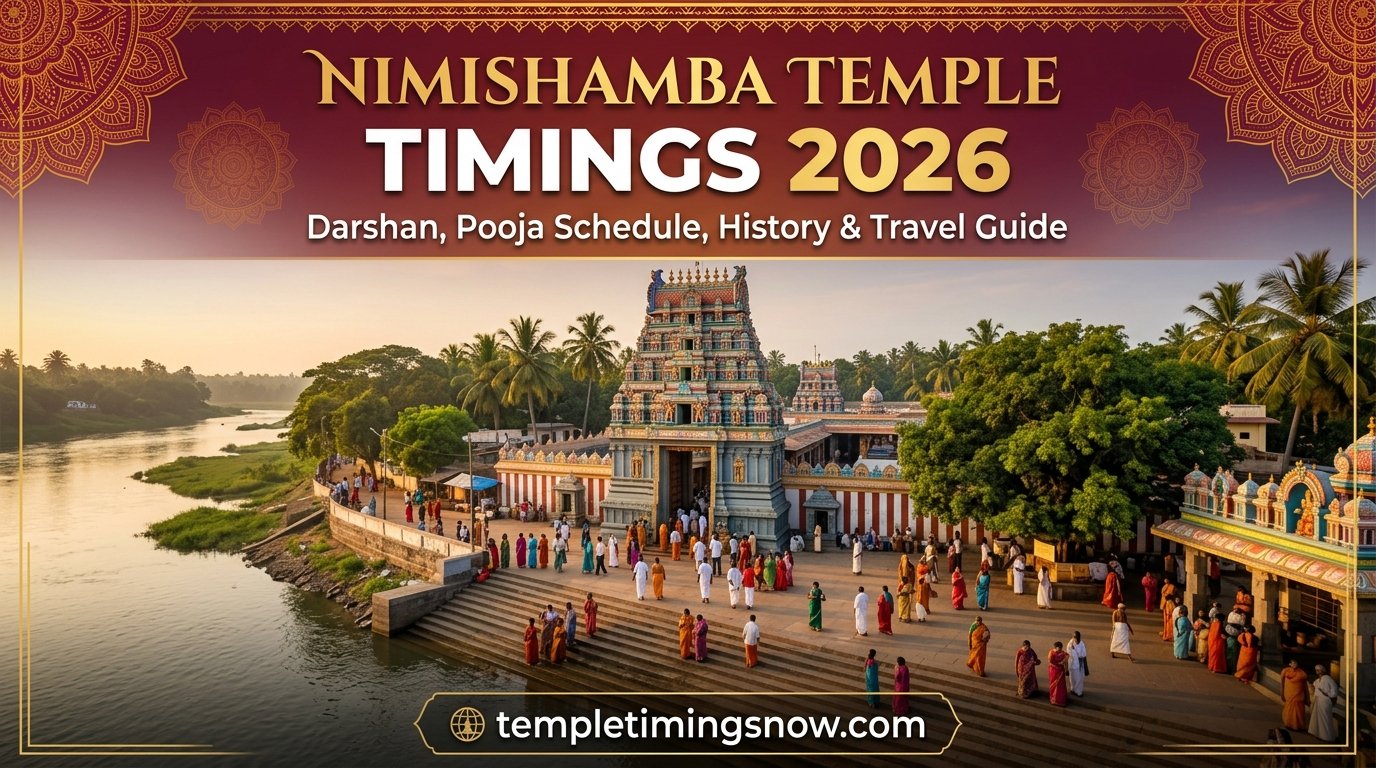
Planning a trip to see the goddess who answers prayers “within a minute”? Then you need the right Nimishamba Temple timings before you leave home, because arriving during the afternoon closure is a real bummer.
This guide covers darshan timings, the pooja schedule, history, travel routes from Bangalore and Mysuru, and the famous 10 Dasami Tithi vow. Whether you are visiting for a family blessing or just a peaceful riverside stop, everything is here.
The Nimishamba Devi Temple at Srirangapatna usually opens in the morning from around 6:30 AM to 1:00 PM and reopens in the evening from about 4:00 PM to 8:00 PM.
The Sowcarpet temple in Chennai follows a shorter schedule: 7:00 AM to 11:30 AM and 5:00 PM to 7:30 PM. Exact hours shift a little on festival days, so call the temple office if your plans are tight.
| Temple | Morning Darshan | Evening Darshan |
|---|---|---|
| Nimishamba Temple, Srirangapatna (approx.) | 6:30 AM – 1:00 PM | 4:00 PM – 8:00 PM |
| Nimishamba Temple, Sowcarpet, Chennai | 7:00 AM – 11:30 AM | 5:00 PM – 7:30 PM |
The timings are generally the same every day of the week, so “today” and “tomorrow” usually follow the schedule above. I can’t see live updates, so if there is a special pooja or a festival, the hours can be extended or paused for short periods. Today is Saturday, and tomorrow is Sunday, which is traditionally busier, so plan accordingly.
On Sundays the temple stays open on the regular schedule, but crowds are much heavier because of weekend travellers from Bangalore and Mysuru. Reach before 8:00 AM if you want a short queue. Weekday mornings are easier, honestly, and you get more time at the sanctum.
Friday is considered the most auspicious day for Goddess Shakti worship, so the temple runs its regular hours but stays packed from early morning.
Devotees bring flowers, coconuts and lemon garlands. Expect special alankara and extra poojas, and give yourself at least two hours if you are visiting on a Friday.
Nimishamba Devi is a form of Goddess Parvati, worshipped as the embodiment of Iccha Shakti (will), Kriya Shakti (action) and Gnana Shakti (wisdom). The name itself comes from the Sanskrit word nimisha, meaning a moment, because the goddess is believed to appear to help a devotee within a minute of a sincere call.
That promise is the whole reason lakhs of people visit every year, and its why the shrine is called a wish-fulfilling goddess temple.
The Srirangapatna shrine stands at Ganjam, on the banks of the sacred River Cauvery, around two kilometres from the island town’s centre. The deity faces east in the Srirangapatna temple and a Sri Chakra sits in front of her, which devotees treat as the heart of the shrine. Its a compact temple, but the energy there feels huge.
According to legend, King Muktharaja of the Somavamsha Mutharasa dynasty received a boon from Nimishamba while he was fighting demons. She promised to help him within a minute of his call, and with her support he defeated the demons. That story established Nimishamba as the goddess who removes the difficulties of her devotees.
A second tradition connects the temple with sage Mukthaka and the demon Mukthasura. In this version the goddess vanquished the demon on Dasami Tithi, and that is exactly why Dasami days are considered so powerful for prayer here. The Shiva shrine next door is Muktheeshwara, named after the sage.
The Chennai story is different. A few centuries ago, a North Indian settler bought land in Sowcarpet and began digging a well. He found a Panchaloha idol of Nimishamba, which turned out to be his own family deity, so he donated the land to build a temple.
Local businessmen then built it, roughly 400 years ago, although the structure itself is often dated to the 18th century. Sources do not fully agree, so treat both dates as approximate.
The Chennai temple has a small three-tier Rajagopuram in South Indian style, squeezed between busy shops in Sowcarpet. It faces south and houses shrines for Maha Vishnu, Varasiddhi Vinayagar, Balamurugan, Muktheeshwar, Hanuman and Shiva. The Navagrahas have a separate shrine behind the sanctum. Tradition also says Adi Shankara visited this temple.
The goddess is shown with four hands. Her upper hands carry a Trident (Trishul) and a small drum (damaru), while her lower hands show Abhaya and Varada Mudras, meaning protection and blessing.
A trident and a Simha Vahana (lion mount) stand before the sanctum, with Dwarapalikas guarding both sides. Durga, Lakshmi and Saraswati appear as Koshta idols around the sanctum wall.
In the Srirangapatna temple, the sanctum is quieter and more intimate, with the goddess draped in colourful silks and fresh flowers. Photography inside the sanctum is not usually allowed, so keep your phone away.
The daily pooja routine includes early-morning abhishekam, alankara, midday maha mangalarathi, and an evening aarti before the doors close. Exact pooja times can vary by season and by the priest’s schedule, so ask at the counter when you arrive. Many devotees also book special sevas in advance.
Here is how worship usually works for first-time visitors:
Devotees commonly offer abhishekam, a sari for the goddess, and prasadam when their wishes are fulfilled. Others light ghee lamps (ghee deepam) and perform special poojas on Full Moon (Pournami) days. Lemon-lamp offerings and lotus flowers are also popular at the Srirangapatna shrine.
The biggest festival is Vaishaka Shuddha Dasami, also celebrated as Nimishamba Jayanthi, and it draws huge crowds, especially the Somavamsha Arya Kshatriya community.
Other celebrations include Varalakshmi Vratham, Durgashtami and Navaratri. Dasami is the key date, so mark it in your calendar once the 2026 panchang is confirmed locally.
Navaratri brings nine days of alankara, music and special alankara-darshan. Come at night, if you can, the lamps look wonderful.
Devotees believe that praying here removes obstacles, brings career and business success, and fulfils sincere wishes quickly. Many businessmen in Sowcarpet visit before launching a new venture, and students, newly married couples and job seekers come in large numbers. Faith plays the biggest role of course, but the calm atmosphere helps too.
The 10 Dasami Tithi vow means lighting ghee lamps on ten Dasami days and praying to Nimishamba for a specific wish. Since the goddess is believed to have vanquished the demon on Dasami, devotees visit the temple on this day to worship her. The tradition says the deity fulfils the wish within five Dasami, though devotees are advised to complete all ten.
Dasami dates for 2026 differ based on the panchang, so check a reliable local calendar or ask the priests. I’m not listing exact dates here because they can be wrong.
The temple is about 125 to 130 km from Bangalore and roughly 15 to 20 km from Mysuru. The drive from Bangalore takes about 2.5 to 3 hours via the Bengaluru–Mysuru Expressway, depending on traffic. Once in Srirangapatna, follow signs towards Ganjam and the Cauvery riverbank.
Bangalore to the temple is approximately 130 km by road. Take NH 275 towards Mysuru and exit at Srirangapatna. Leave Bangalore early, ideally by 5:30 AM, so you catch the morning darshan before the queue builds.
Plan your travel to arrive between 8:00 AM and 11:00 AM for a comfortable morning darshan, or reach by 4:30 PM for the evening one. If you leave Bangalore at 6:00 AM you should reach by about 9:00 AM. Dont forget the afternoon closing, which can stretch past 1:00 PM and leave you waiting outside.
| From | Approx. Distance | Mode |
|---|---|---|
| Srirangapatna town / bus stand | 2 km | Auto / walk |
| Srirangapatna railway station | 2–3 km | Auto |
| Mysuru city | 15–20 km | Bus / cab |
| Bangalore | 125–130 km | Car / train + auto |
From Mysuru, the temple is a short 30-45 minute drive, which makes it a perfect half-day trip. Combine it with Ranganathaswamy Temple, Tipu Sultan’s Summer Palace and Gumbaz. Buses leave frequently from the Mysuru bus stand, so you don’t really need a private car.
The Chennai temple is about 1 km from Broadway Bus Terminus, 1.7 km from Chennai Central Railway Station and around 20 km from Chennai International Airport. Since it sits between busy shops, walking from the bus terminus is often faster than taking an auto. The timings there are 7:00 AM–11:30 AM and 5:00 PM–7:30 PM.
The best time to visit is early on a weekday morning, ideally between October and February when the weather is cooler. Avoid Fridays, Sundays and Dasami days if you hate crowds, though those are the spiritually rich ones. Here are a few small things that help:
The nearby attractions include Sri Ranganathaswamy Temple, Gumbaz, Daria Daulat Bagh, Ranganathittu Bird Sanctuary and Krishna Raja Sagara (KRS) Dam. Many pilgrims make a full day of it. The riverside setting with the Cauvery flowing past makes the whole area photogenic and peaceful.
The Srirangapatna temple usually opens from around 6:30 AM to 1:00 PM and again from 4:00 PM to 8:00 PM. Hours can change during festivals, so confirm with the temple before travelling.
Srirangapatna’s Nimishamba Devi Temple generally keeps morning darshan from about 6:30 AM to 1:00 PM and evening darshan from 4:00 PM to 8:00 PM. Special days may extend or alter these timings slightly.
Usually no. The temple follows a fixed daily schedule, so today’s timings match normal hours. During festivals or special poojas, the opening and closing hours may change, so check locally first.
Tomorrow’s timings will most likely be the same as the regular schedule. Since it falls on a Sunday, expect longer queues, and reach early in the morning for a smoother darshan experience.
The temple stays open on Sundays with its normal morning and evening hours. However, crowds increase noticeably, so arriving before 8:00 AM helps you avoid waiting in long queues.
Friday timings remain regular, but the temple gets very busy because the day is sacred for goddess worship. Expect special alankara and plan around two hours for the complete darshan.
The temple is only about 2 km from Srirangapatna town and bus stand. You can reach it by auto-rickshaw within five to ten minutes, or even walk if the weather is good.
Bangalore is roughly 125 to 130 km from the temple. By car on the Bengaluru–Mysuru Expressway, the journey typically takes between two and a half and three hours, depending on traffic.
Leave Bangalore by 5:30 or 6:00 AM to reach before 9:00 AM. That way you finish morning darshan comfortably before the afternoon closing, and you avoid the heavier traffic on the highway.
The temple timings stay the same, but from Mysuru it takes only 30 to 45 minutes. Start by 8:00 AM, finish darshan, and you can return or visit nearby attractions easily.
According to legend, she promised King Muktharaja that she would help within a minute of his call. Devotees believe the same quick grace applies to them, especially when they pray sincerely.
It is a vow in which devotees light ghee lamps on ten Dasami Tithi days and pray for a wish. The goddess is believed to fulfil it, often within five Dasami.
Common offerings include flowers, coconut, fruits, ghee lamps and incense. Once your wish is fulfilled, devotees usually perform abhishekam, offer a sari to the deity and distribute prasadam to others.
Photography is generally not allowed inside the sanctum, and some areas restrict mobile use. Respect the signboards, and ask a temple staff member if you aren’t sure about the rules.
Early weekday mornings between October and February are ideal. Crowds are lighter, the weather is pleasant, and you will get more peaceful time with the goddess compared to weekends or festival days.
Whether you head to Srirangapatna by the Cauvery or to the busy lanes of Sowcarpet, a visit to Nimishamba Devi is a calming experience.
Check the Nimishamba Temple timings, avoid the afternoon break, and try to include a Dasami visit if you can. Leave early, carry an open mind, and the rest sorts itself out.