Physical Address
304 North Cardinal St.
Dorchester Center, MA 02124
Physical Address
304 North Cardinal St.
Dorchester Center, MA 02124

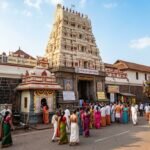
Most pilgrims heading to Tirumala never realise that one of India’s oldest Shiva shrines is sitting just off their route. Before you plan the detour, you need the Gudimallam temple timings.
Without them you could turn up during a break, or miss the evening pooja entirely. This guide covers darshan and pooja timings, the distance from Tirupati, bus and train options, the temple’s 2,000-year history, and the details competing pages gloss over.
One honest note first. Published timings for this temple don’t agree with each other, so wherever I’m not certain, I’ll say so.
The Gudimallam temple is generally reported to open around 6:00 AM and close around 8:00 PM daily. That’s the most consistent figure across sources. What isn’t consistent is the afternoon: some sources mention a short midday pooja with limited access, while others describe a fixed break of roughly 1:00 PM to 3:00 PM.
Here’s how the day usually looks:
| Session | Reported timing | Confidence |
|---|---|---|
| Temple opens | ~6:00 AM | High |
| Suprabhata, morning abhishekam | ~6:00 AM to 8:00 AM | Medium |
| Midday pooja / possible break | ~12:00 PM to 3:00 PM | Low, sources conflict |
| Evening pooja and aarti | ~5:30 PM to 7:30 PM | Medium |
| Temple closes | ~8:00 PM | High |
Treat the afternoon window as unconfirmed until you’ve verified it. If you’re coming from Tirupati, aim to arrive before noon or after 3:30 PM and you’ll avoid the risk either way.
People often search for “Tirupati to Gudimallam temple timings“, but that phrase mixes two questions: when the temple is open, and how long the trip takes. The temple’s hours are what we covered above. The journey, depending on traffic, takes roughly 30 to 45 minutes each way.
So if you want the 6:00 AM opening, leave Tirupati around 5:15 AM. That’s easy to do and it gets you the quietest darshan of the day.
If you’re checking the Gudimallam temple timings tomorrow, don’t assume today’s schedule carries over. Festival days, Pradosha evenings and special abhishekams can all shift things. Check the lunar calendar (panchang) for the date, and call the temple office or the local Endowments listing if you’re travelling a long way for one specific ritual.
Sunday timings are reported to be the same as weekdays, about 6:00 AM to 8:00 PM. Sundays do bring more local families and Tirupati pilgrims on a day trip, so the queue can be longer, though never close to Tirumala levels. Weekday mornings are better if you want to look at the sculpture slowly.
Daily worship centres on Rudrabhisheka, the ritual bathing of the lingam. The ancient lingam gets abhishekam in the morning, a midday pooja, and an evening aarti with deepa aradhana. People searching for “Mallam temple pooja timings” are usually after exactly this sequence.
General darshan is free. Specific sevas such as abhishekam, Ashtottara archana (108 names) and Sahasranama archana (1,000 names) are ticketed at the counter. I haven’t found a reliable published price list, so I won’t invent numbers. Rates are small compared with the big Tirupati-area shrines, but ask at the counter.
Pradosha falls on the 13th lunar day, twice a month, and is the most popular ritual evening here. Devotees plan their visits around the evening pooja, so expect more people than usual. If you want to attend, reach by late afternoon and confirm the exact start time locally, because it shifts with sunset.
Maha Shivaratri is the biggest festival at Gudimallam, with all-night rituals and extended hours. Karthika Masam (October to November) also brings special poojas through the month. One source claims festival-day hours of 5:00 AM to 9:00 PM. That’s plausible, but I couldn’t verify it, so confirm before you go. Ugadi, Navaratri and Arudra Darshan add smaller crowds and extra rituals.
Most sources put the Gudimallam temple about 13 to 17 km from Tirupati, though a few quote around 30 km. Why the gap? The starting point matters. Some measure from Renigunta or the Tirupati bypass, others from the city centre or the Tirupati railway station.
| Starting point | Approximate distance | Typical drive |
|---|---|---|
| Renigunta Junction | ~16 to 20 km | 25 to 35 min |
| Tirupati airport | ~17 km | 30 min |
| Tirupati city / bus stand | ~25 to 30 km (by some sources) | 35 to 45 min |
| Srikalahasti | ~30 to 40 km | 45 to 60 min |
Since I can’t confirm one exact figure, open Google Maps from your real starting point. The Tirupati to Gudimallam distance and the Gudimallam temple to Tirupati distance are the same road in opposite directions, so the return leg costs the same time.
Put the timings and distance together and the practical plan is simple. A 6:00 AM darshan, about an hour at the temple, and you’re back in Tirupati by 9:00 AM with the whole day left. Even with Srikalahasti added afterwards, it fits in a half day.
The easiest way is a taxi or your own vehicle via Renigunta and Papanaidupet (some sources say Yerpedu). The temple lies roughly between Tirupati and Srikalahasti, so you’ll be on the right road anyway. Here’s the usual sequence:
I can’t give you a reliable fixed schedule for Tirupati to Gudimallam bus timings, and I’d rather say so than make one up. What’s commonly described is that direct buses are few, so most people take an APSRTC bus from Tirupati to Renigunta, Papanaidupet or Yerpedu and then a share auto or jeep for the last stretch. Ask at the Tirupati bus stand enquiry counter for the current trips, and leave a buffer so you don’t get stranded after the evening aarti.
The nearest railway station is Renigunta Junction, about 16 to 20 km away. Some pages list Tirupati station instead, but Renigunta is closer and well connected to Chennai, Bengaluru and Hyderabad. Tirupati Airport is the nearest airport, roughly 17 km, and taxis from there go straight to the village.
The Gudimallam temple has seen continuous worship for roughly two thousand years, and its Shiva lingam is counted among the oldest surviving in India. Calling it “the oldest in the world” is a bigger claim than anyone can prove, so “among the oldest” is the safer way to put it.
The Archaeological Survey of India (ASI) has protected the site since 1954. Excavations in the 1970s lowered the floor so the full lingam and its base could be seen. They also turned up pottery, large bricks of the Satavahana type, a punch-marked coin and traces of an early apsidal brick shrine around the lingam.
Later rulers left their marks. Inscriptions record gifts of land, cows and money from the Pallavas, Cholas and Vijayanagara kings, and the sculpture shows Chola and Pallava influence. Part of the complex suffered damage in the medieval period, but the lingam, sitting deep in the sanctum, survived.
The Gudimallam lingam is a seven-sided polished stone about five feet tall, carved with a high-relief figure of Shiva as a hunter standing on a dwarf Yaksha. The figure holds a ram in one hand and a water pot in the other. This is exactly why the lingam is so famous: Shiva in human form, carved straight onto the lingam itself, is extremely rare.
The art historian J.C. Harle is often quoted on its importance, and T.A. Gopinath Rao drew scholarly attention to it in the early 1900s. (A quick note: I can’t search databases, so double-check those names and dates against a proper source before quoting them.)
Parasurama, the sixth avatar of Vishnu, is said to have performed penance here for beheading his mother, which gives the temple the name Parasurameswara. In the legend he set the Yaksha Chitrasena to guard the daily flower offering.
The guard couldn’t resist worshipping with it himself, a fight followed, and Shiva appeared and granted liberation to both. Some traditions treat the Yaksha as Brahma in disguise, so the lingam is read as holding Brahma, Vishnu and Shiva together.
Estimates for the lingam run from the 3rd century BCE to the 2nd century CE, and the disagreement comes down to two kinds of evidence. On one side, the excavated material (Satavahana-type bricks, pottery, coin) points toward a roughly 1st to 2nd century CE Satavahana-era setting.
On the other, some art historians compare the style to the Sanchi railings and argue for an earlier, Mauryan-period origin. The excavation evidence dates the structure and layers around the lingam, while the style argument dates the carving itself, and those two don’t have to match perfectly. So the honest answer is “roughly 2,000 years or a bit more, exact date debated.”
The Swarnamukhi River flows beside the temple. Reports say it floods the sanctum on a long cycle, with the last flood on 4 December 2005. Devotees treat it as a natural abhishekam. The “60-year cycle” is a popular claim, but I couldn’t confirm it independently, so treat it as local tradition.
Wear modest traditional clothing and remove your footwear before entering. The temple is small, so queues build quickly on festivals and Pradosha days. A few rules and tips worth knowing:
Since you’re out that way, Srikalahasti, a major Shiva temple known for Rahu-Ketu pooja, is a natural next stop, and Kanipakam’s Vinayaka temple is a longer drive. Hours for both differ, so check them separately. Srikalahasti is commonly listed around 6:00 AM to 8:30 PM, but confirm that before you rely on it.
The Gudimallam temple works best as an early-morning stop, roughly 6:00 AM to 8:00 PM on paper, with the afternoon the one thing to double-check. It’s close to Tirupati, it’s free, and the lingam is genuinely worth the detour. Confirm the day’s hours, avoid the midday gap, and you’ll have one of South India’s quietest ancient shrines almost to yourself.
The temple is generally reported open from about 6:00 AM to 8:00 PM daily. Afternoon access varies between sources, so confirm locally, especially on festival days and Pradosha evenings.
Darshan runs through the open hours, mainly morning and evening. Some sources mention a midday pooja or break, so plan to arrive before noon or after about 3:30 PM.
Sunday hours are reported to match weekdays, roughly 6:00 AM to 8:00 PM. Expect somewhat bigger crowds from local families and Tirupati visitors, so go early for a calmer darshan.
They’re usually the same as today, but festivals, Pradosha and special abhishekams can change them. Check the panchang for the date and confirm with the temple before travelling.
Rituals typically include morning abhishekam around 6:00 AM, a midday pooja, and an evening aarti around 5:30 to 7:30 PM. Exact times vary, so verify locally before planning around a specific ceremony.
Most sources say about 13 to 17 km, while some quote around 30 km. The difference depends on whether you measure from Renigunta, the airport or central Tirupati.
It’s the same road in reverse, so the return distance matches the outbound trip. Expect roughly 30 to 45 minutes by car depending on traffic and your starting point.
No reliable fixed schedule is published. Direct buses are limited, so people usually take an APSRTC bus to Renigunta, Papanaidupet or Yerpedu, then an auto. Ask at the Tirupati bus stand.
Take a taxi or your own vehicle via Renigunta and Papanaidupet toward Srikalahasti. Alternatively, ride a bus to Papanaidupet or Yerpedu and finish with a share auto.
The temple has been in worship for about 2,000 years. The ASI protects it, and Satavahana, Pallava, Chola and Vijayanagara rulers contributed to it. The lingam dating is debated.
Open roughly 6:00 AM to 8:00 PM, and about 13 to 30 km from Tirupati depending on start point. A 5:15 AM departure gets you there for opening.
No, general darshan is free. Only specific sevas like abhishekam and archana are charged, and tickets are bought at the temple counter. Ask staff for current rates.
Reports say photography is prohibited inside the temple under ASI conservation rules. Some pages say outer grounds are fine, so follow posted signs and staff instructions.
It’s one of India’s oldest surviving lingams and carries a high-relief figure of Shiva as a hunter standing on a Yaksha, a rare early depiction of Shiva in human form.
Early morning, from 6:00 AM to 9:00 AM, is quietest. October to March is the most comfortable season. Pradosha and Maha Shivaratri are auspicious but much busier.