Physical Address
304 North Cardinal St.
Dorchester Center, MA 02124
Physical Address
304 North Cardinal St.
Dorchester Center, MA 02124

If you’re planning a trip to Bet Dwarka Temple, getting the timings right can honestly make or break your whole darshan experience. This little island shrine, sitting quietly off the Gujarat coast, is one of the most spiritually charged spots connected to Lord Krishna, and thousands of devotees show up here every single day hoping to catch a glimpse of Dwarkadhish in his most personal, intimate setting.
In this guide we’re going to cover everything Bet Dwarka Temple opening and closing time, the full darshan schedule, aarti timings, puja list, best months to visit, and (this part most articles skip) exactly how you actually get to the island in the first place.
Let’s get into it.
Bet Dwarka, also called Shankhodhar, isn’t just another stop on the Char Dham Yatra circuit. According to old texts like the Mahabharata and Skanda Purana, this island was Krishna’s actual residence during the Dvapara Yuga — basically his home, not just a temple where he’s worshipped. That distinction matters a lot to devotees.
It’s also the place where, as legend goes, Sudama → travelled to → meet his childhood friend Krishna, carrying nothing but a humble packet of beaten rice (poha), and Krishna received him with open arms despite him being a king by that point. That story alone gives the island a kind of emotional weight that’s hard to describe unless you’ve been there.
The temple itself follows the Pushtimarg tradition, and the architecture — carved pillars, old stone work, the whole vibe — tells Krishna’s life story in a way that words sometimes can’t.
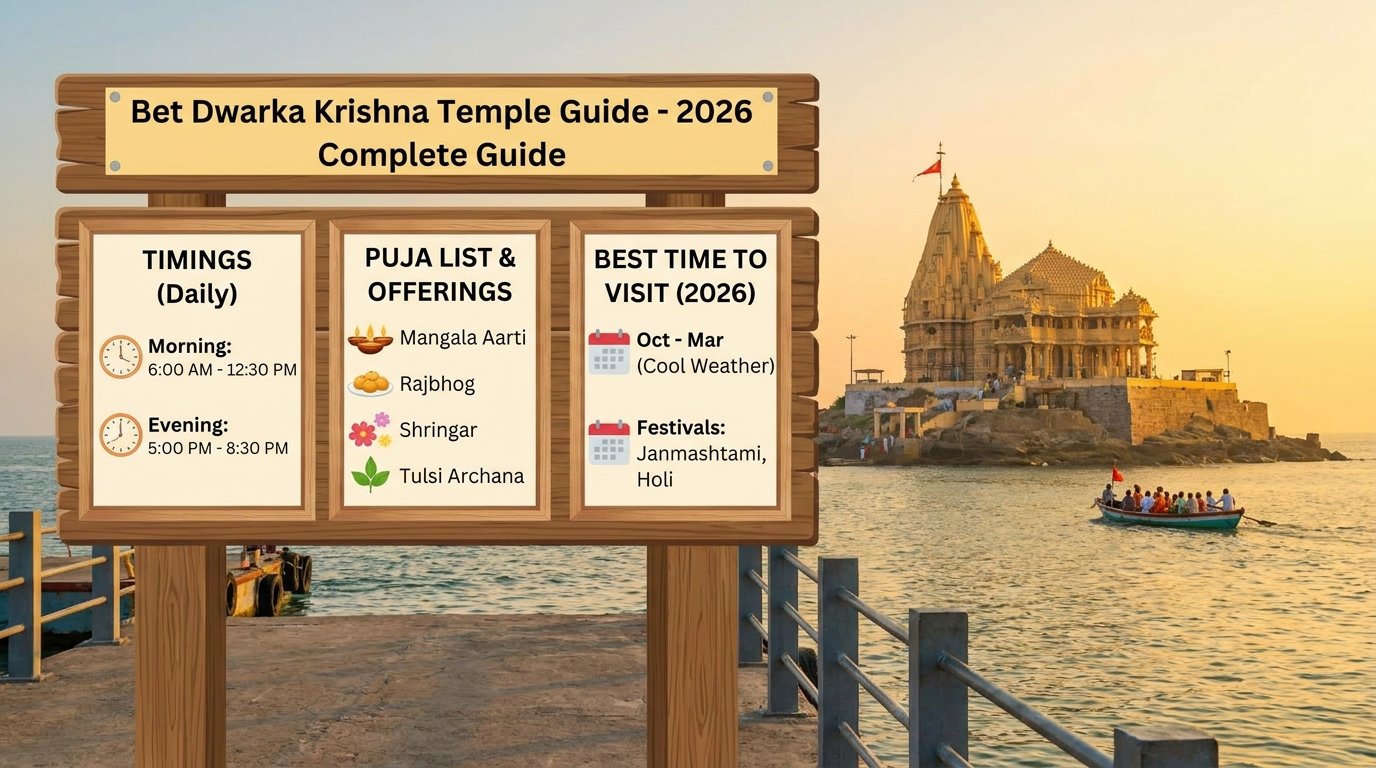
The temple opens at 6:00 AM and closes at 9:30 PM, with a break in the afternoon between darshan sessions. Entry is only allowed during these windows, so don’t expect to just walk in whenever.
Here’s the daily breakdown:
| Session | Timing |
|---|---|
| Morning Darshan | 6:00 AM – 12:30 PM |
| Afternoon Break | 12:30 PM – 5:00 PM |
| Evening Darshan | 5:00 PM – 9:30 PM |
One thing worth mentioning — during festivals like Janmashtami or Holi, these hours often get extended because of the crowd size, so if you’re travelling specifically for a festival, it’s smart to call ahead or check with a local guide once you land in Dwarka.
Darshan here isn’t just one single event, it’s broken into several distinct phases throughout the day, each one representing a different “mood” or moment in Krishna’s daily divine routine. This is a pretty old Vaishnav practice and it’s followed strictly.
Most seasoned pilgrims will tell you the morning session is the one to prioritize if you can only make one — the atmosphere is calmer, there’s less rush, and the whole thing just feels more personal.
Sandhya Darshan and Shayan Darshan → symbolize → Krishna’s return from his daily activities and his preparation for rest, so these two carry a slightly more reflective, quiet energy compared to the morning ones.
Aarti, for a lot of visitors, ends up being the single most memorable part of the trip. There’s something about the bells, the chanting, and the sound of waves hitting the shore just outside the temple that gets to people in a way photos never really capture.
| Aarti Name | Timing |
|---|---|
| Mangla Aarti | 6:30 AM – 8:00 AM |
| Shringar Aarti | 11:05 AM – 11:20 AM |
| Sandhya Aarti | 8:00 PM – 8:10 PM |
| Shayan Aarti | 8:35 PM – 9:00 PM |
If your schedule only allows for one aarti, go for either the Mangla Aarti (great way to start the day) or the Sandhya Aarti (a peaceful, almost meditative close to the day).
Devotees can also take part in daily pujas, each performed at a fixed time and holding its own significance:
Participating in these isn’t mandatory obviously, but a lot of devotees say it deepens the whole experience and gives them a moment to offer personal prayers rather than just observing.
The ideal window is October to March, when the weather stays cool and the sea remains calm enough for a smooth ferry ride out to the island.
Gujarat summers (April–June) get brutally hot, and doing darshan mid-day in that heat is genuinely exhausting — not something we’d recommend unless you’ve got no other choice. Monsoon season (roughly July–September) brings a different problem: rough sea conditions that can delay or even suspend boat services entirely, which is obviously a huge headache if you’ve planned a tight itinerary.
For the best experience overall, aim for early morning or late evening darshan — the temple’s a lot less crowded and honestly just feels more spiritual when it’s not packed shoulder to shoulder.
This is where a lot of articles online drop the ball — they’ll tell you when the temple opens but not how you’re actually supposed to get there. Since Bet Dwarka sits on an island, you can’t just drive up to the front gate.
Before crossing over, you first need to reach Okha, the small coastal town on the mainland that serves as the launching point for boats to Bet Dwarka.
Once you’re at the Okha jetty, here’s roughly what to expect:
Honestly, book your ferry crossing for the early morning if you can — not only do you beat the crowd, the water’s calmer too, which makes for a much smoother ride, especially if anyone in your group gets seasick easily.
Temple authorities expect modest, traditional clothing — shoulders and knees covered, nothing flashy or revealing. Both men and women should dress conservatively out of respect for the sanctity of the place.
A few other things to keep in mind:
This confuses a lot of first-time visitors, so let’s clear it up properly. Dwarkadhish Temple → is located in → the main Dwarka city, and it’s the larger, more famous shrine most people picture when they think “Dwarka.” Bet Dwarka Temple, on the other hand, → is situated on → a separate island a short ferry ride away, and it’s believed to be Krishna’s actual residential palace, not just a place of worship built in his honor.
Think of it this way — Dwarkadhish Temple is where the kingdom worshipped Krishna as their king, while Bet Dwarka is where Krishna actually lived, ate, and spent time with people like Sudama. Most pilgrims doing a full Dwarka Yatra try to cover both in the same trip since they’re so close together geographically but so different in feel.
While you’re on the island, don’t rush straight back to the mainland. There’s more to see:
A trip to Bet Dwarka Temple isn’t really just about ticking off a pilgrimage site on a list — it’s a genuinely moving experience once you’re standing there listening to the aarti bells mix with the sound of the sea. Knowing the Bet Dwarka Temple opening and closing time, the darshan and aarti schedule, and — critically — how to actually get to the island will save you a lot of stress and let you focus on what really matters: the darshan itself.
The temple generally opens at 6:00 AM and closes at 9:30 PM, with an afternoon break from around 12:30 PM to 5:00 PM between darshan sessions.
Early morning (around Mangla Darshan) and evening (Sandhya Darshan) are considered best, offering a calmer, more peaceful atmosphere away from the busiest crowds.
Yes, regular daily timings stay consistent, though they may be extended during festivals like Janmashtami due to increased devotee footfall.
Mangla Aarti in the morning and Sandhya Aarti in the evening are considered the most spiritually significant of the four daily aartis.
Yes, devotees can take part in daily pujas including Abhishek Puja, Raj Bhog, Gwal Bhog, and Shringar Bhog at their designated times.
Yes, the temple stays open during festivals, though darshan hours are usually extended to accommodate the significantly larger crowds.
October to March is ideal, thanks to pleasant weather and calmer sea conditions that make the ferry crossing smooth and comfortable.
Yes, modest and traditional clothing covering shoulders and knees is strongly recommended for both men and women visiting the temple.
The temple is dedicated to Lord Krishna and follows the Pushtimarg tradition, one of the older Vaishnav worship traditions in India.
Yes, Bet Dwarka sits on a separate island and is believed to be Krishna’s actual residence, while Dwarkadhish Temple is the main city shrine.
Travel by road or train to Okha jetty (about 30-35 km from Dwarka), then take a 20-25 minute ferry crossing to reach the island.
Ferry tickets are quite affordable, typically a small amount per person round trip, though pricing can vary slightly by season and operator.
The crossing from Okha jetty to Bet Dwarka Island generally takes around 20 to 25 minutes, depending on tide and sea conditions.
Access can be unreliable during monsoon months, as rough sea conditions sometimes delay or suspend ferry services to the island entirely.
Nearby you’ll find temples dedicated to Hanuman, Devi Rukmini, and Lord Shiva, along with the scenic Gomti River and Arabian Sea confluence.